Skip to content
Search

Latest Stories

News

BLOWBACK BLASTS: ZIMBABWE AND ETHIOPIA

BLOWBACK BLASTS: ZIMBABWE AND ETHIOPIA
Make us preferred on Google

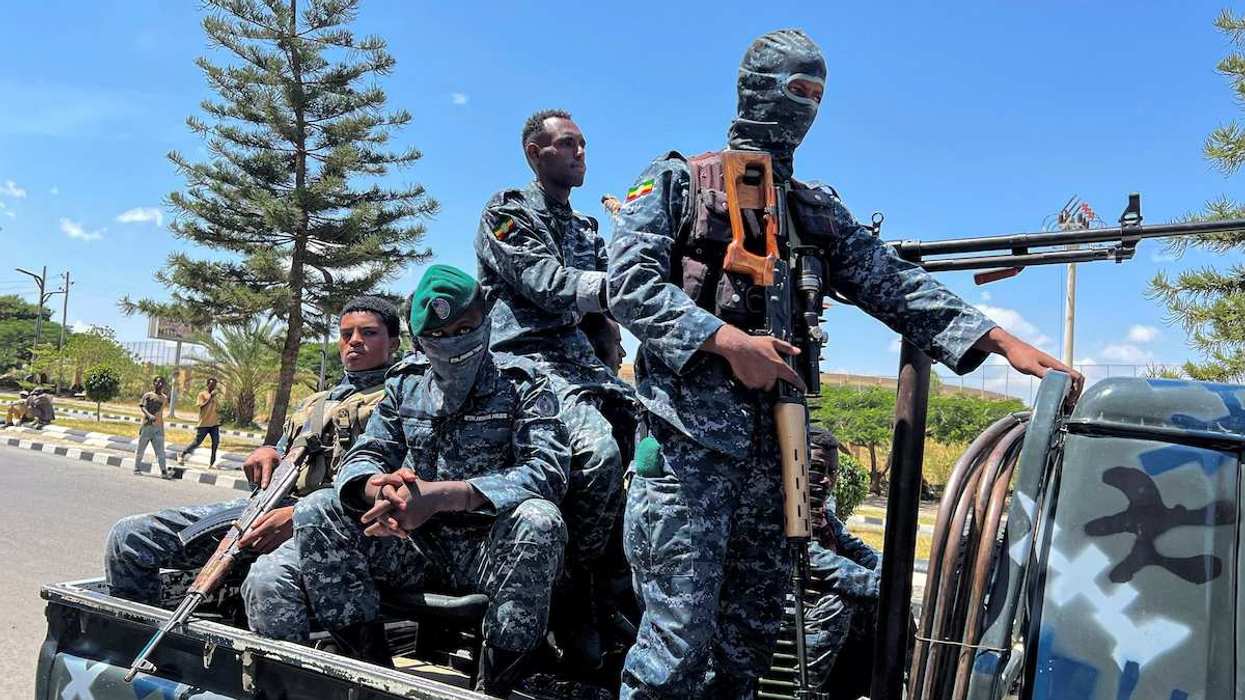
Both men took power only recently. Both come from within the broken authoritarian systems they promise to fix. And both — Zimbabwe’s President Emmerson Mnangagwa and Ethiopia’s Prime Minister Abiy Ahmed (pictured above) — were apparently targeted for death last weekend.


In Zimbabwe, a bomb exploded inches from Mr. Mnangagwa during a campaign rally. “It is not my time,” he said. (We’ve written backgrounders hereand here on Mnangagwa, nicknamed the Crocodile, who once survived attempted assassination by ice cream.)

Who did it? Ahead of what could be Zimbabwe’s first remotely fair elections in decades, the field of suspects is wide. Some within the ruling ZANU-PF party hate Mnangagwa because he toppled long-serving strongman Robert Mugabe last November — and because he’s pledged to open the system in ways that threaten them. Opposition supporters hate him because he was once Mugabe’s enforcer, the head of his ruthless security service. The attack on Mnangagwa took place in the city of Bulawayo, an opposition stronghold, but the near miss suggests it might have been an inside job.

In Ethiopia, someone lobbed a grenade at Prime Minister Abiy Ahmed as he addressed tens of thousands at a rally in Addis Ababa in support of his reform plans. Two were killed and more than one hundred injured.

The youthful Mr. Abiy took power in April after months of riots against government repression left hundreds dead. Since then, Abiy has lifted a state of emergency, begun a nationwide listening tour to ease ethnic tensions, released thousands of political prisoners, pledged to privatize struggling state companies, and signaled agreement on a long-frozen deal to formally end the war with neighboring Eritrea.

It’s still more talk than action, but the promises themselves are big news in one of Africa’s most historically repressive regimes.

Now, Zimbabwe and Ethiopia sit 2,500 miles apart. They are very different countries with different strengths, burdens, and political histories. But they have this in common: each has a new leader who promises big changes to a deeply entrenched authoritarian system. And each man has enemies who want to see him dead.
More For You

Can France redefine its relationship with Africa?

French President Emmanuel Macron and Kenya's President William Ruto shake hands during the "Africa Forward Summit 2026" at the Taifa Hall of the University of Nairobi, in Nairobi, Kenya, May 11, 2026.

REUTERS/Monicah Mwangi
French President Emmanuel Macron met with over 30 African leaders in Nairobi on Monday as the Africa Forward summit, co-hosted by Kenyan President William Ruto, gets underway this week. It is the first time France has held such an event in an English-speaking nation, and it is intended to showcase a “renewed partnership” between France and Africa [...]
China puts Taiwan on an island
When US President Donald Trump and Chinese President Xi Jinping meet in Beijing on Thursday, Taiwan will be top of Xi’s mind.But it’s not an invasion that he seeks, according to Ian Bremmer, at least not yet. What Xi wants, Ian explained in a recent episode of “ask ian,” is “for the Americans to change the status quo.” In other words, the Chinese [...]
UK Prime Minister Keir Starmer giving a speech at the Coin Street Neighbourhood Centre in Waterloo, London, on May 11, 2026.

UK Prime Minister Keir Starmer giving a speech at the Coin Street Neighbourhood Centre in Waterloo, London, as he sets out the next steps he is taking in his plan to build a stronger, fairer Britain, on May 11, 2026.

PA via Reuters
UK’s Starmer tries to save his baconAfter the Labour Party’s disastrous performance in the local elections last Thursday, one that was fully expected, Prime Minister Keir Starmer is clinging onto his position by a thread. In a bid to shore up support, the PM delivered a “relaunch speech” in London on Monday morning, acknowledging voters’ desire [...]
Hard Number: US eyes Cuba, literally
Natalie Johnson
The US military is reportedly increasing surveillance missions over Cuba, mostly around the country’s two biggest cities, Havana and Santiago de Cuba. Flights of this ilk were previously rare in this area. Meanwhile, US President Donald Trump is reportedly growing impatient that the Cuban regime hasn’t fallen, despite a de facto US oil blockade on [...]