Politicians in a growing number of countries have boosted their popularity by demonizing outsiders as “enemies.” Here are three stories that illustrate what can go wrong with this strategy.
In Norway, Fisheries Minister Per Sandberg, deputy head of the anti-immigrant Progress party, was forced to resign this week after visiting Iran with his girlfriend without notifying the prime minister’s office in advance.
This particular girlfriend is an Iranian immigrant (and beauty queen) who had seen three requests for asylum in Norway rejected before she was finally granted a residency permit. Sandberg’s party has called for those with rejected asylum applications to be swiftly expelled from the country. Fortunately for Sandberg, his girlfriend managed to avoid that fate.
Here are two (more serious) examples.
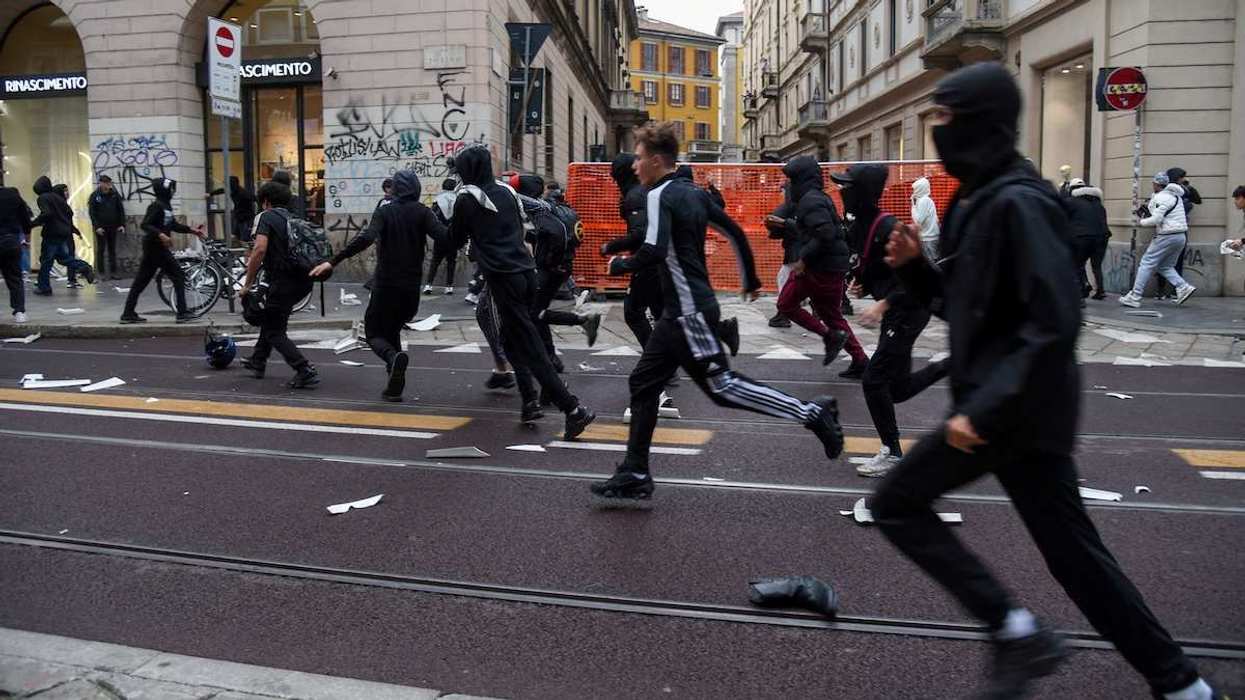
In Italy, a bridge collapsed in the northern city of Genoa on Tuesday, killing at least 39 people. For Italy’s interior minister, Matteo Salvini (pictured above), the enemy is the European Union and the spending caps the EU asks of member states. That spending could have helped repair shoddy infrastructure, he argued.
But journalist Albero Nardelli points out the EU has not only warned that Italy needs infrastructure spending, it “has given the green light to some €10 billion” for exactly that purpose, including in Genoa. But the M5S, the party with which Salvini’s Lega governs in coalition, has argued that Italy’s government shouldn’t spend big money on infrastructure because the need for repairs is a “fable.”
In addition, as Tuesday author Alex Kliment rightly notes, Salvini’s complaint that the EU doesn’t allow Italy enough for infrastructure spending would have more credibility if Italy weren’t dead last among Western European countries in corruption rankings. Too much money is stolen before it can be invested.
Salvini’s accusation won’t help the mood when Italy’s government submits a draft budget for EU review in October.
In Turkey, an economic crisis has taken hold. President Erdogan says the enemies are outsiders preying on the country’s economy. He calls tariffs imposed by the Trump administration “economic terrorism.”
But the true source of Turkey’s current turmoil is an economy built on heavy borrowing that’s denominated in foreign currency and a refusal to fight rising inflation by raising interest rates.
Erdogan presses Turkey’s central bank to keep rates low in hopes of keeping growth, and his own approval ratings, artificially high. The result is a sharp drop in the value of Turkey’s currency that began well before Trump imposed penalties in response to the standoff over a US citizen held in Turkey.
The bottom line: All three cases illustrate the reality that, though posing as defender of the people against foreign enemies can make for successful politics, it doesn’t help with governing.