When Canadian defense expert Philippe Lagassé met with American counterparts in Washington this week, he quickly sensed they had not registered that the mood had shifted in Canada.
“There’s still a lot of emphasis on partnership,” he said. “We should be working together. We should be doing some things together.”
But Lagassé, an associate professor at Ottawa’s Carleton University, had to tell them that things had changed. “That’s hard right now because, politically, that’s just become a lot more difficult.”
Canadians were so angered by Donald Trump’s tariffs and annexation threats that they yanked American bourbon from liquor stores and turned up their noses at American produce. The typically staid hockey fans of Ottawa even booed the US national anthem.
Canadians, who are used to thinking of the Americans as friendly neighbors, are suddenly seeing them as a threat to their sovereignty. A poll this week shows 80% of Canadians support using oil as a weapon in the trade dispute, which would be a dramatic escalation. On Monday, Trump called off the planned 25% tariffs after Justin Trudeau agreed to take measures on the border, but the pause is for just 30 days.
Rattled Canadians are suddenly more committed to enhancing their sovereignty by reducing internal trade barriers, diversifying international trade so the country is less dependent on the United States, and beefing up the military.
Long a NATO laggard
It will need a lot of beef. For decades, Canada has sheltered under the coattails of Uncle Sam.
With oceans on both sides, an impassable ice cap to the north and friendly Americans to the south, there was little public support for military spending and lots of support for spending money on social programs. Even tough-talking Conservative Stephen Harper did little to boost defense spending. Canada is a NATO laggard, spending only 1.37% of GDP on defense — the average across NATO members is 2.71% of GDP — something Barack Obama, Joe Biden, and Trump have all complained about. Last year, leaked documents showed that Trudeau told NATO that Canada had no plan to get to 2%, the level all NATO countries have agreed on.
When political circumstances changed, Trudeau laid out a plan to get to 2%, but years of neglect will take time to turn around. Due to recruiting problems, there are only 63,000 people in the Canadian Armed Forces — well below the 71,500 it is supposed to have. Even at full strength, it is tiny compared with the 2 million troops south of the border. To make matters worse, three-quarters of Canadian soldiers are either overweight or obese.
Canada has summoned the will, finally, to spend on defense. Trudeau has promised to reach 2% by 2032. His likely successor, Mark Carney, said Wednesday he would aim for 2030. The defense minister has said we could get there within two years, although quickly rearming would pose logistical challenges.
But it is not clear if Canada's big push will be in partnership with its newly hostile neighbors. After all, if the United States decides to put tariffs on all Canadian exports, driving the country into a deep recession, would Canada want to proceed with the CA$70-billion purchase of 88 F-35A US fighter jets? Or would Ottawa cancel the order and buy fighters from Sweden, which has never threatened annexation? And if Canada’s economy is in free fall, could it afford to buy either?
Pentagon control
And should Canada buy kit from a hostile power? Canada’s military technology is integrated with America’s, so any operations without US approval would be complicated. The F-35 can’t function without its autonomic logistics information system, which is controlled by the Pentagon, which could limit its effectiveness in a showdown with America.
There may be pressure, therefore, to work more closely with other countries — to buy equipment from the Europeans, for example — although the natural inclination of the defense community in Ottawa is to stick with the Americans, whom they see as their friendly big brothers.
“I think there’s going to be a pretty heavy emphasis on the fact that you take Trump at his word, so you buy more American equipment, and you invest more in the US,” says Lagassé. “You try to integrate yourself more deeply into those supply chains, and that’s how you protect yourself. The other side is going to argue, well, now this is too vulnerable. We should try to become less dependent, take a step back.”
Not a lot of choices
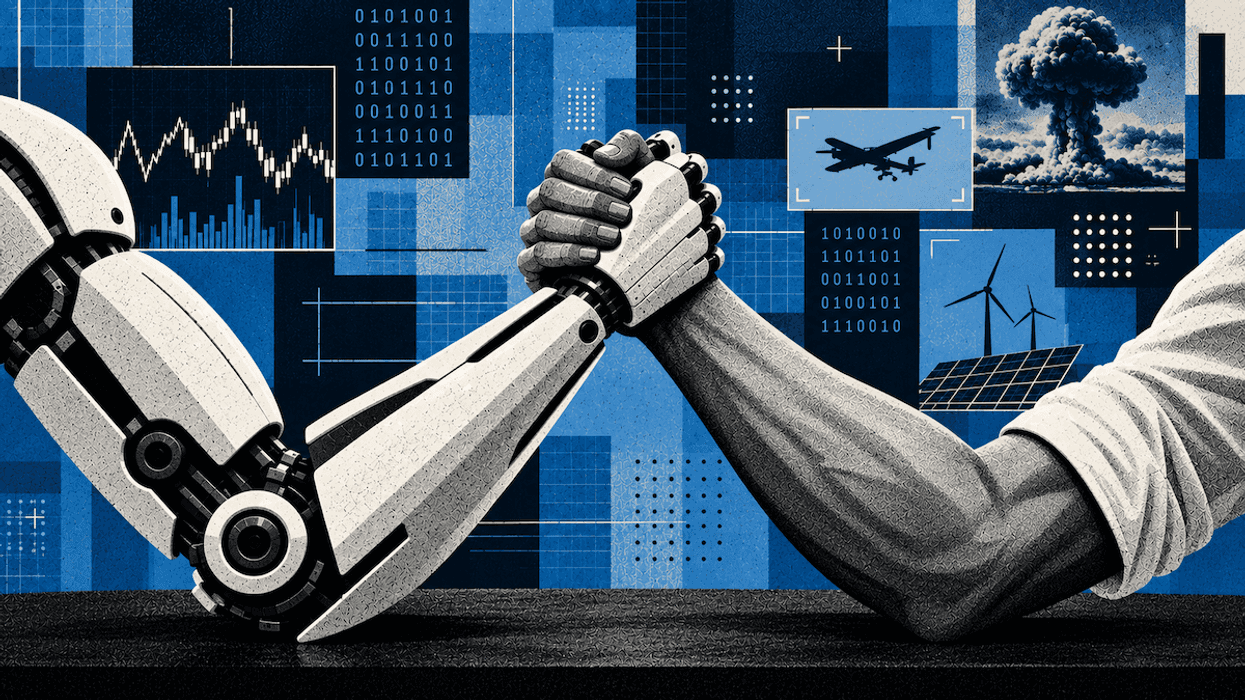
But Canadians are limited in their options, says Graeme Thompson, an analyst with Eurasia Group, because at the forefront of military innovation with AI and advanced computing, there are only two real options: China and the US.
“There’s the Chinese ecosystem and there’s the American ecosystem, and basically Canada doesn’t have a choice there. It’s not going to be able to develop its own autonomous tech ecosystem or supply chains. It has to be plugged into the US side of things. There’s a great line, I don’t know who said it, but ‘the US is our best friend, whether we like it or not.’”
Canadians may want their government to do more to assert national sovereignty, but Lagassé doubts that sentiment is strong enough to disrupt the close military cooperation between Canada and the United States.
“The public may want us to do something differently, but … is the public willing to sustain the cost? Is the public’s attention going to be sufficiently focused so that political leaders see gain in pursuing that? Or does it just kind of evaporate once the tariff threat is no longer present?”
Once tempers cool, Canadian politicians will continue to use procurement deals as a way of currying favor with the Americans rather than a way of asserting independence. After all, they are Canada’s best friends, whether they like it or not.