Skip to content
Search

Latest Stories

News

What We're Watching: Bosnia's deepening political crisis

 Milorad Dodik

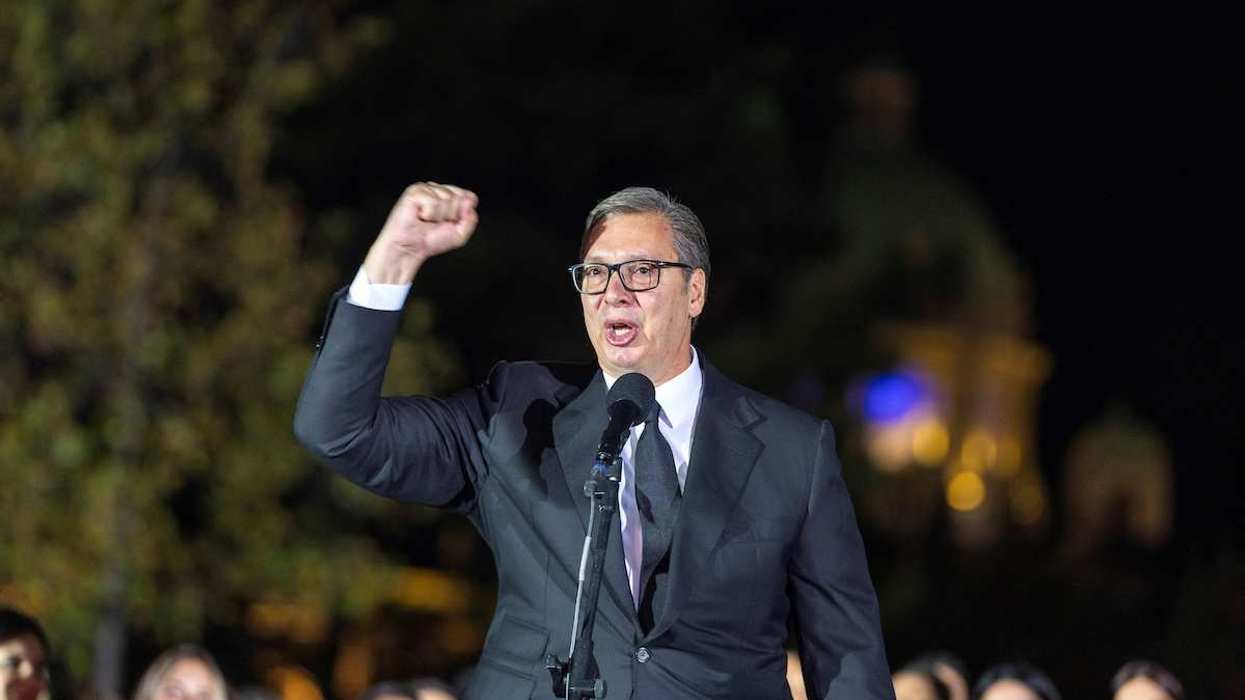
Bosnia on the brink: Bosnia is facing its worst political crisis since the end of the bloody Yugoslav civil war in 1995, which pitted ethnic Bosnians against Serbs and Croats and left more than 100,000 dead. What's going on? Well, when that war ended, the peace agreement created a special enclave within Bosnia for ethnic Serbs — the better to keep warring ethnicities apart. This has always been a messy arrangement, but now the nationalistic leader of that enclave, Milorad Dodik, is threatening to secede altogether, amid a spat over new laws meant to ban denial of the genocide that Serbs carried out against Bosnian Muslims during the war. A breakup of Bosnia could quickly lead to serious violence, and both the EU and US staunchly opposed the move. But Dodik is undaunted. He says that Serb-only institutions will be in place as soon as November. Asked how he'd pull this off, Dodik — who recently oversaw provocative military drills that spooked Bosnia's other ethnic groups — said "as the Slovenes did it." That's a not-so-veiled reference to the breakup of former Yugoslavia, which led to years of bloodshed. Indeed, it's not a good omen, and is raising fears of a return to the deadly violence of the 1990s.

More For You

Tokyo Electric Power Company (TEPCO)'s Kashiwazaki Kariwa nuclear power plant, one of the world's largest nuclear facilities, stands along the seaside in Kashiwazaki, Niigata prefecture, Japan December 21, 2025.

Tokyo Electric Power Company (TEPCO)'s Kashiwazaki Kariwa nuclear power plant, one of the world's largest nuclear facilities, stands along the seaside in Kashiwazaki, Niigata prefecture, Japan December 21, 2025.

REUTERS/Issei Kato
54: Japan is reopening the world’s largest nuclear power plant after a regional vote gave the greenlight on Monday. The Kashiwazaki-Kariwa plant, located 136 miles outside of Tokyo, had its 54 reactors shuttered following the 2011 earthquake and tsunami that spurred the worst nuclear disaster since Chernobyl. The decision reflects Japan’s push to [...]
Pro-democracy protesters carry portraits of North Yemen's late president Ibrahim al-Hamdi.

Pro-democracy protesters carry portraits of North Yemen's late president Ibrahim al-Hamdi.

REUTERS/Khaled Abdullah
Group of Yemeni ministers announce support for UAE-backed rebel coalitionIn the latest twist to Yemen’s decade-long civil war, a group of government ministers declared support for the UAE-backed Southern Transitional Council (STC), a rebel group that broke the war’s deadlock earlier this month by seizing control of the oil-rich Handramout region. [...]
US President Donald Trump speaks with Chinese President Xi Jinping at Gimhae Air Base in Gimhae, South Korea, on October 30, 2025.

US President Donald Trump speaks with Chinese President Xi Jinping, during a bilateral meeting at Gimhae Air Base in Gimhae, South Korea, on October 30, 2025.

Yonhap News/POOL/Handout via Sipa USA
Every January, Eurasia Group, GZERO’s parent company, unveils a forecast of the top 10 geopolitical risks for the world in the year ahead, authored by EG President Ian Bremmer and EG Chairman Cliff Kupchan. The 2026 report drops on Monday, January 5.Before looking forward, though, it’s worth looking back. Here’s how the 2025 Top Risks report [...]
US President Donald Trump announces tariffs on US trading partners at the White House in Washington, DC, USA, on April 2, 2025.

US President Donald Trump arrives to announce reciprocal tariffs against US trading partners in the Rose Garden of the White House in Washington, DC, USA, on April 2, 2025.

POOL via CNP/INSTARimages.com
As GZERO readers will be all too aware, 2025 has been a hefty year for geopolitics. US President Donald Trump’s return to office has rocked global alliances, conflicts have raged from Khartoum to Kashmir, and new powers – both tangible and technological – have emerged.To put a bow on the year, GZERO highlights the biggest geopolitics stories of 2025. [...]