News
What We're Watching: Black Sea wheat pirates, Kazakh referendum, Korean missile tit-for-tat
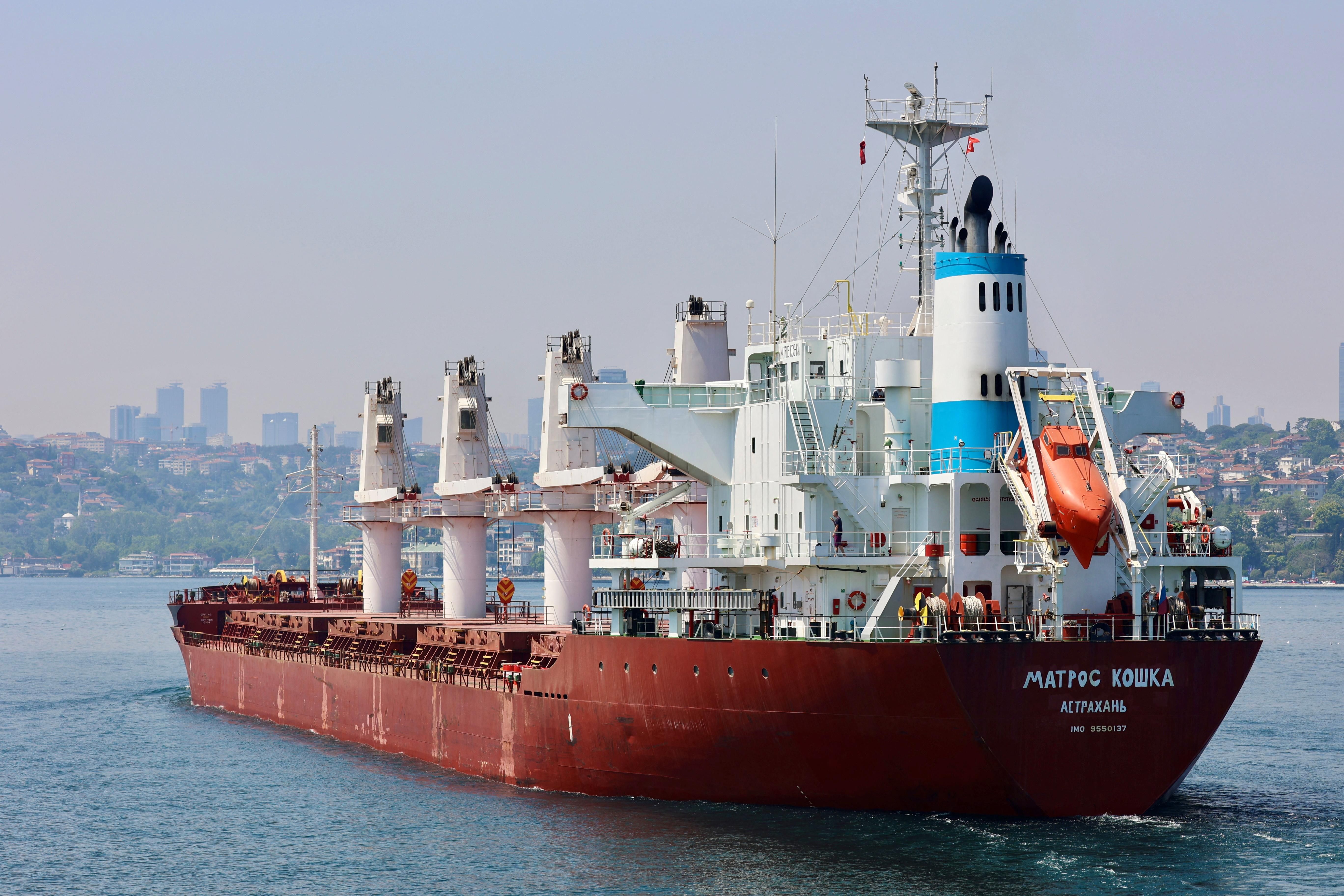
A Russian-flagged bulk carrier transits the Bosphorus near Istanbul.
REUTERS/Yoruk Isik
Ukrainian and Russian forces are locked in a fierce battle for control of the strategic eastern city of Sievierodonetsk. Taking it would help Russian forces occupy a broader swath of the Donbas. Ukrainian President Volodymyr Zelensky, visiting frontline troops in nearby Zaporizhzhia, said his men had “a chance” to hold the city despite being outnumbered. The question remains — at what point should Ukraine consider negotiating? Meanwhile, US officials have warned as many as 14 countries that Russian grain ships may arrive with cargos pilfered illegally from Ukraine. Still, amid a growing global food crisis that’s been made worse by the war, are governments really prepared to turn away huge shipments of wheat?
Voters in the sprawling, oil-rich former Soviet republic approved constitutional changes that would decentralize the political system and strip former strongman Nursultan Nazarbayev of his emeritus privileges as “leader of the nation.” The move is seen as a bid by current President Kassym-Jomart Tokayev to move out of the shadow of his predecessor, who ruled the Central Asian nation from the Soviet collapse until stepping down in 2019. This isn’t the first swipe Tokayev has taken at Nazarbayev. Back in January, amid mass protests that began over fuel prices, Tokayev removed him from a key security post, while also calling in troops from a Russia-led regional security alliance to restore order. Those forces left soon after, and in the wake of that unrest, Tokayev proposed a range of constitutional reforms meant to tackle nepotism and move away from what he has called a “super-presidential” system. Tokayev has also sought to distance himself from Russia’s position on Ukraine, in a move experts say is also about distinguishing himself from Nazarbayev. After the YES vote, it remains to be seen whether the changes are really about moving Kazakhstan away from strongman rule, or merely cutting a path for one strongman to replace another.
This comes to you from the Signal newsletter team of GZERO Media. Subscribe for your free daily Signal today.
Netanyahu said Israel won’t pull back from Gaza until Hamas gives up its weapons—a nonstarter for Hamas, which insists it won’t disarm until Israel withdraws first.
Check out the latest swag from the official Puppet Regime merchandise store! Browse an array of products that will show the world you are a devoted subject of the Regime, including: A big, beautiful mug for drinking coffee very strongly, A handsome tote bag to carry your favorite classified documents, Collectible stickers, Stylish t-shirts and hoodies – now also available in pink. We ship worldwide! Shop now at shop.puppetregime.tv!
US-backed negotiations are opening a possible path to democratic elections in Venezuela – even as the country’s most popular opposition leader remains outside the room.
Think you know what's going on around the world? Here's your chance to prove it.