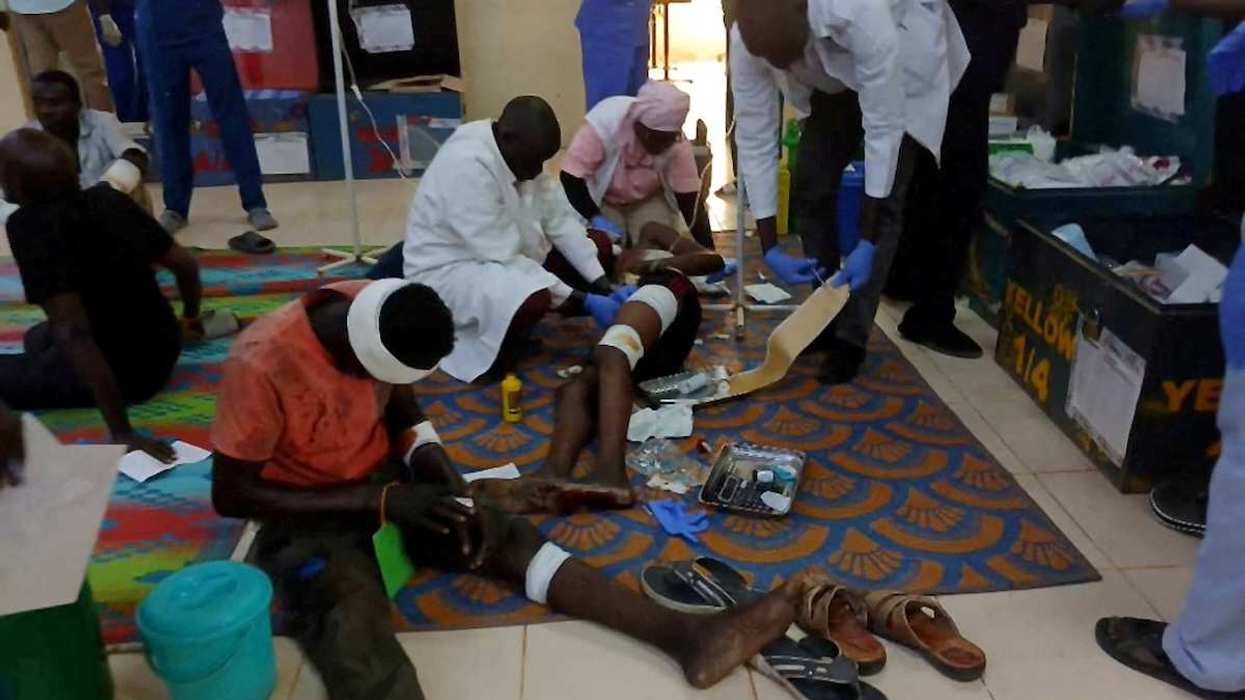
Burundi expels the WHO: Just days before Burundians head to the polls to elect a new president and parliament, the government has expelled officials from the World Health Organization (WHO) who are in that country to help steer the government's pandemic response. Burundi's government did not give a reason for the dismissal, but critics say it was a reprisal against WHO personnel who had criticized the ruling party, currently led by President Pierre Nkurunziza, for holding large political rallies in recent weeks that have been banned in most parts of Africa, and for threatening citizens who called out the government's poor response to the outbreak. This isn't the first time that Burundi's ruling party, which won the vote in 2015 in an election that many say was illegitimate, has booted out UN representatives who raise human rights concerns. Burundi's officials, for their part, point to the country's low infection rate (there are currently around 30 confirmed cases of COVID-19) as proof of their success in handling the crisis, but critics say that's only because of the country's limited testing capacity. The Africa Centers for Disease Control and Prevention, meanwhile, says that the health infrastructure in Burundi – where half the population of 11 million is food insecure – is so weak that the WHO's support and expertise are needed now more than ever.
Vaccines: who gets them? As labs around the world race to develop a coronavirus vaccine, a thorny question looms: who gets them first? It's a moral, medical, and monetary dilemma that spilled into the open this week when the head of French Pharma giant Sanofi suggested the US would get first dibs on vaccines from the company. His reasoning? Washington put up big money to fund the vaccine development, which isn't cheap. But his remarks provoked an angry response in France, with President Emmanuel Macron summoning the Sanofi boss for a meeting to ask him why les Americains should get the vaccine before, say, the French. Sanofi, the world's third largest vaccine-maker, has since walked back the idea, saying Friday that any vaccine would be available in all regions of the world at the same time. Still, the problem remains: with supplies of any vaccine sure to be extremely limited at first, what's the right criterion for whether you can get one – your passport or your wallet? Is a global rationing system possible? Tough questions with a silver lining: merely asking them will mean that a vaccine is finally close.
Haiti's border problem: Haiti and the Dominican Republic share an island and a border, but so far, their experiences of the coronavirus pandemic have been markedly different. The DR, a popular tourist destination, has suffered the worst outbreak anywhere in the Caribbean, with about 12,000 cases, while Haiti, which has grown increasingly isolated after a year of political unrest, has registered just 230. But now as 150,000 Haitian migrants working in the Dominican Republic lose their jobs (and their legal status) and are forced to return home, they risk bringing the virus with them. At the moment, around 22,000 homeward-bound Haitians are crossing the border every week. Public health experts warn that Haiti, the poorest country in the Western Hemisphere, could not handle a serious outbreak of disease. The country's decrepit health care system would reportedly need an additional 8,000 hospital beds in order to accommodate a surge in cases. Even before the coronavirus outbreak, Haiti had been rocked by a series of crises including perennial political corruption scandals, a catastrophic earthquake, and violent political protests. As coronavirus crosses the border, the challenges for the country will be immense.