Skip to content
Search

Latest Stories

News

Coronavirus Politics Daily: Polio eyes a comeback in Africa, Malawi's corona mess, America's economic bounce back

Coronavirus Politics Daily: Polio eyes a comeback in Africa, Malawi's corona mess, America's economic bounce back
Make us preferred on Google
Polio eyes a comeback in Africa: The public health impacts of COVID-19 will go far beyond the number of people that the disease kills directly, especially in developing countries that are still struggling to contain other infectious diseases at the same time. The West African nation of Niger, for example, has now become the 15th country on the continent to report a fresh outbreak of polio, as mass immunization programs against the disease are suspended due to the coronavirus pandemic. Polio was largely eradicated in industrialized countries by the 1960s, but as recently as the late 1990s, it still affected as many as 75,000 people annually in Africa. Since then, immunization has virtually eliminated wild strains of the virus on the continent, but isolated outbreaks can still occur when recently vaccinated children transmit the virus to the unvaccinated. The challenge of keeping polio in check during the coronavirus pandemic comes alongside the potential resurgence of measles. As at least 24 countries have suspended their vaccination programs against that disease due to social distancing requirements.

What will the US economy's bounce back look like? The US economy contracted at least 4.8 percent in the first quarter of this year because of coronavirus lockdowns, the US Commerce Department said Wednesday, the swiftest economic decline since the Great Recession over a decade ago. With consumer spending plunging and shuttered businesses causing mass layoffs, the US economy has likely entered a recession, analysts say. When the economy began to nosedive back in March many predicted that the economic comeback would be much faster than 2010 with businesses clamoring to reopen and quarantined consumers keen to socialize and spend again. It's now clear, however, that in the absence of a vaccine we're not going back to anything resembling "normal life" any time soon. The economic revival of the country in the near-term, therefore, is contingent on two things: how quickly a vaccine is developed – which could take 12 –18 months – as well as when the US rolls out a widespread testing program so that people who have developed immunity can reenter the workforce. While the federal government has stepped in with $2 trillion in financial aid to assist unemployed Americans and struggling businesses, this won't be enough to help mom-and-pop stores, gyms, restaurants, and cafes around the country weather the COVID storm. In sectors like retail, meanwhile, where jobs were already disappearing as shopping moved online, it's hard to imagine that giants like Macy's will rehire many of the nearly 125,000 employees furloughed when the chain closed some 750 stores in March. So, what does Q2 have in store, you ask? An economic decline of at least 30 percent – or more – economists say.

A corona mess in Malawi: The landlocked country of Malawi in southeastern Africa, where about half the population of 19 million live below the poverty line, made headlines in recent days over the constitutional clash between the courts and the government, which has been blocked from implementing a national lockdown to curb the spread of the coronavirus. A human rights group said that people would not be able to provide for their families during a lockdown, and home quarantine orders have been banned while the case is reviewed by the country's Constitutional Court. Much of the criticism directed at the government centered on the fact that it had not directed financial aid to offset the loss of income for millions who work in Malawi's agriculture and informal sectors. With help from the World Bank, the government has since set up a $37 million funding package for 1 million people (which would come to a monthly allowance of about $40), but analysts say it's unclear that the cash-strapped Malawi government can even pay for its share. In a country with limited capacity to test for COVID, weak government infrastructure and distrust between the courts and government after a contested election last year, Malawi represents a ticking time bomb scenario.



More For You

Donald Trump speaking during an address to the nation on July 16, 2026.

US President Donald Trump speaks about election security during an address to the nation from the East Room of the White House in Washington, D.C., US, July 16, 2026

SAUL LOEB/Pool via REUTERS
Trump’s election claims add to a cloud of mistrustThe US president used a primetime address last night to argue America’s election system is broken and vulnerable to “rigging.” He pointed to documents he says show Chinese interference in the 2020 vote. But the evidence Trump offered, along with past assessments from the intelligence community, [...]
Betting on Trump
Farida Dowidar
Gabriel Perez, who has worked for the president since 2016, is under fire for his prediction market wagers, allegedly using his access to the speeches to make his bets. At times, Perez reportedly backed out of bets mid-speech when Trump skipped over portions of addresses that he’d bet would be mentioned. Kalshi, the platform used, detected unusual [...]
Hunger strike in India intensifies
Farida Dowidar
Sonam Wangchuk has long campaigned for the reform of India’s corrupt and inefficient system of entrance exams for higher education. That issue is also central to the recently formed Cockroach Janata Party protest movement, led by people decades younger than Wangchuk, who is 59-years-old. In India, millions of students compete vigorously for a [...]
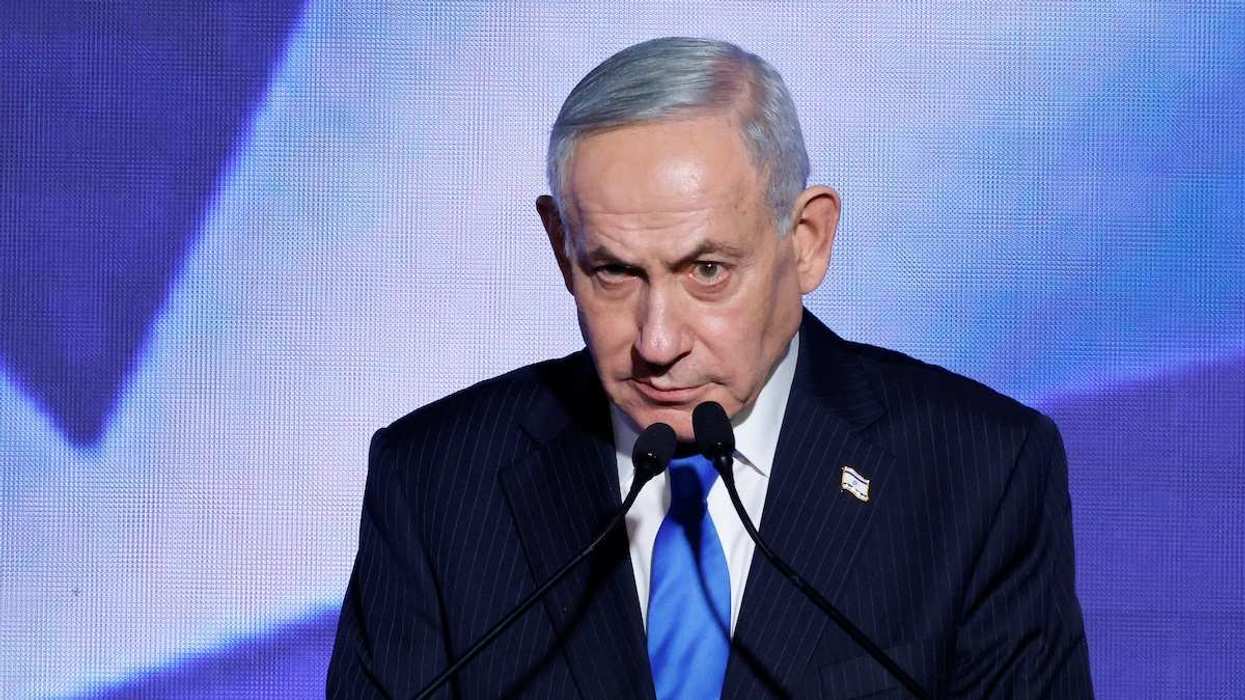
​Israeli Prime Minister Benjamin Netanyahu attends a session at the Knesset, in Jerusalem, Israel, on July 16, 2026.

Israeli Prime Minister Benjamin Netanyahu attends a session at the Knesset, Israel's parliament, before it dissolves ahead of the 2026 Israeli elections, in Jerusalem, Israel, on July 16, 2026.

REUTERS/Ronen Zvulun
It’s official: on Sunday, Israel’s parliament affirmed that the country will hold a national election on Oct. 27. It will be the first time that Israelis head to the polls since the Hamas attacks on Israel of Oct. 7, 2023, and the subsequent wars in Gaza, southern Lebanon, and Iran.The big question in this election yet again is whether Benjamin [...]