Thousands of the world's most influential people are in New York this week to attend the 77th UN General Assembly at a time of multiple related crises. It's not just Russia's war in Ukraine: inflation, food, climate, and COVID are all affecting different parts of the world in different ways.
This year, UN Secretary-General António Guterres wants to focus on rescuing the Sustainable Development Goals, or SDGs — the UN's blueprint for making the world a better place. Progress on the SDGs got derailed by the pandemic, to the point that they likely won't be achieved by the 2030 deadline.
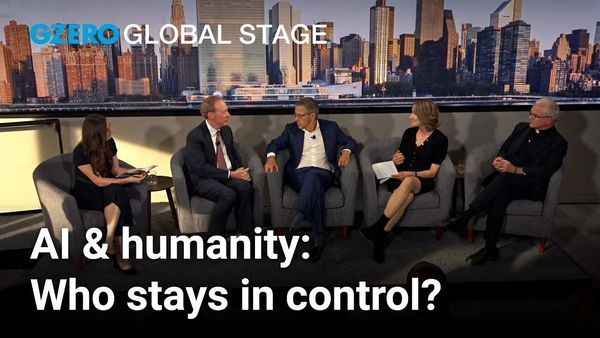
To get a sense of the scale of the problems and explore possible solutions, we brought in several experts to weigh in for a Global Stage livestream conversation "Rescuing a World in Crisis," hosted by GZERO Media in partnership with Microsoft. Here are a few highlights.
Ian Bremmer, president of Eurasia Group, shared his thoughts on why climate is the biggest factor unwinding progress on the SDGs, why Guterres is angry because the United Nations has a big platform yet no power, and why in the near term we'll see the fallout from today's crises not only at the ballot box but also via the fragmentation of societies. He sees an opportunity to rebuild the architecture of global institutions like the UN to make them more fit for purpose, although how and when will depend on the actions of bad actors like Russia, which Bremmer now puts at the same level as Iran but with nukes.
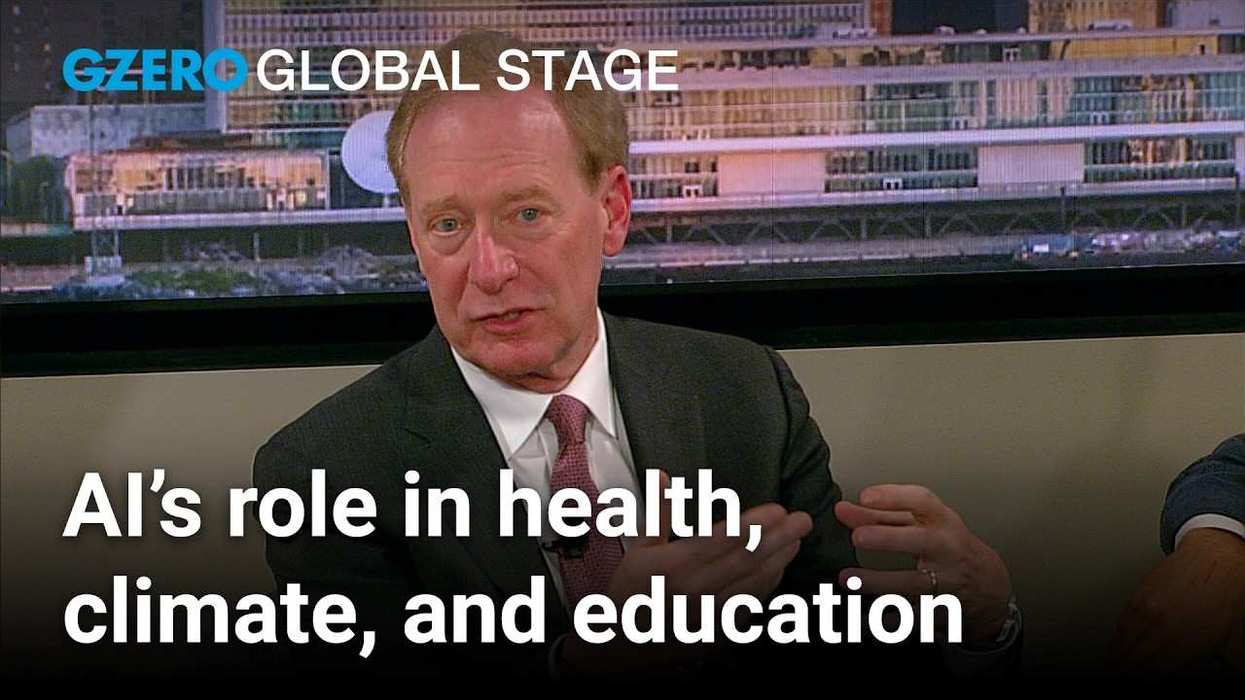
Microsoft’s president Brad Smith agreed that interlocking problems can unlock interlocking solutions on things like energy or food, thanks in no small part to technology combined with data. What's tricky, though, is deploying tech in a way that addresses inequality without furthering polarization. Smith also said that the smartest money now is investing in climate tech, and that while cyberattacks haven't gotten as bad as many feared with Russia fighting Ukraine, they've become normalized and made cyberspace a more dangerous place.
Elizabeth Cousens, president and CEO of the United Nations Foundation, called Russian aggression in Ukraine the single biggest threat to the UN Charter in more than 70 years. What's more, the global food crisis aggravated by the war has exposed the vulnerability of countries that depend too much on food imports. Cousens also panned the glaring mismatch in investment in education across the world and has a message for people who demand action from their leaders: governments only perform when their citizens demand it.
Nobel Peace Prize laureate and anti-child labor activist Kailash Satyarthi underscored how the pandemic not only pushed kids out of school but also into the workforce. COVID increased the demand for child labor around the world, which has a double negative effect: the children of poor people who lost their livelihoods have become yet another source of cheap labor, with kids taking over adult jobs. Satyarthi believes in the power of tech to help fix the problem, but he's wary of artificial intelligence replacing human compassion and the rise of child porn — yet another reason we need a global social protection system that covers kids.
Kolinda Grabar-Kitarović, former president of Croatia, drew parallels between the Russian invasion of Ukraine and the conflict she experienced in her country in the 1990s, suggesting that perhaps Bosnian Serbs might soon try to de-nazify their chunk of the Balkans. Grabar-Kitarović, who's met Vladimir Putin, believes he'd rather die than surrender despite the damage he's done to Russia and beyond, so a ceasefire is likely the best we can hope for.
- Shocks making it harder to meet Sustainable Development Goals ... ›
- How to get students back on track after the Great Education ... ›
- António Guterres exclusive interview | How a war-distracted world ... ›
- The road to 2030 - GZERO Media ›
- The Road to 2030: Getting Global Goals Back on Track ›
- 2022 has been rough. Will 2023 be any better? - GZERO Media ›
- 2022 has been rough. Will 2023 be any better? - GZERO Media ›
- Russia freezing out Ukrainian civilians because it can't beat military, says Microsoft's Brad Smith - GZERO Media ›
- Join us live from Davos on January 19th - GZERO Media ›
- Live From Davos 2023: Risks and Rewards of AI ›
- Global Stage: Global issues at the intersection of technology, politics, and society - GZERO Media ›
- On Russia’s reckoning, China’s vulnerability & US democracy’s Dunkirk - GZERO Media ›
- Climate disinformation back to denying it exists, says UN's Melissa Fleming - GZERO Media ›
- AI at the tipping point: danger to information, promise for creativity - GZERO Media ›