If Canada’s provinces weren’t squabbling with the federal government, it wouldn’t be Canada. But lately, these tensions seem to be cropping up more forcefully at every turn, and they couldn’t come at a worse time.
The Alberta factor
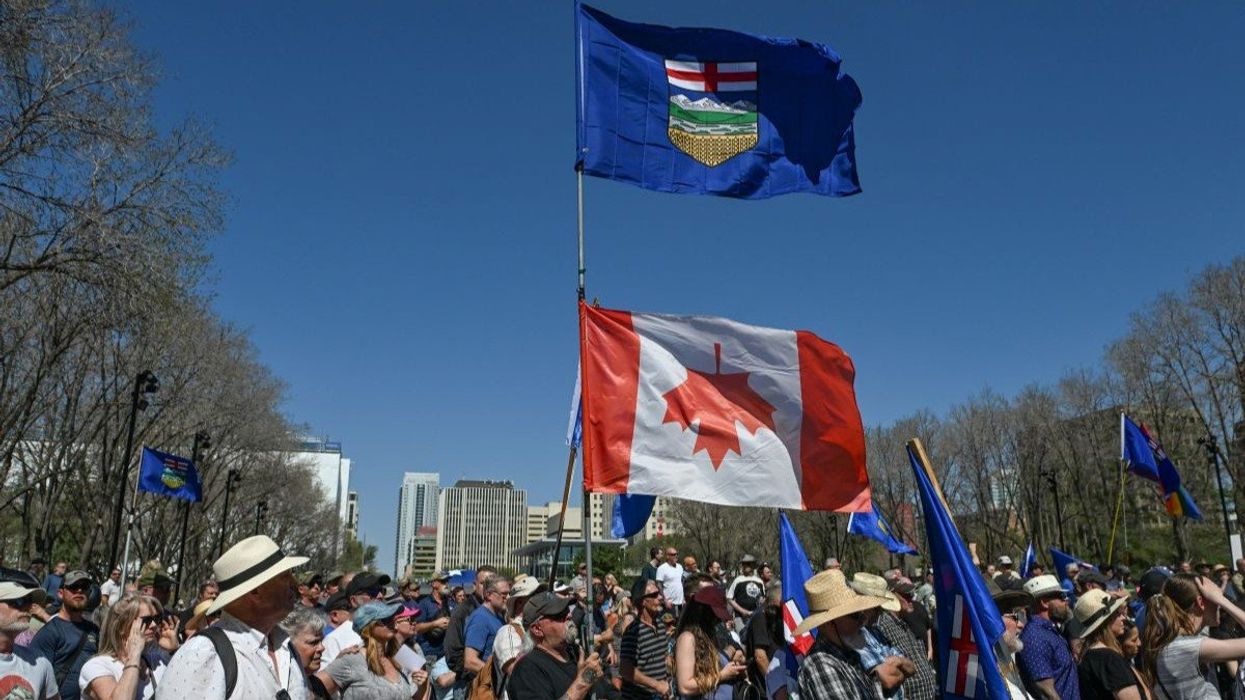
In recent weeks, Alberta Premier Danielle Smith has launched an effort to take half the money in the Canada Pension Plan and set up a separate, Alberta-only pension scheme. The feds, unsurprisingly, say “no way” and have warned of significant economic pain if the province splits from the national plan.
At the same time, energy-rich Alberta is threatening to use a legal loophole to ignore proposed nationwide clean electricity regulations that are part of Canada’s pledge to have a carbon-neutral grid by 2035.
Albertan grievances with the federal government are nothing new, of course. Albertans, whose natural resource wealth contributes significantly to Canada’s GDP, have always felt a little taken for granted. And now, with climate policy hitting at the heart of their economy and culture, they are in a particularly plucky mood to fight back.
But it’s not just the Albertans. As the struggle over pensions and electricity regulations plays out in the West, provinces across the country are fighting with Ottawa over carbon pricing.
Since 2019, Canada has had a federally mandated price on carbon for any provinces that don’t have their own local emissions taxes. It is one of the government’s signature climate policies. But now, with inflation high and his political fortunes in question, Prime Minister Justin Trudeau is suspending the carbon tax on home heating oil for three years in a bid to give consumers a break.
It just so happens that home heating oil is used primarily in Atlantic Canada, where the Liberals are doing particularly badly in the polls. Now, some other provinces want carve-outs for the fuels that they use too.
In the federal Parliament, Conservative leader Pierre Poilievre leveraged the broader provincial outrage over the carbon tax carve-outs to pitch a motion of his own to exempt all home heating from the tax, but the Liberals defeated it with help from the Bloc Quebecois.
Meanwhile, the premier of Saskatchewan, Scott Moe, says SaskEnergy, the provincial-owned natural gas provider, won’t collect the carbon tax on natural gas home heating at all for the federal government. That set up a direct legal challenge to the feds’ tax authority.
Even the deepening housing crisis isn’t immune from conflict between the premiers and the prime minister. In a meeting on Tuesday, provincial heads blasted the federal government’s approach of bypassing provincial governments to cut housing construction deals directly with municipalities. One premier is even considering a law to prevent the feds from making the local bilateral deals at all.
An old challenge looms. As if all of this wasn’t enough of a problem, the mother of all federal-provincial tensions is quietly stirring again. A recent poll found support for Quebec separation rising several points to 38%, a jump from the 32% support it enjoyed in 2020. One cause of the uptick could be misgivings about immigration – some Quebec nationalists say the feds are preventing the province from attracting enough French speakers to preserve the dominance of the French language there. Meanwhile, a Quebec plan to increase university tuition costs for out-of-province students, also aimed at shoring up Francophone dominance, has sparked fresh protests.
All of this couldn’t come at a worse time. The federal government is trying to tackle overarching challenges like climate change, healthcare, and housing that require comprehensive approaches. But with the Liberal government trailing in the polls by double digits, provinces may smell blood in the water and believe now is the time to strike for concessions.
Unfortunately, the people who suffer most are ordinary Canadians. Struggling with high costs for housing and health care, and worried about climate change, they’re less interested in jurisdictional squabbles than they are in practical solutions to real problems.