As summer settles in, political parties on both sides of the border find themselves in election mode — with November’s US presidential election and Canada’s federal election by October 2025. While elections in Canada can be triggered early, the governing Liberals and Prime Minister Justin Trudeau are not keen to meet voters anytime soon.
Meanwhile, as much as Trudeau confirms and reconfirms his intention to remain as leader, there’s plenty of speculation about whether he’ll stick around. Both Trudeau and Joe Biden are unpopular. Biden’s disapproval rating is hovering around 56%, with only 38.4% approving of his job performance, but his place on the ticket isn’t in doubt.
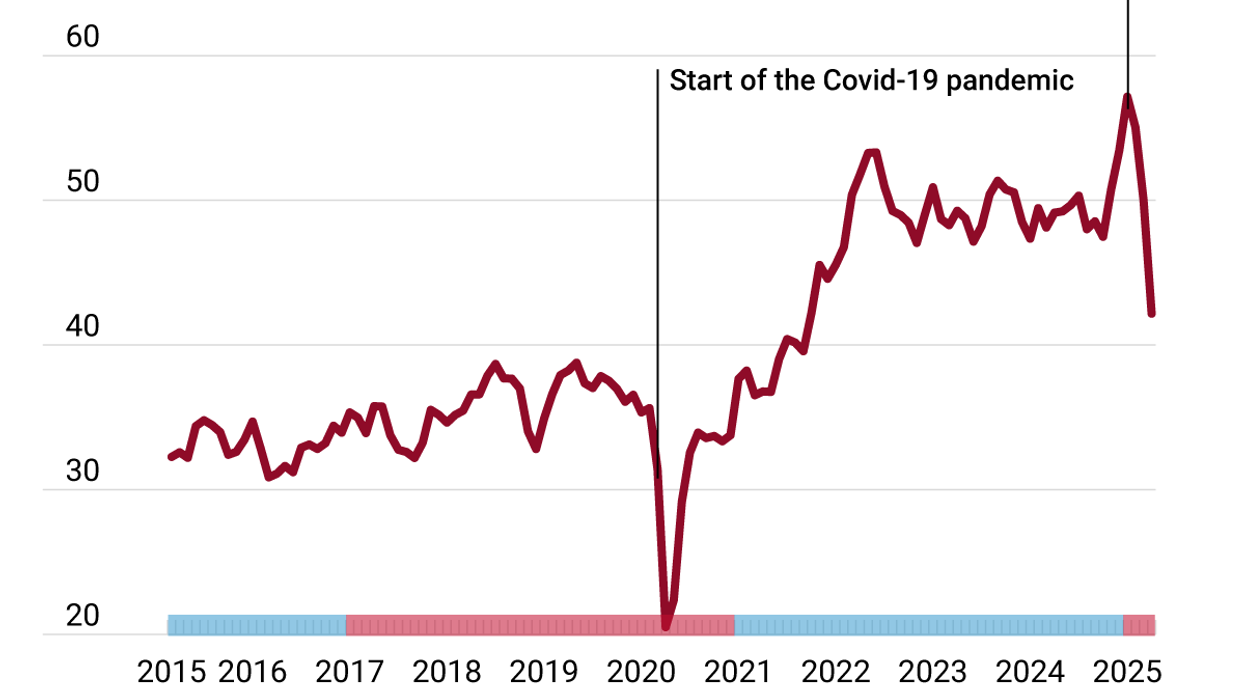
Trudeau’s place, on the other hand, very much is. His latest approval data from April confirms a downward trend that stretches back to 2020. Two months ago, a mere 28% of Canadians approved of him, while 66% disapproved. Just days ago, a poll put the Conservatives 20 points ahead of the Liberals as support for Trudeau’s party remains stuck in the 20s. That same poll found 59% of Canadians hold a negative opinion of Trudeau compared to 33% who have a positive opinion.
On Wednesday, another poll, this one by Ipsos, found 68% of Canadians want Trudeau to go. The polling firm’s CEO, Darrell Bricker, told Global News, “This is as bad as we’ve seen it for Trudeau. It’s close to rock bottom.”
Trudeau looks to make modern history
Trudeau is vying for his fourth election win in a row — a feat no prime minister has managed since Wilfried Laurier did it in 1908. Others have tried, including Trudeau’s father, who came close, but Canadians tend to grow weary of a leader by the time a fourth election rolls around.
On Monday, Trudeau dismissed the polls and his approval rating, telling the CBC’s David Cochrane that voters aren’t in “decision mode” right now. “What you tell a pollster, if they ever manage to reach you, is very different from the choice Canadians end up making in an election campaign,” he said.
Some voters are in decision mode, though. Next week features a byelection in Toronto–St. Paul's, a Liberal stronghold since 1993. An upset is unlikely, but all the Conservatives need is a strong showing, and there’s speculation that this contest – for one of 338 parliamentary seats — could have an outsized effect on the Canadian political scene as a referendum on the future of the government and Trudeau.
But would the Liberals be better off without the man who led them back from the edge of oblivion and into power with a majority government in 2015? For months, pollsters, pundits, social media posters, and plenty of others have speculated about who could replace Trudeau on the ticket, and how they’d fare.
Post-Trudeau options
In May, pollster David Colletto of Abacus Data discussed his firm’s data on preferred Trudeau replacements. Of those polled, 54% were unsure who could best replace him, while 13% preferred Finance Minister Chyrstia Freeland, and 11% favored of former Bank of Canada and Bank of England Governor Mark Carney. Behind them came Foreign Minister Mélanie Joly and Industry Minister Franćois-Philippe Champagne at 5% each. Both Joly and Champagne, incidentally, would likely be poised to perform best in Quebec, an essential province for the Liberals.
It’s hard to think of a Trudeau replacement taking the reins ahead of the next election without thinking about the early 1990s, when the late Progressive Conservative Prime Minister Brian Mulroney was tanking in the polls and stepped aside, appointing Kim Campbell in his place. She was put in a tough spot, and in the 1993 election, Campbell and her party went from 154 seats to 2, dropping from first to fifth place in Parliament. Conservatives didn’t win a federal election again until a united right managed a minority government under Stephen Harper in 2008.
In June, a Nanos poll found the Liberals would fare better in 2025 with Trudeau out of the picture, with 56% favoring a replacement and a mere 17% supporting the prime minister.
The case for going down with the ship
The numbers suggest that the Liberals would be electorally better off without Trudeau, but could an immediate successor do much better? Trudeau is a strong campaigner, and Canadians could very well transfer their anger and frustrations from Trudeau to his replacement – like they did with Campbell. After a brief improvement in their numbers when Campbell was appointed, the PCs crashed back down to earth. Hard.
That ended Campbell’s career. Should the Liberals take a similar path, they could end up sacrificing one of their rising stars in the same way. Alternatively, should Trudeau stay, there’s a small chance that he pulls off another win. Others have made comebacks in Canadian politics, including Ontario Premier Kathleen Wynne in 2014 and British Columbia Premier Christy Clark in 2013.
If Trudeau stays on and loses, the party might still come out better in the long run. The Liberals would get a fresh start with a new leader and a few years to sort themselves out while the country takes a turn getting tired of another party.
Graeme Thompson, a senior analyst with Eurasia Group's global macro-geopolitics practice, agrees. “A successor usually struggles to turn the ship around, and they often don’t get a second chance,” he says.
“There is logic to the idea that Trudeau should go down with the ship in order to give his successor a full parliament to put their own stamp on the party and begin to rebuild its policy and organizational capacity,” Thompson adds.
In this way, Trudeau is both the party’s “biggest liability and their best shot to limit the damage in the upcoming campaign,” says Thompson.
Are the Liberals counting on a Trump card?
While a comeback for the Liberals is a long shot, the cynical talk around Ottawa is of an aptly named Trump card. The reasoning: A Donald Trump win in the US would galvanize progressives in Canada, bolstering Liberal support and making it easier for the party to paint Trudeau’s opponent, Conservative Party leader Pierre Poilievre, as Maple Trump.
Linking Trump and Poilievre will not be that easy, says Thompson. Canada’s Conservatives are pushing back against the effort, he explains, by staying focused on economic messaging and distancing themselves from the Republican nominee.
There’s also a risk the plan is “too clever by half” and backfires, he argues.
“It’s always possible that voters conclude that the Tories would be better positioned to handle relations with a Trump 2.0 administration,” Thompson says.
So, should Trudeau stay, or should he go? Please share your thoughts with us here.