Following the largest cut in oil production — 2 million barrels per day — since the beginning of the pandemic by the Saudi-led OPEC+ oil cartel (which includes Russia), the Biden administration finds itself on a war footing about how to deal with Riyadh.
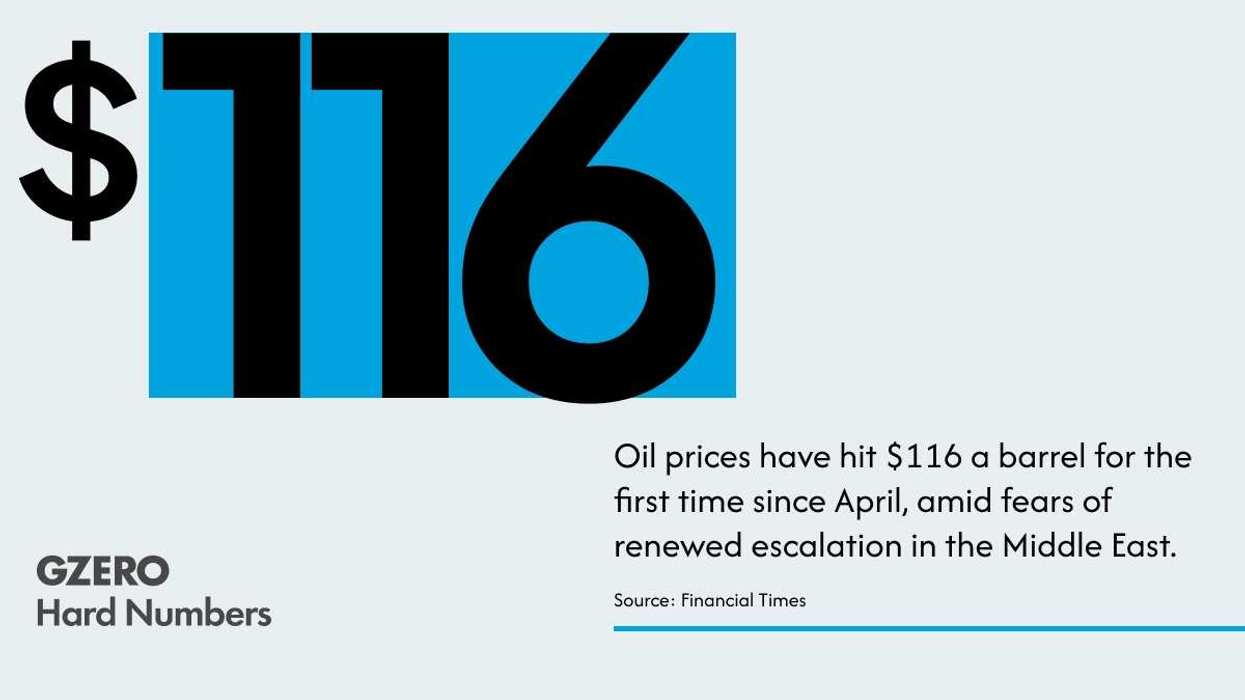
Not heeding American pleas to increase output — and instead triggering an increase in oil prices just before the midterm elections — is being seen in Washington as an attempt by Saudi Crown Prince Mohammed bin Salman to influence US politics to the advantage of Republicans. It’s also being kicked up as a clear pro-Putin move by some members of Congress, who have started to push legislation that would enable the White House to deal forcefully with the Saudis.
Remember, President Joe Biden burnt a lot of political capital in the summer with his tour of Saudi Arabia — fist-bumping-for-oil-pumping was the intention, kind of. Clearly, by the president’s own admission, those measures have fallen short.
With gas prices spiking, Republicans blaming the White House and Democrats pushing for action, how will the administration respond? Besides a host of maneuvers (limiting energy exports, tapping into the already almost-tapped out Strategic Petroleum Reserve, easing sanctions on oil-producing bad actors), the Biden administration has at least three choices provided by Congress to move against the Saudis and/or OPEC+.
First, the NOPEC vs OPEC option: The NOPEC (No Oil Producing and Exporting Cartels Bill) bill would empower the US Justice Department to sue oil cartels for antitrust violations in oil and gas products. The premise would be prosecuting price-fixing under the Sherman Act, and consequences could include seizing foreign-owned property to pay for damages.
Until recently, the White House had been careful not to take up this option, but has now hinted that it’s now working on it with Congress — where the legislation has enjoyed bipartisan support for years.
Next, the OPEC Accountability Act [aka the ‘See You In Court’ Act]: Reintroduced last week on the same day as the OPEC+ announcement, this bill would require the US president to initiate consultations with OPEC countries; if these do not succeed in “ending collusion on oil production and market manipulation,” the legislation instructs the US Trade Representative to initiate dispute proceedings at the World Trade Organization, which would take the US versus OPEC+ war into the bureaucratic but hectic machine of international law.
Then, the [aptly named] Strained Partnership Act: Also tabled last week by Democrats who term Saudi actions as a hostile move that hurts American consumers, the bill focuses on the US pulling out its approximately 3,000 troops in Saudi Arabia and 2,000 in the UAE, including Patriot missile batteries and the THAAD air defense system based there, within 90 days.
Unclear about where in the Middle East to relocate these assets, the proposed legislation isn't novel either: its Democrat authors say Republicans used similar legislation under former President Donald Trump to stare the Saudis down in 2020 — but that was to decrease production, not increase it. In any case, the bill acknowledges the difficulty of moving troops around “to the extent practicable.” Also, Congress is out of session until the election.
However, Washington’s defense ties with Riyadh have become very unpopular with Americans. A new Eurasia Group Foundation survey says that more than two-thirds of both Democratic and Republican and Democratic voters oppose continued US arms sales to Saudi Arabia.
While the US is the world’s largest arms exporter, Saudi Arabia is the world’s second-largest importer. The kingdom is also the No. 1 importer of American weapons, accounting for 23% of all US exports from 2017-2021. But America’s biggest arms customer is also its most controversial buyer.
The tilt within Biden's own party is clearly against selling weapons to the Saudis: nearly three-quarters of Democrats opposed arms sales to Riyadh, compared to 62% of Republicans, according to the survey.
Why? First, Saudi Arabia’s track record of domestic oppression and human rights abuses. Second, the kingdom’s use of US-provided weapons in the war in Yemen.
Collusion on oil prices wasn’t one of the top reasons — but it could be now. The study also notes that while Biden announced early in his administration an intent to end the sale of offensive weapons used in Saudi Arabia’s war in Yemen, he’s reportedly still reevaluating this decision.
In the desert, reality bites the dust. The US has a host of measures it can take to retaliate if it wants to, including limiting arms. But none of these are likely to alter Saudi decision-making or deter Riyadh from taking similar decisions on oil in the future, even if this means being at odds with Washington, says Raad Alkadiri, Eurasia Group’s managing director for Energy, Climate & Resources.
“This is the latest sign of a strategic schism in the alliance that has been building for some years,” he explains. “Saudi and US interests are diverging, with Riyadh increasingly questioning the credibility of the US security guarantee and putting its own financial and economic priorities ahead of Washington’s desire for lower oil prices.”
While the Saudi oil-price floor no longer overlaps with the US oil-price ceiling, at least for the moment, and with both sides focused on immediate political and economic priorities, Alkadiri says that the room for compromise has shrunk.
Clearly, Saudi Arabia under MBS is acting more independently than it has done in the past, and much like the UAE, is looking east to secure its economic future.
“The erosion of the alliance with Washington is the result, and it is giving full voice to anti-Saudi sentiment that has long percolated just under the surface in Congress, and in this White House as well,” says Alkadiri.
Is this going to be the pattern for the future? For Alkadiri, “we are witnessing a particularly fraught moment in US-Saudi ties, largely because Riyadh’s oil move risks damaging the Biden administration’s — and the Democratic Party’s — political interests at home. It has led to a lot of mud-slinging at the Saudi leadership.”
“Anger in Washington,” he adds, “will probably die down a bit over time, but the strategic differences that will shape the relationship moving forward have been exposed in the full light of day.”
What about the Saudi take? American officials, the Saudis say, "tried to position it as 'us versus Russia,'" pushing them into a corner where they needed to make a call. That didn’t work, and the Saudis pushed back with their own advice for the US: pump more of your own oil, and fix your refineries.
Riyadh also raised reservations about the lack of details from the US about the price cap plans on Russian oil. In the end, it came down to priorities, with the Saudis dropping diplomatic niceties.
"We are concerned first and foremost with the interests of the Kingdom of Saudi Arabia and then the interests of the countries that trusted us and are members of OPEC and the OPEC+ alliance," the Saudi energy minister said on the day of the announcement.
Bottom of the oil barrel: The tense dynamics of the Washington-Riyadh dyad, compounded by the ascent of MBS – who is now PM, a privilege that his lawyers argue provides him immunity from being tried in the US for the murder of journalist Jamal Khashoggi – suggest bilateral ties will be determined much more by “immediate imperative rather than strategic coordination,” says Alkadiri. We have moved beyond the US-Saudi relationship of old into a repositioning that could be “more competitive and confrontational.”This article comes to you from the Signal newsletter team of GZERO Media. Sign up today.