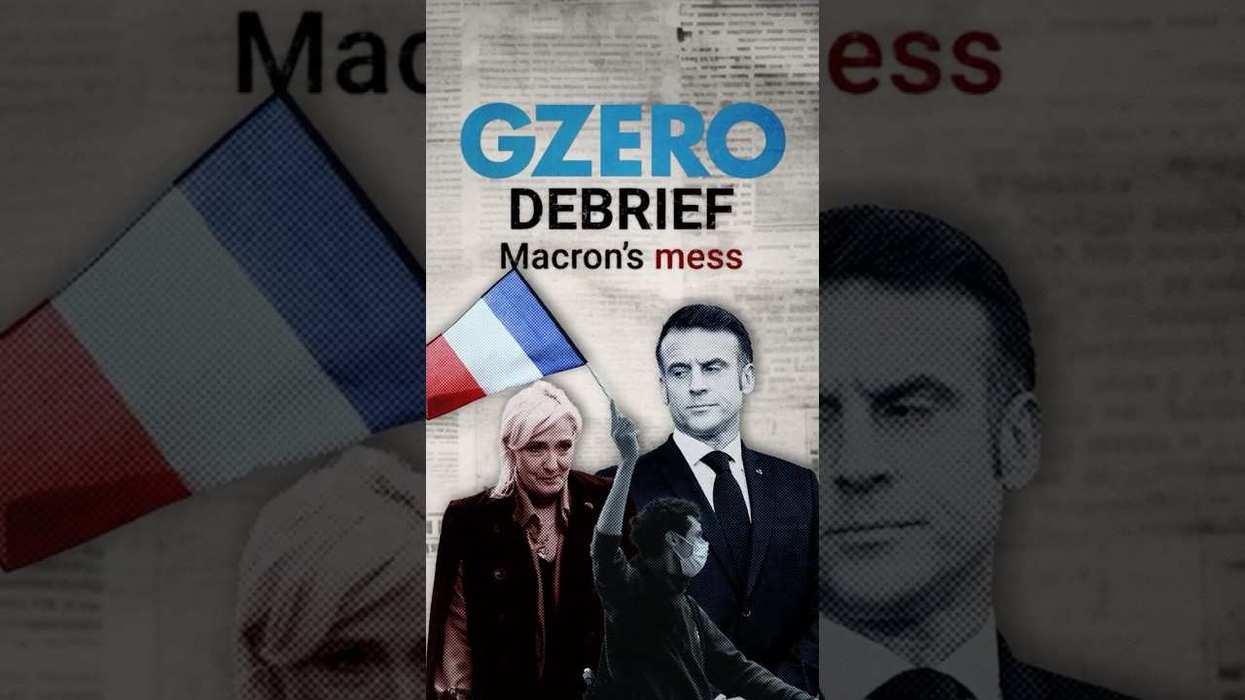
Emmanuel Macron is in the news again, and this time it’s not because he’s trying to get French people to work longer.
France’s president set off a firestorm last week after he said Europe should stay out of any conflict between the United States and China over Taiwan and called for Europe to lessen its dependence on the US … at the same time as he was in Beijing trying to increase Europe's dependence on China.
Much like German Chancellor Olaf Scholz’s trip to China a few months ago, the purpose of Macron’s three-day visit was two-fold: (1) to urge Chinese President Xi Jinping to help end the war in Ukraine and (2) to deepen commercial ties between Europe and China. Business as usual for a European leader these days.
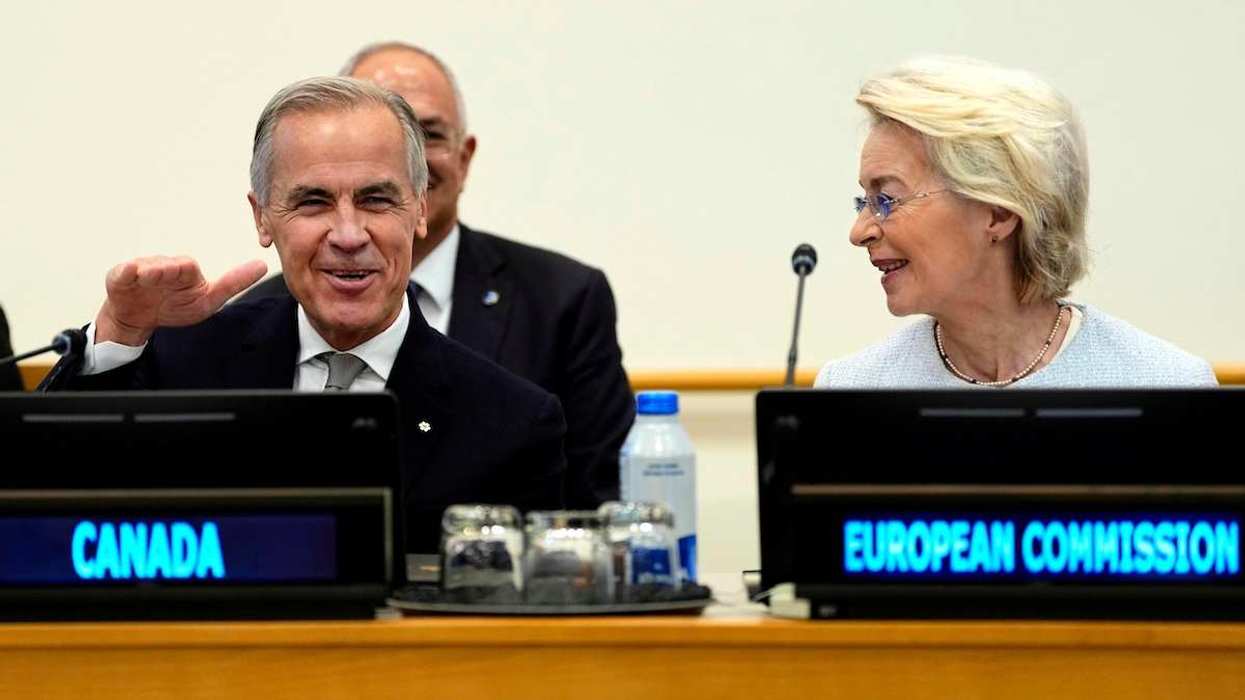
Macron’s delegation included Ursula von der Leyen, the president of the European Commission, as well as some 50 business leaders. Xi rolled out the red carpet for the French leader (not so for von der Leyen), complete with a state banquet, a military parade, and a mob of cheering students.
Everything was going swimmingly … until Macron opened his mouth.
“We don’t want to get involved in a bloc vs. bloc logic,” he stated to reporters from Les Echos and Politico aboard a flight between Beijing and Guangzhou. Rather than become a “vassal” of the US, he said, Europe should aim to become a “third superpower” independent of both Beijing and Washington, warning Europeans against getting “caught up in crises that are not ours” such as Taiwan.
Much like his repeated attempts to engage Vladimir Putin riled many in the US and Ukraine, these comments prompted sharp criticism on both sides of the Atlantic.
For starters, openly complaining about excessive dependence on the US and claiming cross-strait stability isn’t a core European interest when Europe relies so heavily on America to address crises like Ukraine, which concerns Europe much more than the US, is hypocritical. As India’s foreign minister said last year: "Europe has to grow out of the mindset that Europe’s problems are the world’s problems but the world’s problems are not Europe’s problems."
To be blunt, if it weren’t for US leadership, intelligence, and weapons, the Russians would be sipping tea in Lviv. Should Europe be powerful enough to stand up to Russia and compete with China on its own? Absolutely. But the “strategic autonomy” Macron has strived for since 2017 can’t simply be talked into existence. It must be earned in the physical world through costly policy changes Europe doesn’t seem able or willing to push through.
Moreover, saying that Europeans should avoid falling in with “the US agenda and a Chinese overreaction” on Taiwan presumes the US will be the aggressor while China will simply be reacting. In reality, a conflict over Taiwan would more likely be precipitated by Beijing’s more aggressive actions to change the island’s status quo by force, against the wishes of the Taiwanese people (who don’t seem to possess any agency in Macron’s worldview).
I can’t imagine any other G7 leader acting the way Macron did, especially in today’s geopolitical environment. The timing couldn’t have been worse, happening just as Beijing was launching military exercises off Taiwan in response to President Tsai Ing-wen’s meeting with House Speaker Kevin McCarthy in California just days earlier.
And for what? He handed Xi a PR win, failed to extract any concessions or promises on Ukraine, undermined intra-European and trans-Atlantic unity on China, gave fodder to American isolationists like Donald Trump and Sen. Josh Hawley, and weakened Western deterrence of Chinese aggression against Taiwan. But at least we're not talking about his pension reform.
All this is not to say France, an important NATO ally, nuclear power, and permanent UN Security Council member, doesn’t have every right – and plenty of reasons – to express concerns about US leadership. The Biden administration’s handling of the AUKUS submarine snub was an embarrassment and did lasting damage to the bilateral relationship. Trump’s “America First” treatment of US allies no doubt scarred the Elysée Palace, too, sowing the initial seeds of mistrust and prompting Macron to seek out alternatives to a “brain dead” NATO.
But you’d think that Washington’s muscular response to the Russian invasion, which by Macron’s own admission was an “electroshock” for the trans-Atlantic alliance, would have assuaged his fears. Think again. Partly, that’s a logical response to the prospect of another Trump presidency. But in part it’s structural, born of a deep-seated ambivalence toward the US and ambition to be a geopolitical “balancing power” that has characterized French foreign policy since Charles de Gaulle. Plus ça change …
The point is that France should air its grievances – however legitimate – with the United States and fellow allies. Even if he said nothing new, Macron voicing them publicly while in China, given the asymmetry of the US-France relationship, the intensifying strategic competition between Washington and Beijing, and America’s outsized role in Ukraine’s defense, reflects poor judgment.
Whether it leads to a broader rift in the trans-Atlantic alliance is an open question, but two things are clear from this episode.
First, while there is near-total alignment between the US and its allies on the need to decouple economically from Russia, the same cannot be said about decoupling from China. As Beijing has long suspected, economic diplomacy can be a pretty effective way to buy off at least some of Washington’s friends.
Second, China is decisively leaning into the role of global peacemaker, and it is finding lots of takers. Coming on the back of the proposed 12-point framework for peace in Ukraine and the Beijing-brokered détente between the hitherto irreconcilable Iran and Saudi Arabia, the momentum of its diplomatic push is undeniable.
Xi’s got to be feeling pretty good about himself these days.