After the Turkey's done, it's a Thanksgiving tradition for two people at the dinner table to grab hold of the y-shaped “wishbone" of the Turkey, silently make wishes, and then pull it apart – whoever gets the bigger piece of bone gets what they want. Here are three groups of world leaders who'd make nice pairs when it's time to make a wish…
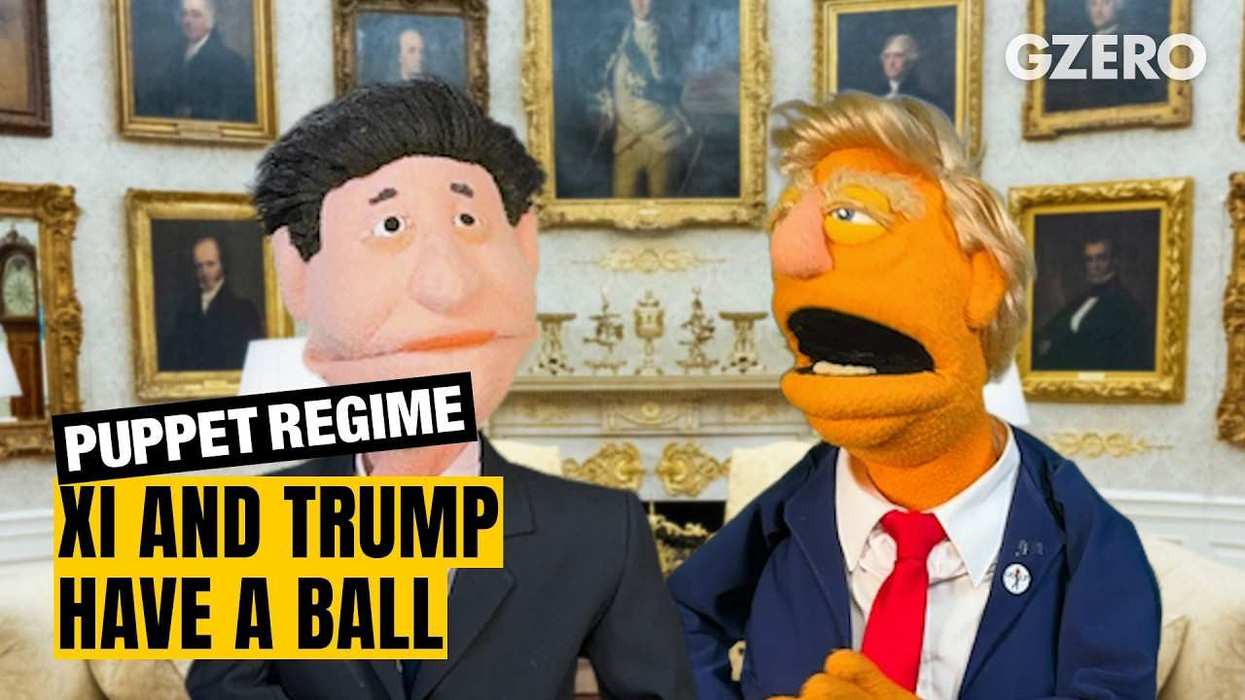
DONALD TRUMP AND XI JINPING
Trump's wish: “The president of China, who is greatly respected by me, will agree to cut support for China's flagship economic development project, Made in China 2025."
Xi's Wish: “Mr. Trump is more vulnerable politically to a trade war, so let's run out the clock until he is gone and then deal with a more predictable successor."
China and the US clashed during last weekend's APEC summit of Asia-Pacific powers in Papua New Guinea – with US President Mike Pence warning countries not to embrace Beijing's commercial overtures, while China's President Xi Jinping floated the dangers of conflict between the world's two largest economies. Mr. Trump and Mr. Xi will meet later this month on the sidelines of the G-20 summit in Argentina, and the prospect of tamping down tensions look bleak.
The dispute is narrowly about trade and industrial policy – Trump wants Beijing to stop unfairly supporting Chinese firms while throwing up huge barriers to entry for American ones, and the Chinese want to preserve a wildly successful state-centric economic model that they now hope can catapult them to technological dominance. But it's also taken on an existential hue for both sides: the US increasingly sees China as a competitor, while Beijing bristles at the sense that America is trying to prevent China from assuming its rightful place as a global commercial and technological power.
JAIR BOLSONARO AND ANDRES MANUEL LOPEZ OBRADOR
Bolsonaro's wish: “Right side of the wishbone."
Lopez Obrador's wish: “Left side of the wishbone."
Both Jair Bolsonaro, the rightwing president-elect of Brazil, and his leftwing Mexican counterpart Andres Manuel Lopez Obrador, won elections by promising to make radical changes in countries plagued by violence and inequality. They share an almost messianic appeal among their supporters, and both have a strong nationalist streak. But the similarities end there.
Bolsonaro, who has spoken nostalgically of Brazil's military dictatorship, wants to solve Brazil's problems through a combination of business-friendly reforms and radically conservative social and security policies. Lopez Obrador, who idolizes the early Mexican revolutionaries and leftwing strongmen who ruled his native Tabasco State in the 1930s, wants to increase the government's role in the economy and has placed an amnesty proposal at the heart of his plans to deal with an epidemic of narco-violence.
Beyond their countries' borders, they also differ: Bolsonaro has outlined a Trump-friendly foreign policy that takes direct aim at the region's leftwing governments, particularly Venezuela and Cuba. Lopez Obrador, for his part, has invited Venezuelan President Nicolas Maduro to his inauguration, and he sees himself as a force for the renewal of a Latin American left tarnished by the recent debacles in Venezuela and Brazil. Watch this space closely: Latin America's two largest economies now have starkly different national and regional visions.
ANGELA MERKEL AND EMMANUEL MACRON
Macron's wish: “Money everyone can use."
Merkel's wish: “Money that everyone can use unless Germans are on the hook for it."
Both French President Emmanuel Macron and German Chancellor Angela Merkel believe that integrating the European Union further is the only way to head off the challenges of populist nationalism both on the continent (Hungary, Poland, Italy) and outside it (“America First"). On the economic front, an important part of that vision is Macron's proposal to create a common budget fund that can be used to help out eurozone members who run into economic or financial troubles.
Merkel has agreed to such a thing in principle, true. But big hurdles remain in implementing such a plan: most importantly, disagreement over its purpose. Macron sees the fund as a kind of rapid response tool, offering direct budgetary support for countries facing economic crises. But Merkel and the leaders of other fiscally fastidious Northern European countries wonder that would simply leave them on the hook for other countries' poor choices.