Skip to content
Search

Latest Stories

News

HUNDRED YEAR QUESTIONS FOR EUROPE

HUNDRED YEAR QUESTIONS FOR EUROPE

Over the weekend, two very different centennial celebrations took place in Europe, each highlighting a huge challenge facing the European Union.

In France, dozens of world leaders gathered in and around Paris to commemorate the armistice that ended World War I. There, French President Emmanuel Macron embraced German Chancellor Angela Merkel in a moving gesture of once-improbable historical reconciliation and warned about the dangers of resurgent nationalism. Macron's words were an implicit rebuke to the America First policy of US President Donald Trump who, for his part, did not attend some parts of the weekend's events and sat impassively as Macron spoke.


Meanwhile, across Europe in Poland, some 250,000 people took part in a march through the capital, Warsaw, to mark 100 years of the country's modern independence. The event, tied to far-right organizations, was controversial from the start. After previous Independence Day marches attracted sizable contingents of right-wing extremists and racist groups, Warsaw's liberal city government sought unsuccessfully to ban the event this year. The right-wing Law and Justice party, which governs Poland and has recently clashed with the EU over democratic norms and rules, sponsored its own march along the same route.

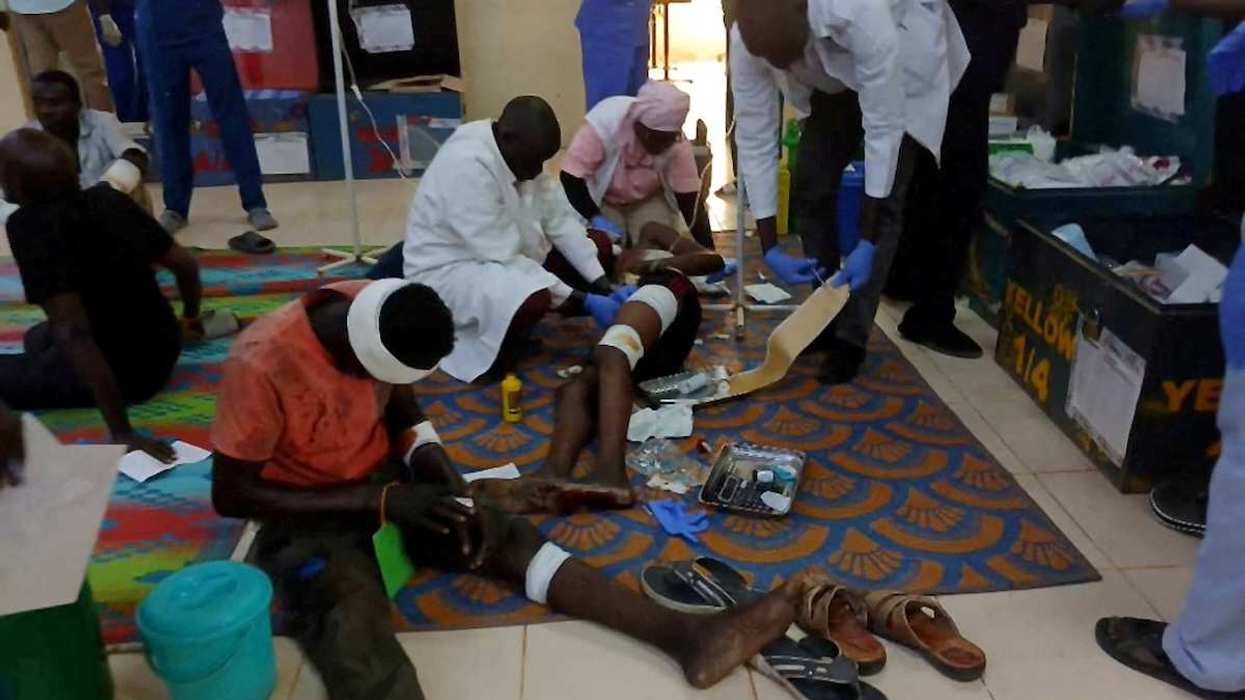
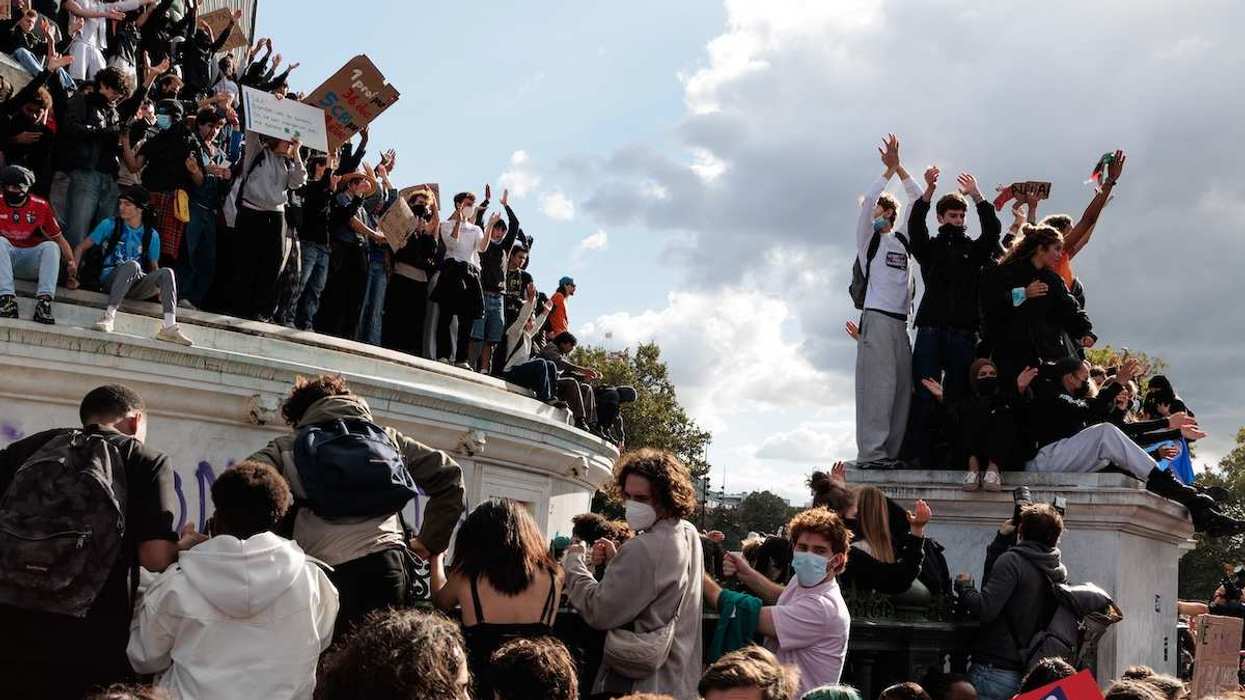
In the end, both marches went ahead, with government officials heading an official procession of people chanting patriotic slogans and waving Polish flags, followed by a smaller number of nationalists and far-right extremists setting off flares, chanting extremist slogans, and waving the flags of banned interwar fascist groups (see the photo above, sent to us from the front by filmmakers Mike Tucker and Petra Epperlein).

Taken together, Paris and Warsaw highlight the daunting challenges facing the European Union in the twenty-first century.

In Paris, the tensions with Mr. Trump, and his aloofness from the festivities, nicely encapsulate the EU's main external challenge: like it or not, the continent can no longer depend on the United States as fully and firmly as it once did. President Trump has raised hard questions about the wisdom and benefits of the US continuing to guarantee European security and underpin the conditions for the continent's prosperity.

Meanwhile, in Warsaw, the primary internal challenge for the EU was on full display: a resurgent nationalism that chafes against the rules and shared values of the 28-member bloc. It's no accident that nationalists marching in Warsaw were joined by like-minded groups from Italy and Hungary.

Can pro-EU leaders like Mr. Macron and (during her limited time left in office) Ms. Merkel meet these twin challenges? Or will the EU eventually collapse under their combined weight? As the history commemorated in Paris reminds us: there is nothing inevitable about a Europe that is increasingly integrated, peaceful, and free.

More For You

French President Emmanuel Macron, German Chancellor Friedrich Merz, Ukrainian President Volodymyr Zelenskiy, U.S. Special Envoy Steve Witkoff and businessman Jared Kushner, along with NATO Secretary-General Mark Rutte and otherEuropean leaders, pose for a group photo at the Chancellery in Berlin, Germany, December 15, 2025.

French President Emmanuel Macron, German Chancellor Friedrich Merz, Ukrainian President Volodymyr Zelenskiy, U.S. Special Envoy Steve Witkoff and businessman Jared Kushner, along with NATO Secretary-General Mark Rutte and otherEuropean leaders, pose for a group photo at the Chancellery in Berlin, Germany, December 15, 2025.

Kay Nietfeld/Pool via REUTERS
The European Union just pulled off something that, a year ago, seemed politically impossible: it froze $247 billion in Russian central bank assets indefinitely, stripping the Kremlin of one of its most reliable pressure points. No more six-month renewal cycles. No more Hungarian vetoes. The money stays locked up, full stop.Turns out that was the [...]
Most quotable moments of 2025 | GZERO World with ian bremmer
Big global stories. Real conversations with world leaders. Our award-winning global affairs show, GZERO World with Ian Bremmer, goes beyond the headlines on the stories that matter most. Here’s a look back at the 10 most quotable moments from this year’s episodes.Don’t miss an episode in 2026!GZERO World with Ian Bremmer airs nationwide on US [...]
Mercosur free trade agreement, in Strasbourg, France, December 17, 2025.

A police officer walks past tractors parked in front of the European Parliament as French farmers protest against government measures, including the culling of entire cattle herds, aimed at containing an outbreak of lumpy skin disease among livestock in France, and the EU-Mercosur free trade agreement, in Strasbourg, France, December 17, 2025.

REUTERS/Layli Foroudi
EU-Mercosur trade deal is on the chopping blockThe trade deal between the European Union and South America’s Mercosur bloc is on the chopping block, facing an end-of-year deadline to be approved or shelved until 2028. The agreement would remove duties on over 90% of exports between the two trade unions, alarming European farmers who worry about [...]
People gather outside the Tom Bradley International Terminal at Los Angeles International Airport to decry President Trump's travel ban on 19 countries which went into effect this morning.​

People gather outside the Tom Bradley International Terminal at Los Angeles International Airport to decry President Trump's travel ban on 19 countries which went into effect this morning.

5: US President Donald Trump added five new countries – Burkina Faso, Mali, Niger, South Sudan, and Syria – to the list of nations banned from traveling to the US. The US will also reject people with travel documents issued by the Palestinian Authority. Fifteen other countries also face partial travel restrictions under the expanded order. [...]