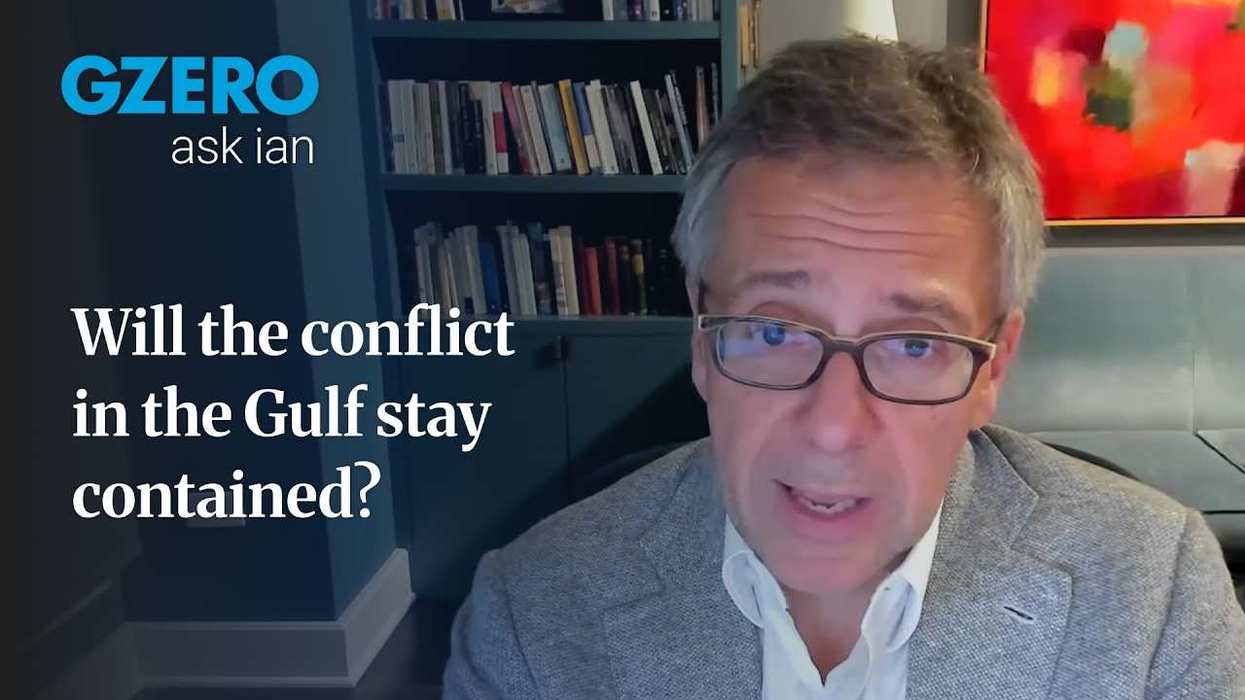
US forces on Thursday night killed General Qassim Suleimani, the head of the Iranian Revolutionary Guards' elite Quds Force. The assassination, carried out via a drone strike in Baghdad, was framed as a response to recent attacks by Iran-backed militias on the US Embassy in Baghdad, and the killing of a US contractor in northern Iraq last week. The Pentagon said it believed Major General Suleimani was planning further attacks on US interests in the region.
Given General Suleimani's prominence – he was the main architect of Iran's foreign policy and one of the country's most powerful and revered public figures – this event dramatically escalates ongoing US-Iran tensions.
Here are a few key questions to consider in the coming days and weeks.
What kind of response will we see from Iran? Iran's Foreign Minister Javad Zarif called the US strike an "act of terrorism," and the country's all-powerful Supreme Leader Ayatollah Khamenei has promised "severe revenge."
Immediate places to watch are Iraq, where Iranian proxies may escalate low-level conflict with US troops, or the broader Persian Gulf, where Iran may ratchet up the pressure again on oil shipping lanes – crude oil prices have already jumped 4% as of this writing. And don't forget about cyber, an area in which Iran has demonstrated capabilities, and could lash out at the US or its allies. Lastly, Iran has the ability to carry out militant or terrorist attacks against US interests beyond the region itself, though this could invite a very severe response if US civilians are killed.
But the Iranians have to calibrate their response carefully. Given how prominent Suleimani was at home, Tehran has to show some muscle here, but likely wants to avoid a full-fledged, direct military conflict with the much more powerful United States military. Proxy skirmishes are one thing – and are an area in which Iran excels – but direct combat is another. As Trump's response yesterday showed, the US is willing to escalate dramatically when American lives are concerns (as opposed to incidents where Iran merely harasses US regional allies or unmanned drones, after which Trump did little).
What happens to the US forces in Iraq? The Iraqi government, which is close to Iran, will likely increase pressure on the US to withdraw. In recent years, Suleimani had succeeded in advancing Tehran's interests in the country, in part by building up an array of shia militias who helped defeat ISIS and then turned their battlefield victories into political power at the ballot box. The US hit on Suleimani also killed the leader of one of those militias.
On Friday, Iraq's embattled Prime Minister condemned the strike and said he would order Parliament to take steps to preserve Iraq's "sovereignty." That could mean legislation that would rescind or modify the authorization for US troops to be in the country. Whether the US would comply with that on Iraq's terms is an open question. More broadly, the prospect of deeper conflict with Iran complicates Trump's own stated preference for pulling the US out of Iraq.
How might this affect the US presidential election? With ten months to go it's too early to say, but any escalation with Iran will surely make foreign policy a much bigger part of the campaigns. Democrats will seek to paint Trump as impulsive and ill-informed on a dangerous foreign policy issue, while the White House will portray Trump as a strong defender of the US globally, who is unconcerned about what the foreign policy establishment thinks.