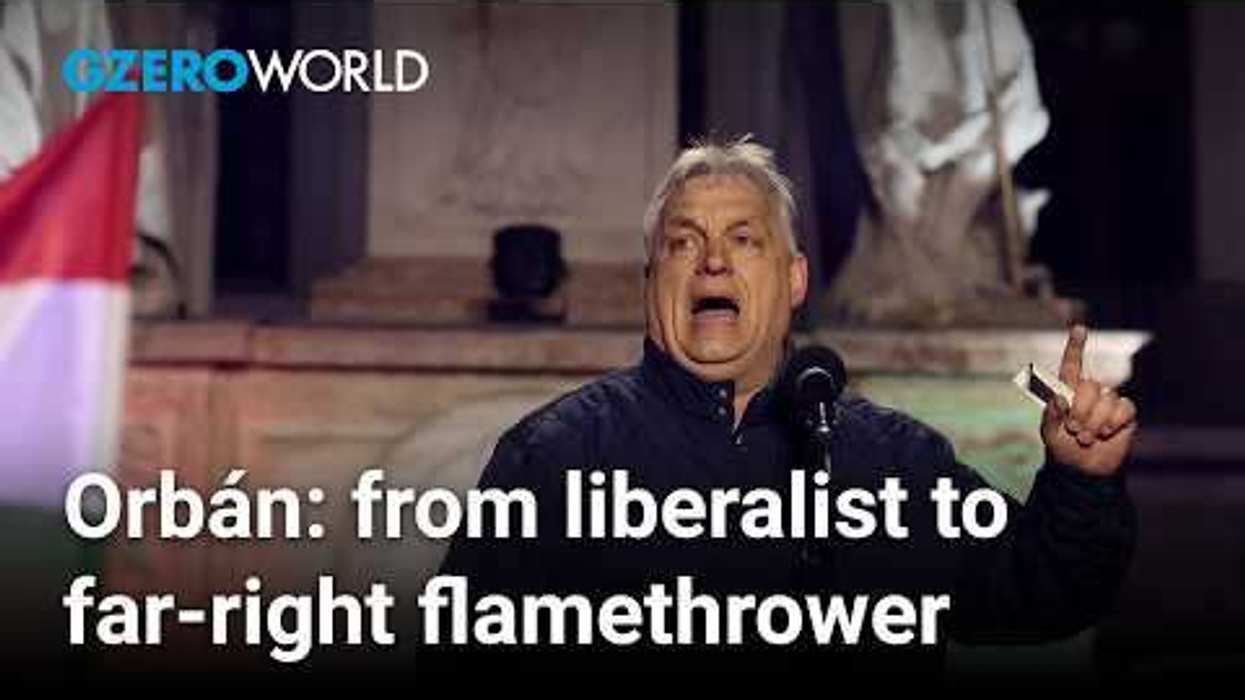
Viktor Orbán started his political life as a pro-democracy liberalist, according to Chairman of the Centre for Liberal Strategies Ivan Krastev. Orbán first made history in 1989 by demanding Soviet troops leave Hungary. What happened next, Ivan Krastev argues, was a genuine ideological transformation.
"I do believe he internalized his own conservatism," Krastev tells Ian Bremmer. Orbán's politics are rooted in a very specific strain of 19th-century Hungarian nationalism: the grief of a nation that lost vast territory and millions of its people after World War I, and that cannot afford to be a loser again in the 21st century. That makes him, Krastev argues, far more like Putin: deeply anchored in national history, than like Trump, who is largely indifferent to his predecessors.
The contradictions, though, are glaring. For all his fierce anti-immigration rhetoric — which made him a hero of Europe's 2015 migration crisis — Hungary quietly issued more work permits to foreign workers than almost any other EU member state that same year. Orbán, Krastev suggests, is an opportunist who has also become a true believer.