What We're Watching: Algeria's "sham" election

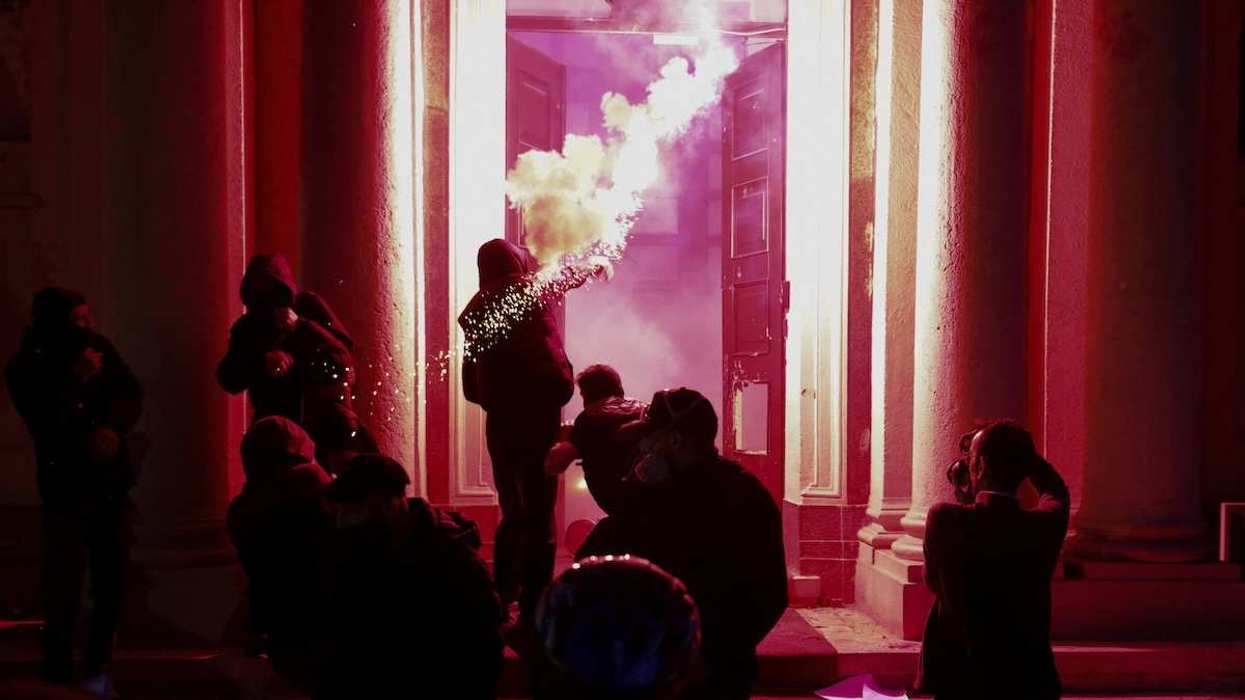
Algeria's election: Some Algerians went to the polls today to elect a new president. Others hit the streets of major cities to denounce the vote as a sham, one designed to hide the reality that nothing will change following the ouster in April of doddering former president Abdelaziz Bouteflika after two decades on the job. All five presidential candidates have promised "change" in some form, but all five have also worked for Bouteflika at some time in the past. The military, led by General Ahmed Gaid Salah, remains the true power behind the throne. Protests are likely to continue, and we'll be watching the army, which will be watching the crowds.


Trump gets a trade deal with China: After months of wrangling and rollercoaster hype, the US and China agreed today on the terms of a so-called "phase one" trade deal. The US will roll back some existing tariffs on Chinese imports and postpone any new ones, in exchange for Beijing's promise to buy more US agriculture goods. The legal text of the agreement hasn't yet been finalized, though, so there's still a possibility that either side could ditch it (which has already happened once before.) If a deal is finalized it would be a welcome reprieve from steadily growing tensions between the world's two largest economies, but it still wouldn't address the core issues on which Washington and Beijing are at odds: China's unwavering support for state companies and its ambitions to become a rival technology superpower.

What we're listening to: The New Yorker's Moscow correspondent Joshua Yaffa on The New Yorker Radio Hour, explaining how today's Russian propaganda differs from the Soviet variety in the way that it actively undermines the idea of truth itself. Yaffa's excellent new profile of Konstantin Ernst, the Kremlin's arty and sophisticated propaganda chief, is worth a read too.


In the end it wasn't even close. British Prime Minister Boris Johnson's Conservative Party won a stunning victory in the UK's snap elections yesterday, taking at least 364 seats out of 650, delivering the Tories their largest majority since 1987.

Johnson read the public mood correctly. After three years of anguish and political uncertainty over the terms of the UK's exit from the European Union, he ran on a simple platform: "Get Brexit Done." In a typically raffish late-campaign move, he even drove a bulldozer through a fake wall of "deadlock." Despite lingering questions about his honesty and his character, Johnson's party gained at least 49 seats (one seat still hasn't been declared yet).

More Show less

This holiday season, how concerned should I be about smart toys and their vulnerability to hacking?

You should be concerned both, that Internet connected toys can be hacked and also that they have shoddy privacy practices. And then the voice files of your kid talking to their teddy bear will end up in the cloud, accessible to all kinds of creepy people. On the other hand, Internet connected toys are great. Kids need to learn about technology. So, tradeoffs.

More Show less

David Miliband: Now that Boris Johnson has won a majority in the House of Commons, what's going to happen to Brexit?

If only Brexit could get done in 60 seconds? Because the result of the general election obviously means that Britain will leave the European Union, but it does nothing to clarify our future relations with the European Union. The Johnson victory is undoubtedly a very strong one, and he will try and interpret it as a victory for himself and for the Conservative Party and the attraction that they offer to Labour voters.

More Show less

Once a widely heralded human rights champion who was awarded a Nobel Peace Prize in 1991 for advancing democracy in Myanmar, Aung San Suu Kyi has now taken up a different cause: defending her country from accusations of genocide at the International Court of Justice in The Hague.

Yesterday was the court's final day of hearings over that country's military-led crackdown against the Rohingya Muslim minority in 2017, which left thousands dead and forced more than 740,000 people to flee to neighboring Bangladesh. Here's what you need to know about the proceedings.

More Show less