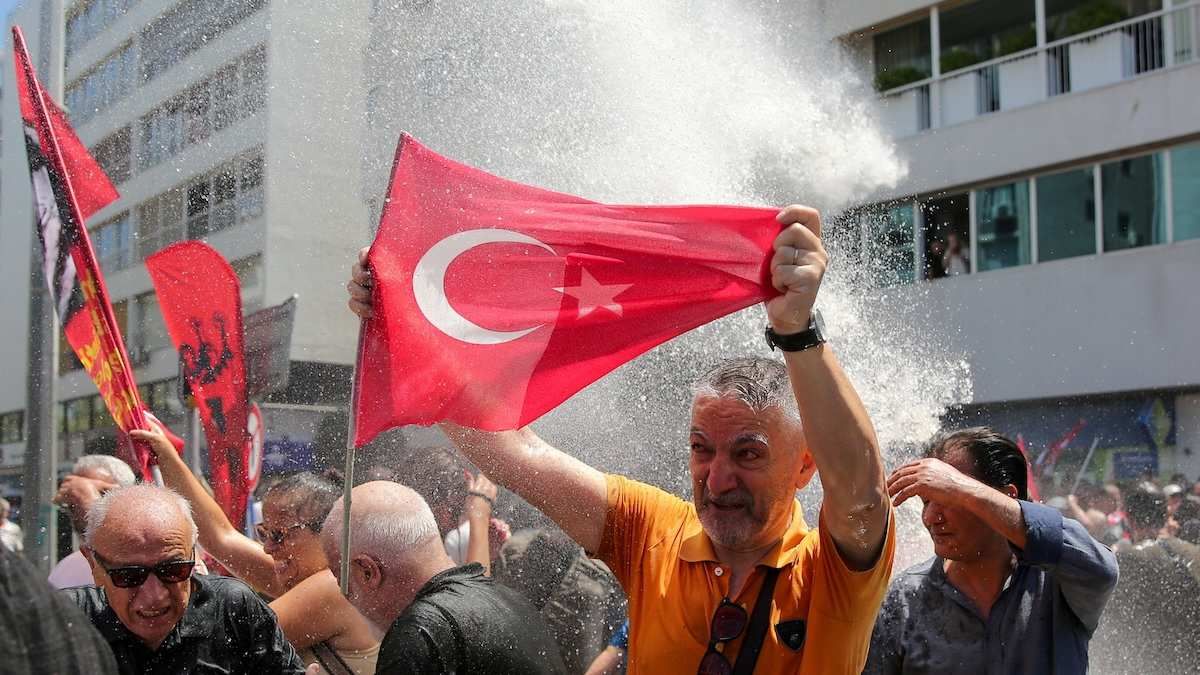
Turkey’s crisis of democracy deepens
Riot police over the weekend raided the headquarters of Turkey’s main opposition party, the Republican People’s Party (CHP), following a court order to remove party leader Özgur Özel. There were subsequent demonstrations in Istanbul and Ankara against the move by the government of President Recep Tayyip Erdoğan, one that protesters and rights groups saw as politically motivated: under Özel, elected as chair in 2023, the CHP has mounted a competitive opposition to Erdoğan, who has held power for more than 20 years. Last year, courts jailed another prominent CHP figure, Istanbul Mayor Ekrem İmamoğlu, who is seen as a viable candidate in the next presidential election. But the current assault on the party has also benefited from divisions within the CHP itself about leadership. The courts have effectively backed a faction that supports the party’s previous leader, Kemal Kılıçdaroğlu, who largely failed to mount an effective challenge to Erdoğan. On Tuesday, Özel himself called for fresh party elections to settle the issue. Will the courts allow it?
US-Iran talks: deal or no deal?
For now, it’s “no deal.” On Monday night, the US military struck missile launch sites in Iran, as well as what it says were Iranian boats that were trying to lay mines in the Strait of Hormuz. The weekend started with hopes of a deal, after US President Donald Trump said on Saturday that an agreement was “largely negotiated,” with Israel’s consent. However, Trump tempered those expectations on Sunday, before Iran said Monday that a deal was “not imminent.” Meanwhile, Israeli Prime Minister Benjamin Netanyahusaid Monday that his military would intensify its attacks on the Lebanese militant group Hezbollah – Iran has demanded that an Israel-Hezbollah ceasefire be included in one they make with the United States. All to say: there’s work to do before a deal is done – although negotiations are ongoing.
Political shakeup in Senegal puts IMF deal at risk
A political showdown is brewing in Senegal after President Bassirou Diomaye Faye on Friday dismissed his former ally, the popular Prime Minister Ousmane Sonko. Their relationship has fractured over how to manage the West African nation’s growing public debt: the IMF recently suspended its $1.8 billion loan program after discovering $13 billion in previously undisclosed debt (Senegal’s debt is a whopping 132% of its GDP), and while Faye supports the IMF restructuring plan, Sonko opposed it. But on Sunday, the speaker of Parliament resigned, and Sonko was quickly elected on Tuesday to replace him. With Sonko now holding the second-highest political office in the country and his party holding the most seats in Parliament, he is positioned to significantly influence – and potentially obstruct – any future legislation that Faye puts forward and throw talks with the IMF into disarray.