Skip to content
Search

Latest Stories

German opposition leader slammed for doing deal with the far right

German opposition leader slammed for doing deal with the far right

Thousands of people take part in a protest against CDU Leader Friedrich Merz and his action to vote with AFD to tighten immigration policy in Duesseldorf, Germany, on January 30, 2025. The poster reads "Hey Merz, Judas would be proud of you!"

Ying Tang/NurPhoto
Make us preferred on Google
German opposition leader Friedrich Merz, of the Christian Democratic Union, stands accused of breaching a “firewall” in his country’s politics after he cooperated with the far-right Alternative für Deutschland, or AfD, to narrowly pass a motion limiting migration.

Chancellor Olaf Scholz condemned the move as an “unforgivable mistake,” while Robert Habeck, the deputy chancellor and leader of the Green Party, implored, “Mr. Merz, don’t vote with racists. It is not necessary and it is ill-advised.”

What did the motion say? Merz’s “five-point plan” would see Germany turn back migrants at the border, in contravention of the UN convention on refugees. It comes amid public outrage after a stabbing attack by an Afghan asylum-seeker and a deadly SUV attack by a Saudi doctor at a Christmas market.

On Friday, Merz will introduce a draft migration bill based on the plan, which could become law after Germany’s upcoming election, scheduled for Feb. 23. After the anti-migration proposal vote, Merz said he “regretted” relying on the AfD and offered to hold discussions with the ruling Social Democrats and Greens prior to presenting the bill.

Why did Merz cave? In a word, votes. Polls show 66% of Germans support his migration plan, but opposition parties including Merz’s Christian Democratic Union have slipped in popularity while the populist AfD has gained ground.


More For You

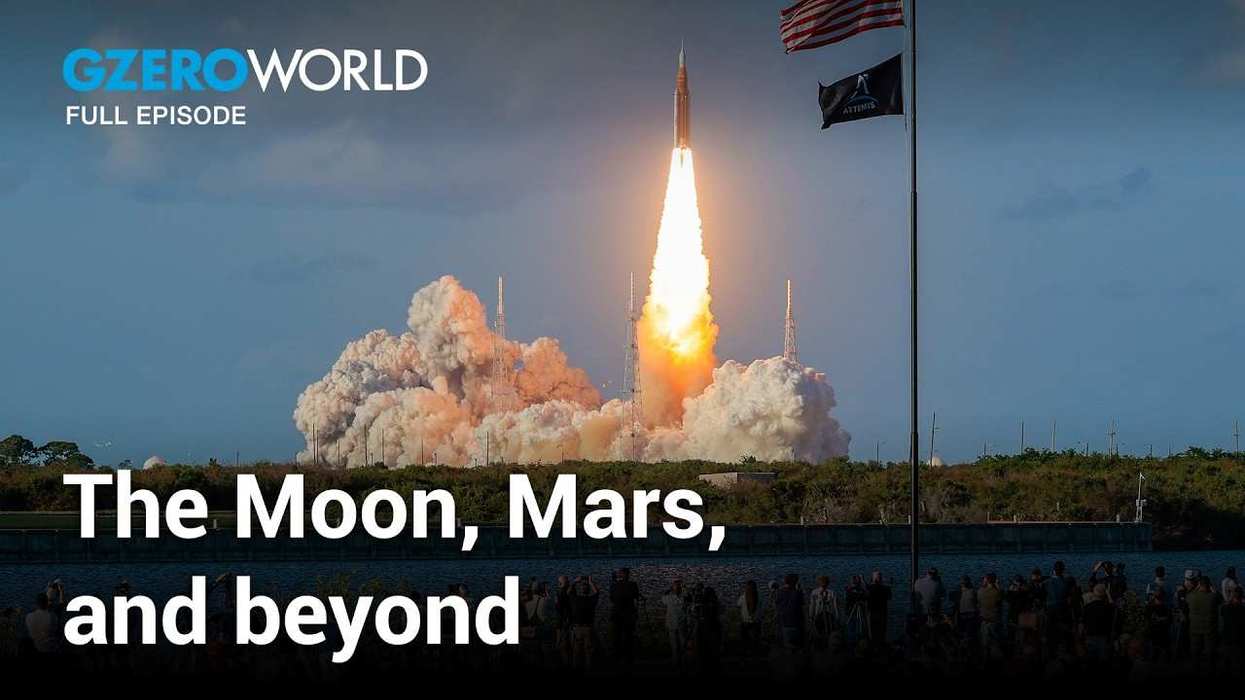
Humanity's next giant leap in space exploration
- YouTube
More than 50 years after the Apollo missions, humanity is entering a new era of space exploration. Falling launch costs, private companies, and the discovery of water on the Moon are making a permanent human presence beyond Earth more realistic than ever.On GZERO World, Ian Bremmer sits down with astronaut Chris Hadfield to discuss what it will [...]
The race to build humanity's future in space, with Chris Hadfield
More than half a century after humans last walked on the Moon, the next era of space exploration is taking shape. Getting there is cheaper, private companies are playing a much bigger role, and discoveries like vast reserves of lunar water have made the prospect of establishing a permanent presence on the Moon far more realistic.Ian Bremmer sits [...]
The race to build on the Moon
- YouTube
Humanity is heading back to the Moon, but this time the goal is bigger than planting a flag. Cheaper launches and the potential discovery of usable lunar water could make permanent settlements possible – and turn the Moon into a valuable economic and strategic prize. Ian Bremmer breaks down the new race for the Moon, from NASA’s Artemis program [...]
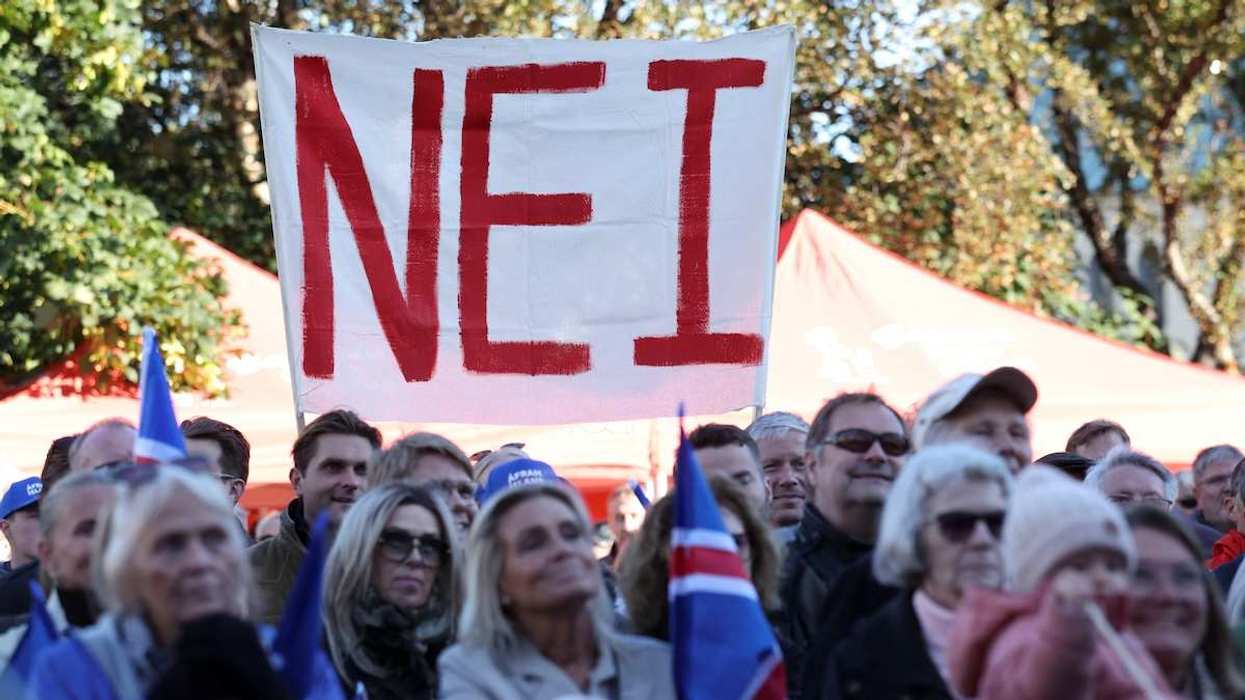
People hold a sign that reads "No" during a rally of the "No to EU" campaign ahead of a referendum on whether Iceland should resume accession negotiations with the European Union, in Reykjavik, Iceland.

People hold a sign that reads "No" during a rally of the "No to EU" campaign ahead of a referendum on whether Iceland should resume accession negotiations with the European Union, in Reykjavik, Iceland, August 27, 2026.

REUTERS/Leonhard Foeger
Iceland votes on restarting EU accession talks Polls remain tight as Iceland holds a referendum tomorrow on whether to restart EU accession talks. Membership has long been a divisive topic on the island, which gained independence from Denmark in 1944 and remains fiercely protective of its sovereignty. During previous talks, the bloc’s fisheries [...]