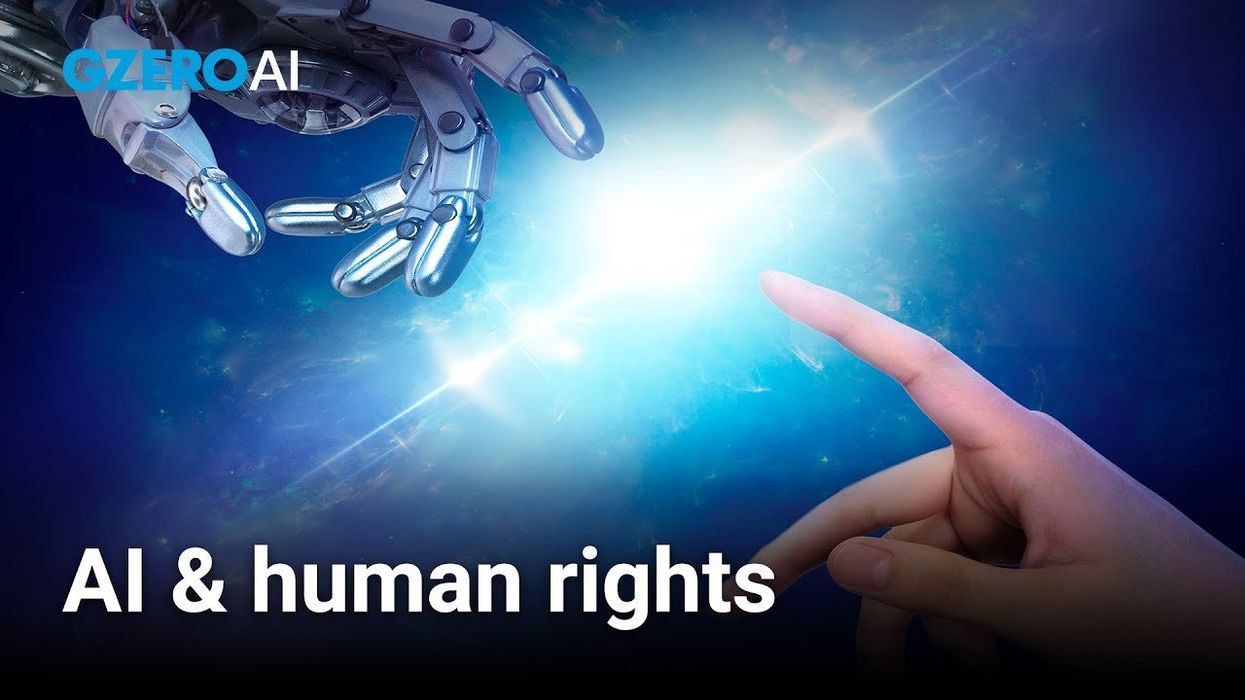
AI & human rights: Bridging a huge divide
February 16, 2024
Global Stage LIVE from United Nations WATCH REPLAY
GZERO AI is our weekly video series intended to help you keep up and make sense of the latest news on the AI revolution.
Presented by
Marietje Schaake, International Policy Fellow, Stanford Human-Centered Artificial Intelligence, and former European Parliamentarian, reflects on the missing connection between human rights and AI as she prepares for her keynote at the Human Rights in AI conference at the Mila Quebec Institute for Artificial Intelligence. GZERO AI is our weekly video series intended to help you keep up and make sense of the latest news on the AI revolution.
I'm in the hallway of the Mila Quebec Institute for Artificial Intelligence, where there's a conference that deals with human rights and artificial intelligence. And I'm really happy that we focus on this uniquely today and also tomorrow, because too often the thoughts about, the analysis of and the agenda for human rights in the context of AI governance is an afterthought.
And so it's great to hear the various ways in which human rights are at stake, from facial recognition systems to, you know, making sure that there is representation in governance from marginalized communities, for example. But what I still think is missing is a deeper connection between those people who speak AI, if you will, and those people who speak human rights. Because still the worlds of policy and politics and the worlds of artificial intelligence, and within those, the people who care about human rights tend to speak in parallel universes. And so what I'll try to do in my closing keynote today is to bring people's minds to a concrete, positive political agenda for change in thinking about how we can frame human rights for a broader audience, making sure that we use the tools that are there, the laws that apply both international and national and doubling down on enforcement. Because so often the seeds for meaningful change are already in the laws, but they're not forceful in the way that they are being held to account.
And so we have a lot of work ahead of us. But I think the conference was a good start. And I'll be curious to see the different tone and the focus on geopolitics as I go to the Munich Security Conference with lots of the GZERO team as well.





Keep up with what’s going on around the world - and why it matters.