Skip to content
Search

Latest Stories

GZERO AI

Publishers are cashing in on AI

OpenAI logo displayed on a phone screen and binary code displayed on a laptop screen are seen in this illustration photo taken in Krakow, Poland on December 5, 2022.

OpenAI logo displayed on a phone screen and binary code displayed on a laptop screen are seen in this illustration photo taken in Krakow, Poland on December 5, 2022.

Jakub Porzycki/Reuters

OpenAI is striking lucrative deals with major news publishers to license their content for their AI models. On May 29, OpenAI announced that it struck deals with The Atlantic and Vox Media one week after it inked a similar agreement with Wall Street Journal publisher News Corp. While the News Corp. deal was reportedly worth $250 million over five years, figures for the new deals haven’t yet been reported.


There’s currently a split in the news world over how to deal with tech companies that want news content to train their models and deliver reliable, up-to-date information for users. The New York Times has taken a different approach and is suing OpenAI for copyright violations, as have several newspapers owned by Alden Global Capital.

Journalists have also pushed back against coziness with AI firms. Jessica Lessin, founder of the news site The Information, wrote an op-ed in The Atlantic just days before the deal was announced, saying that news companies are making a “huge mistake” by “absolving AI companies of theft.”

The Atlantic’s tech editor, Damon Beres, called it a “devil’s bargain” in writing about his employer. “Generative AI has not exactly felt like a friend to the news industry, given that it is trained on loads of material without permission from those who made it in the first place,” Beres wrote, likening these deals to the ones made with Facebook and other social media companies a decade ago — only for them to change their mind and pivot away from news.

Vox’s Editorial Director Bryan Walsh also wrote critically about his employer: “I’ve seen our industry pin our hopes on search engine optimization; on the pivot to video (and back again); on Facebook and social media traffic,” he wrote. “But sure — maybe this time Lucy won’t pull the football away.”

More For You

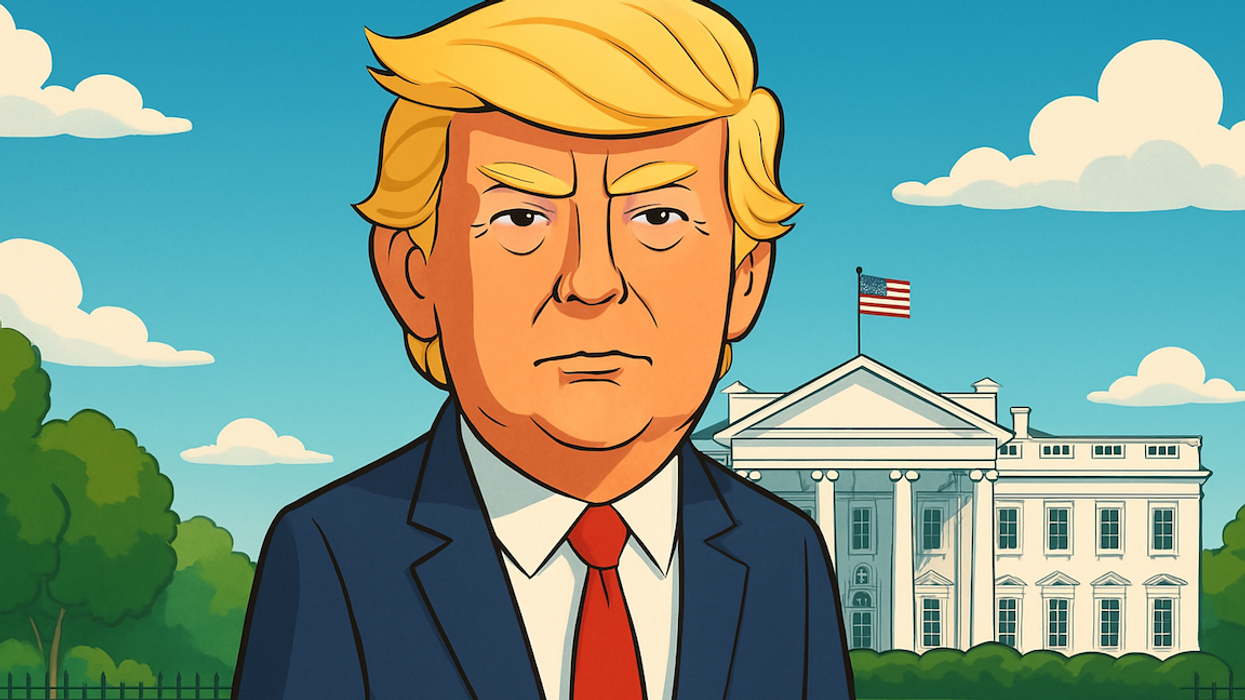
What we learned from a week of AI-generated cartoons
Courtesy of ChatGPT
Last week, OpenAI released its GPT-4o image-generation model, which is billed as more responsive to prompts, more capable of accurately rendering text, and better at producing higher-fidelity images than previous AI image generators. Within hours, ChatGPT users flooded social media with cartoons they made using the model in the style of the [...]
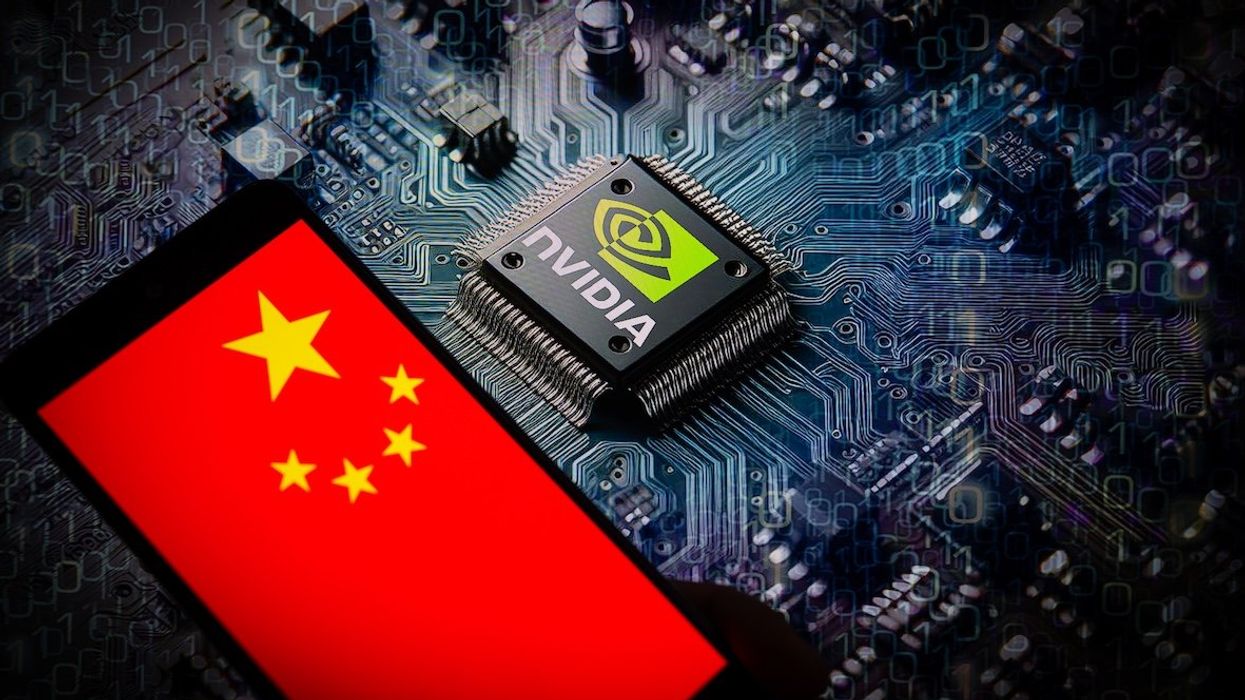
The flag of China is displayed on a smartphone with a NVIDIA chip in the background in this photo illustration.

The flag of China is displayed on a smartphone with a NVIDIA chip in the background in this photo illustration.

Jonathan Raa/NurPhoto via Reuters
H3C, one of China’s biggest server makers, has warned about running out of Nvidia H20 chips, the most powerful AI chips Chinese companies can legally purchase under US export controls. [...]
​North Korean leader Kim Jong Un supervises the test of suicide drones with artificial intelligence at an unknown location, in this photo released by North Korea's official Korean Central News Agency on March 27, 2025.

North Korean leader Kim Jong Un supervises the test of suicide drones with artificial intelligence at an unknown location, in this photo released by North Korea's official Korean Central News Agency on March 27, 2025.

KCNA via REUTERS
Hermit Kingdom leader Kim Jong Un has reportedly supervised AI-powered kamikaze drone tests. He told KCNA, the state news agency, that developing unmanned aircraft and AI should be a top priority to modernize North Korea’s armed forces. [...]
The logo for Isomorphic Labs is displayed on a tablet in this illustration.

The logo for Isomorphic Labs is displayed on a tablet in this illustration.

Igor Golovniov/SOPA Images/Sipa USA via Reuters
In 2024, Demis Hassabis won a Nobel Prize in chemistry for his work in predicting protein structures through his company, Isomorphic Labs. The lab, which broke off from Google's DeepMind in 2021, raised $600 million from investors in a new funding round led by Thrive Capital on Monday. The company did not disclose a valuation. [...]