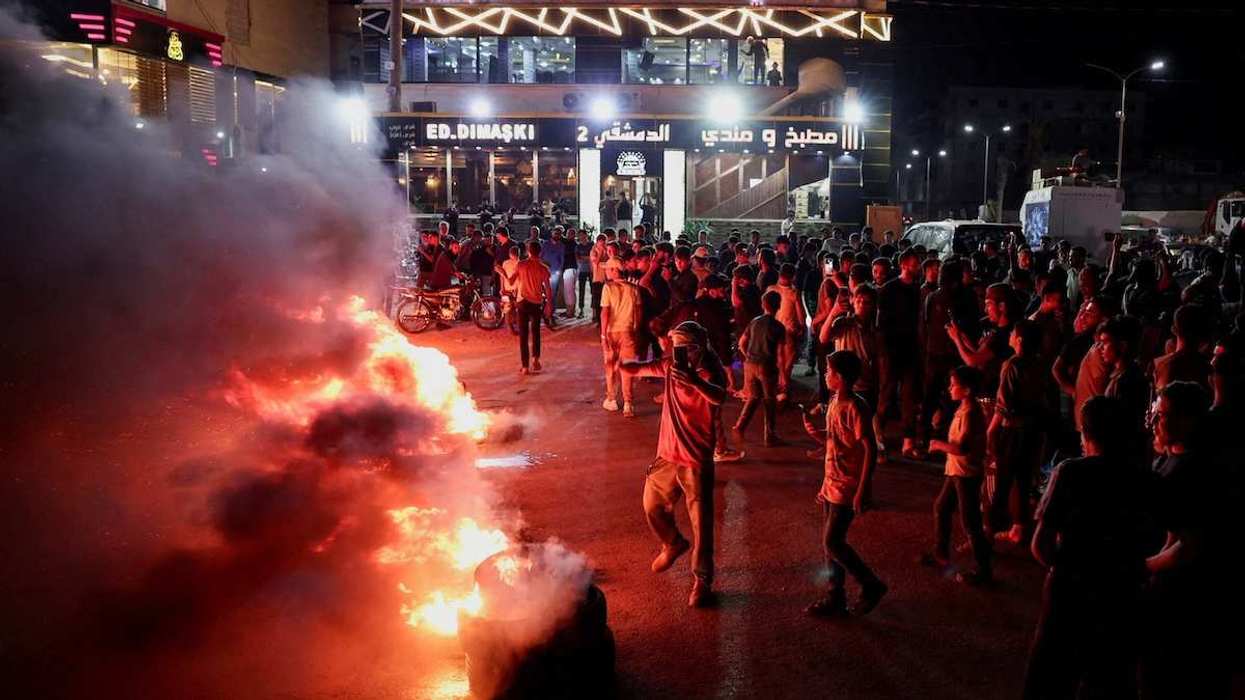
On Saturday, a Colombian presidential candidate was shot in the head at a rally in the country’s capital, Bogotá. Three days later, a series of bombs went off in and around the third largest city, Cali, leaving at least four dead. The sudden surge of violence has many Colombians wondering if the country is headed back to a darker time.
“It’s a painful memory of where we come from,” says Colombia Risk Analysis director Sergio Guzmán. “Back then, political candidates were falling like flies.”
What was “back then”? In the 1980s and 1990s, Colombia suffered the worst of a decades-long internal conflict that left 220,000 dead, tens of thousands missing, and millions displaced. Initially a fight between Marxist rebels and the government, it rapidly expanded to include powerful drug cartels and right-wing paramilitaries. The violence was especially acute during the 1990 presidential campaign, when three candidates were assassinated, at least one of them by Pablo Escobar’s fearsome Medellín Cartel. In the early 2000s the state regained ground from the guerillas and the cartels, laying the groundwork for a 2016 peace accord with the main guerilla groups.
But amid rising violence generally, the assassination attempt on Senator Miguel Uribe has rattled a country on edge.
“The shooting is the most significant assault on a presidential hopeful in several years,” says Antonio Espinosa Calero, Eurasia Group’s Andean Region Researcher. “It has certainly fueled anxiety about instability and violence ahead of the upcoming election.”
The shooting isn’t the only reason for the country’s collective anxiety. President Gutavo Petro hasn’t been able to keep a lid on the drug cartels, crime is on the rise nationwide, and political violence has spread across nearby countries – like Ecuador and Mexico.
Wasn’t there a peace deal? Yes. Under the 2016 peace accord between the government and the Revolutionary Armed Forces of Colombia, known as FARC, members of the guerilla group agreed to hand over their weapons to the government, in exchange for amnesty and political participation.
This hasn’t fostered peace? It has not. Instead, the drug cartels – which were not part of the peace deal – have filled the void, along with other guerilla groups that refused the peace. From 2021 to 2024, the number of kidnappings jumped 72%, while the number of extortion cases more than doubled. Cocaine production has reportedly reached record levels. Killings of human rights activists and other social leaders have soared.
Has the president tried anything? Elected in 2022, Petro tried to implement a Total Peace (“Paz Total”) to rid the country of violence. The former guerrilla fighter, Colombia’s first leftist president, tried to reach accords with every major armed group in the country. The plan has failed to bear fruit, as talks with groups like ELN – a dissident rebel group – have repeatedly broken down. The kidnapping of a famous soccer player’s father in 2023 only underscored the sense of chaos.
Politicians’ use of violent rhetoric hasn’t helped the situation, Colombia experts say. Petro is renowned for using provocative language in his social media posts, and he has already hinted at a conspiracy behind the shooting of Uribe.
“The presence of President Petro on social media,” Atlantic Council’s Colombia expert Enrique Millán-Mejía, has contributed to “an environment of political violence.”
Petro’s opponents – Uribe among them – have often responded in kind. The senator himself posted on X in May, “Every day Petro is in power, Colombia bleeds.”
Where does Colombian politics go from here? It’s a boost for the tough-on-crime candidates who seek to replace the term-limited Petro next year. A poll last year found 85% of adults believe the security situation is getting worse, and this assassination attempt will likely increase those numbers.
“The shooting will amplify public demand for change and concerns over safety in Colombia,” says Espinosa Calero, “likely benefiting conservative and tough-on-crime candidates in the lead-up to next year’s general elections.”