Skip to content
Search

Latest Stories

News

Pompeo and Circumstance: US Policy In The Middle East

Pompeo and Circumstance: US Policy In The Middle East

Over the past week, US Secretary of State Mike Pompeo has been crisscrossing the Middle East in a bid to clarify the Trump administration's policy towards the region. He has been at particular pains to explain what Trump's hasty and controversial decision to pull US troops out of Syria means for allies and adversaries alike.


One slew of answers came in Mr. Pompeo's high-profile policy speech in Cairo last Thursday, where he framed a "new" policy in which Washington is a "force for good" that prioritizes its relationships with traditional Arab allies, rolls back Iranian influence in Iraq, Lebanon, and Syria, and focuses on fighting terrorist groups as a guiding principle for any involvement in the region.

Much of the speech was a deliberate rebuke to the Obama administration's policy of opening to Iran, its dithering responses to the Arab Spring and the Syrian civil war. Also in sharp contrast to Mr. Obama, who spoke in the same place a decade ago, Mr. Pompeo pointedly omitted from his speech any words of support for democracy, human rights, or economic development – a refreshing bit of honesty, some observers have dryly noted.

There is certainly room to debate whether the ideological, hard-power focused approach that Pompeo outlined is the right one. But the speech immediately raised much more immediate and practical question: are Mike and his boss on the same page?

Pompeo's declaration that "when the US retreats, the result is chaos" contrasts sharply with President Trump's move to abruptly withdraw US troops from Syria – a decision that will likely open the way for more Iranian (and Russian) influence in the region. And just yesterday, Pompeo was curiously unable to explain Trump's offhand threat to "devastate" Turkey's economy if Ankara tries to attack Kurdish groups left vulnerable by the US withdrawal.

More broadly, Pompeo's vision of the US as a great power actively shaping the region "for good" seems out of sync with President Trump's "America First" pledges to disentangle the US from nearly two decades of combat action in the region.

Added to which, there are still critical diplomatic staff vacancies in the region – five of the nine countries Pompeo visited still have no US ambassador, and senior regional positions at the State Department remain unfilled.

Unless these policy and staffing issues are resolved, it will be difficult for the US to act credibly and coherently as a force for anything in the region – "good" or otherwise.
More For You

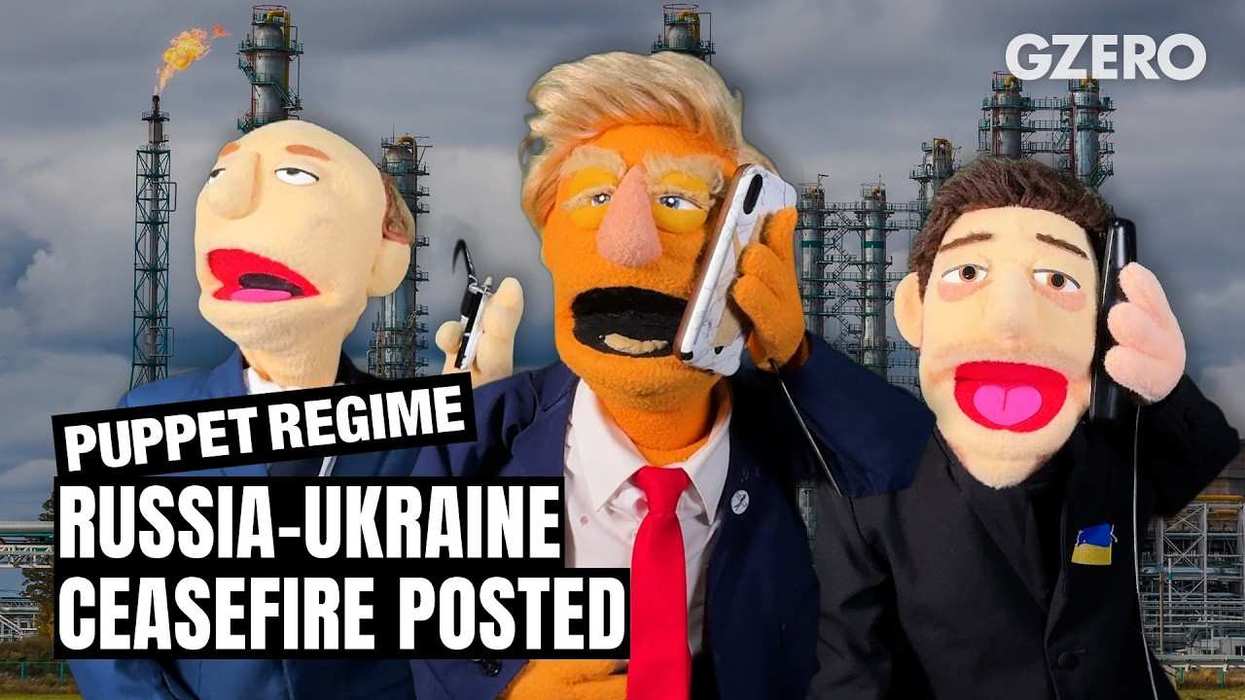
Trump, Putin, and Zelensky surrounded by tanks and negotiators.

Trump, Putin, and Zelensky surrounded by tanks and negotiators.

Nearly four years into Russia's invasion of Ukraine, the push to end the war is intensifying. The past few weeks produced not one but two proposals. Summits convene near daily. American envoys are shuttling between Kyiv and Moscow. Public displays of applause for President Trump's efforts to stop the bloodshed while everyone scrambles to shape the [...]
​Ultra-Orthodox Jewish children hold makeshift gallows as part of a protest against attempts to change government policy that grants?ultra-Orthodox?Jews exemptions from military conscription, in Jerusalem, March 20, 2024.

Ultra-Orthodox Jewish children hold makeshift gallows as part of a protest against attempts to change government policy that grants?ultra-Orthodox?Jews exemptions from military conscription, in Jerusalem, March 20, 2024.

REUTERS/Ronen Zvulun
Ultra-Orthodox conscription to divide Israel’s parliament againHere we go again: Israel’s Knesset is once more considering a bill that would force certain ultra-Orthodox Jewish men, who are part of the Haredi sect, to serve in the military – just like the rest of the country. There’s a difference this time: support for Haredi conscription jumped [...]
Police officers pass a burnt police armoured personnel carrier after gunmen kidnapped several people from an orphanage in a mountainous community that has been under deadly attacks by armed gangs since the start of this year, on the outskirts of Port-au-Prince, in Kenscoff, Haiti August 4, 2025.

Police officers pass a burnt police armoured personnel carrier after gunmen kidnapped several people from an orphanage in a mountainous community that has been under deadly attacks by armed gangs since the start of this year, on the outskirts of Port-au-Prince, in Kenscoff, Haiti August 4, 2025.

REUTERS/Fildor Pq Egeder
Last fall, Haiti created a transitional presidential council tasked with regaining control over the gang-ravaged Caribbean country and ushering in elections by February 2026. On Tuesday, the transitional government passed a law calling for elections in August, missing the original deadline but calming fears that leaders intended to indefinitely [...]
​Fishing boats moored at Taganga Beach in Santa Marta, Colombia, on October 20, 2025.

Fishing boats moored at Taganga Beach, as fishermen express concern over unclear US government videos showing strikes on vessels during anti-narcotics operations, amid fears that those targeted may have been fishermen rather than drug traffickers, in Santa Marta, Colombia, on October 20, 2025.

REUTERS/Tomas Diaz
1: The family of Alejandro Carranza Medina from Colombia became the first to file a formal complaint related to the US boat bombings in the Caribbean, alleging to the Inter-American Commission on Human Rights on Tuesday that Medina was illegally killed in an airstrike by the US military. The US claims that the bombing targeted a suspected drug [...]