Skip to content
Search

Latest Stories

News

Tariff Time for China

Tariff Time for China
Make us preferred on Google

It sure is hard to keep pace with Donald Trump. He proved it again yesterday by replacing National Security Advisor HR McMaster with the hawkish John Bolton.


A few quick thoughts:

  1. In 2005, to sidestep a vote in the Senate, President George W. Bush used a recess appointment to make John Bolton his ambassador to the United Nations, because he didn’t believe a Republican Senate would approve him.
  2. Three years ago, Bolton wrote an op-ed in the New York Times under the headline “To Stop Iran’s Bomb, Bomb Iran.
  3. Three weeks ago, Bolton wrote an op-ed for The Wall Street Journal under the headline “The Legal Case for Striking North Korea First.”
  4. Trump is a punch thrower. He will now be taking national security advice from a punch thrower.

More to say on that in future editions. Today we want to focus on yesterday’s big trade news.

Trump wasn’t kidding when he pledged to get tough with the world’s largest emerging economy. Senior advisors have reportedly recommended US tariffs on Chinese exports of about $30 billion, but Trump decided to push that up to $60 billion. More than 1,000 products could be affected. We’re also likely to see new restrictions on Chinese investment in the US.

Another few thoughts:

  • China will move quickly to retaliate. For a glimpse of the anxiety this will cause US farmers, check out this piece from the Des Moines Register, which warns that China’s response will directly target states that Trump considers part of his political base.
  • China may also target the US auto sector for the same reason. (Michigan might be the most closely watched state on the electoral map as 2020 approaches.)
  • This gets to a point we’ve made before: Trump believes the Chinese economy is more vulnerable than the US economy, while China’s Xi Jinping believes he is stronger politically than Trump. They’re both right, and this confidence on both sides creates a risk of escalation that neither side wants.
  • To try to avoid that escalation, China will probably signal that it means to match Trump’s actions without exceeding them. We’ll hear the word “proportional” a lot in coming days.
More For You

​Various groups march to highlight the issue of missing persons, in Mexico City, Mexico, on June 11, 2026.

Various groups march along Calzada de Tlalpan to the Estadio Ciudad de Mexico in Mexico City, Mexico, on June 11, 2026.

Gerardo Vieyra/NurPhoto
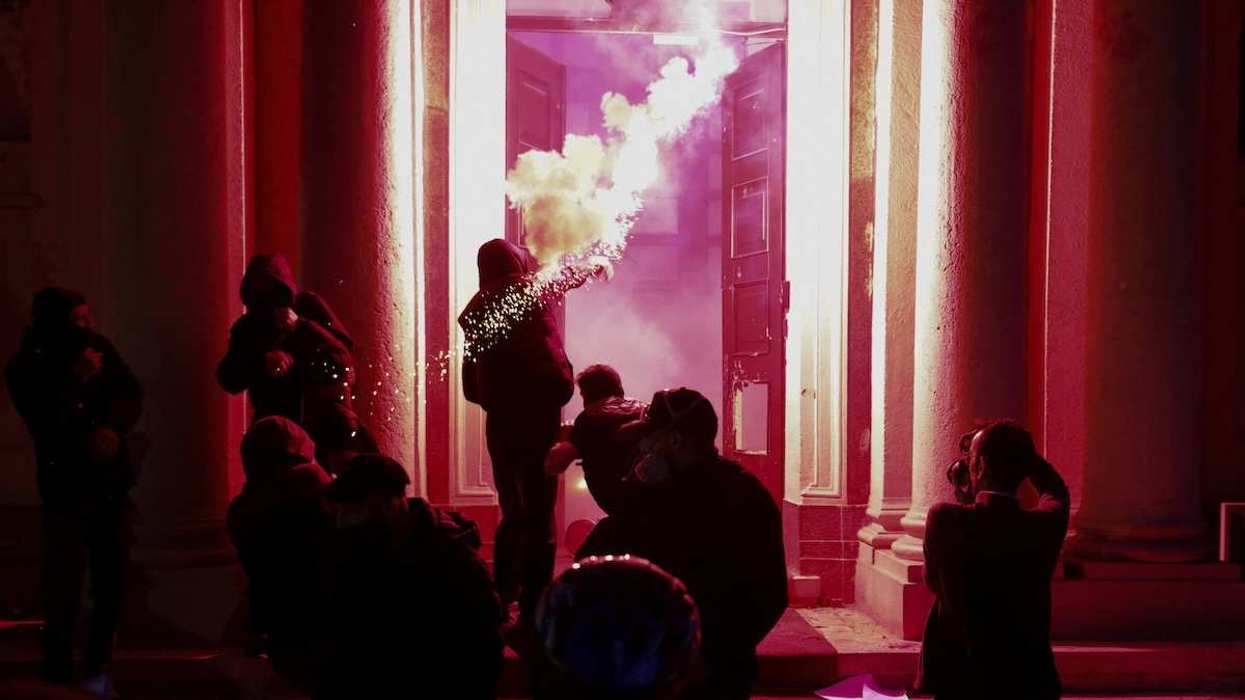
Protests overshadow Mexico’s victory in World Cup openerOn the field, “El Tri” cruised past South Africa 2-0 on Thursday at the majestic Estadio Azteca in Mexico City. Off the field, it wasn’t as smooth. Hundreds of protesters clashed with police outside the stadium, with some throwing rocks and petrol bombs at law enforcement officials (it’s [...]
Cuba’s next fuel shipment in purgatory
Farida Dowidar
Earlier this week, Florida‑based Vanguard Energy announced it had authorization from both the US and Cuban governments to ship 250,000 barrels of fuel to private buyers in Cuba – potentially the island’s largest delivery since Eisenhower‑era sanctions in 1960. But once the news became public, the US State Department said Vanguard did not have a [...]
A demonstrator waves South Africa's flag during a protest calling for the deportation of undocumented immigrants

A demonstrator waves South Africa's flag during a protest calling for the deportation of undocumented immigrants, as violence against migrants from other African countries increases, in Benoni, east of Johannesburg, South Africa, June 5, 2026.

REUTERS/Ihsaan Haffejee
On the outskirts of Durban this week, over a thousand immigrants fled their homes and set up a makeshift camp nearby after angry residents ordered them to leave, accusing them of taking jobs and economic opportunities from South Africans. The migrants, mostly from Malawi, are among those fearing a wave of anti-immigrant violence gripping a nation [...]
Is Putin running out of options in Ukraine?
- YouTube
In this episode of GZERO Europe, Carl Bildt reflects on how Russia's war in Ukraine has lasted longer than World War I and the role an underachieving military campaign and international politics have played in putting pressure on Putin. [...]