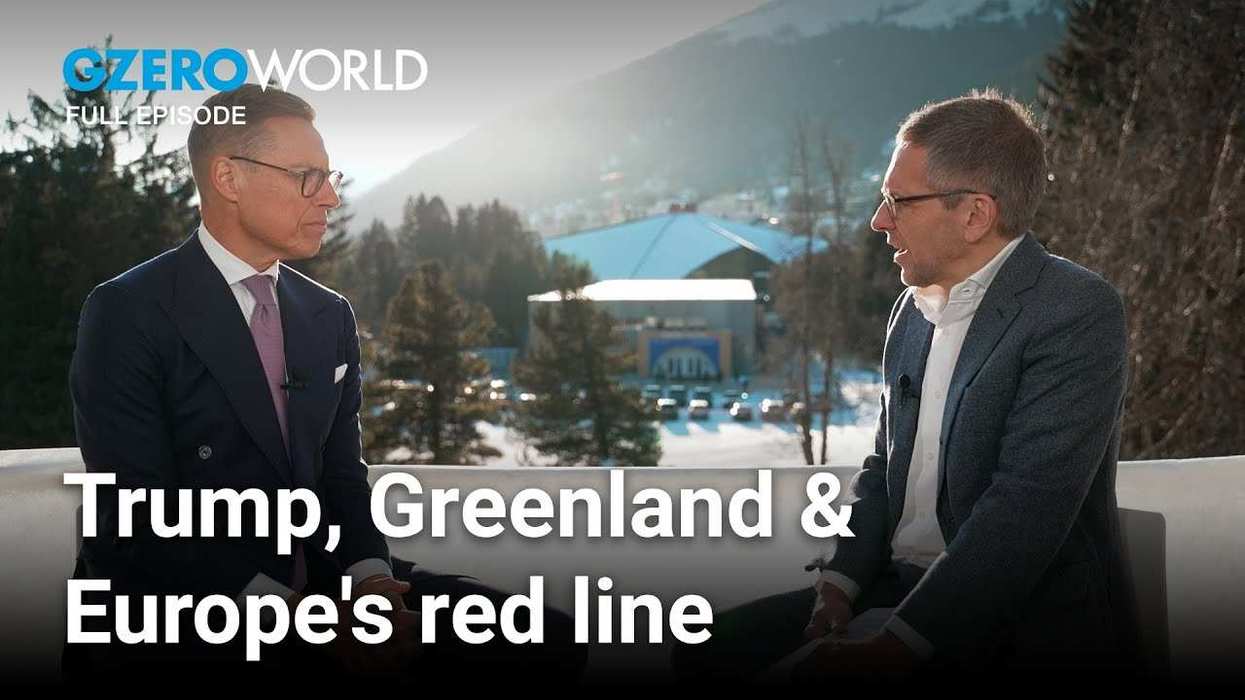
Tensions were high at the World Economic Forum in Davos, Switzerland this week as President Trump showed little sign of backing away from his intent to rewrite the global order. He threatened European nations and reiterated his desire for US control of Greenland—only to announce a framework deal with NATO over the Danish territory’s future hours later. Amid so much uncertainty, is Europe at risk of breaking from its once-closest ally? Ian Bremmer sits down with Finland’s president Alexander Stubb on GZERO World to talk about Trump’s Greenland threats, Arctic security, the war in Ukraine, and the future of the transatlantic relationship.
Then, Bremmer talks with Kristalina Georgieva, Managing Director of the International Monetary Fund, about why the world economy has been more resilient than many feared, despite trade tensions and geopolitical shocks. From the surprisingly limited impact of tariffs to productivity gains driven by AI, Georgieva breaks down what’s keeping growth afloat, and what could still derail it. Both Stubb and Georgieva agree: one positive outcome of so many geopolitical shocks in the last year is that Europe has been forced to come together and act on urgent economic and security issues.
“I don't think I've ever seen the European Union more united,” Stubb says, “First came Russia's war of aggression in Ukraine, then came the energy crisis. Now we're working on defense. We're together in NATO. So I think there's a lot of unity.”