Iraq’s deepening political crisis
Hundreds of Iraqi protesters stormed the government palace and took to the streets Monday after popular Shia cleric Muqtada al-Sadr, whose bloc won the most seats in parliamentary elections last fall, announced he was stepping back from politics. At least 30 people were killed and more than 380 were injured in clashes between al-Sadr supporters, Iran-aligned groups, and Iraqi security forces. Moreover, al-Sadr announced he was starting a hunger strike until the violence stops. It's the the worst violence Baghdad has seen in years, most of which is concentrated around the heavily fortified Green Zone, which houses foreign embassies and government buildings. For almost a year, Iran-aligned parties have prevented al-Sadr from forming a new government, prompting his 73 lawmakers to resign en masse this summer in protest, which in turn led to sectarian clashes. Al-Sadr — who has long railed against Iran’s influence over Iraqi social and political life— retains widespread influence over some institutions and has proved adept at whipping his supporters into a frenzy. (Last month, hundreds of his supporters breached Baghdad’s Green Zone and occupied parliament.) The Supreme Court will decide on Tuesday whether parliament will be dissolved and new elections called – though the constitution says the legislature must agree to dissolve itself. That’s unlikely given that parliament is now dominated by a pro-Iran bloc, which became the biggest parliamentary faction by default after al-Sadr withdrew. Iraq’s military announced a nationwide curfew as the situation continues to deteriorate.
Updated on Aug. 30.
China, Russia hold joint drills
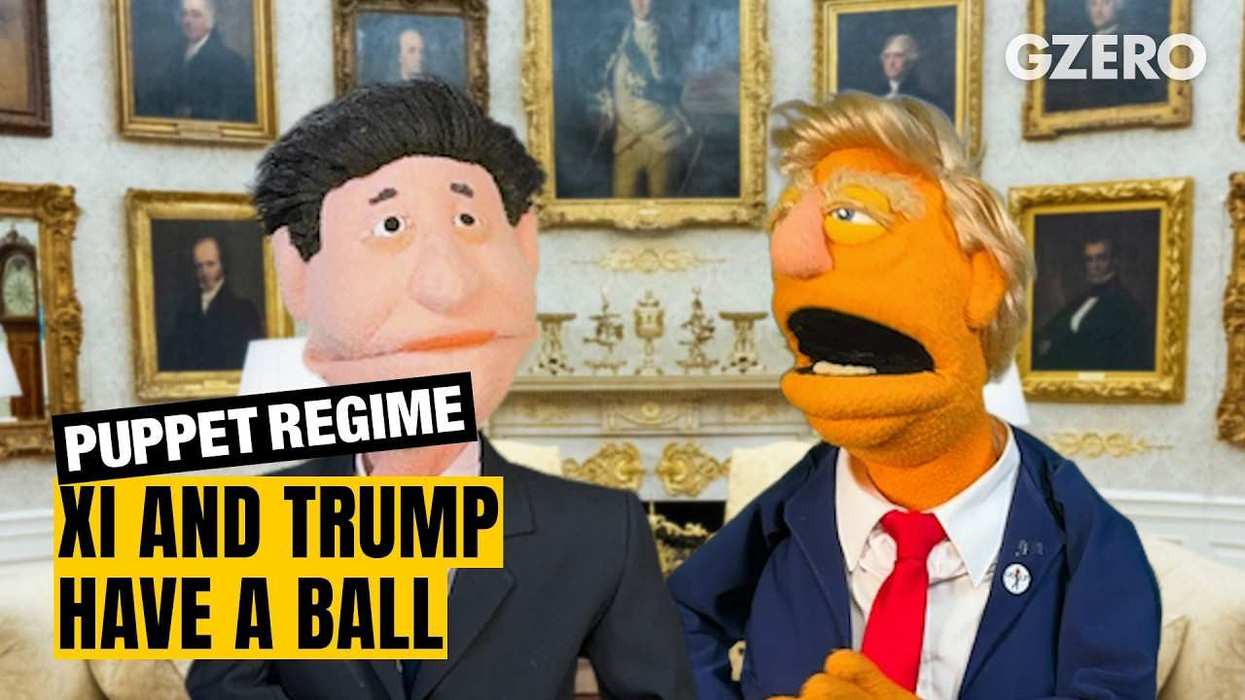
China and Russia kicked off on Monday joint military exercises in Russia’s far east. The week-long exercise occurs every four years, though this year the geopolitical landscape is ... quite different. In 2018, Russia had about 300,000 troops participate in the drills, though only 50,000 are expected to take part this year given that up to 75% of Russian troops are busy fighting the war in Ukraine, causing some observers to say this is merely an act of political theatre. In pushing through with the drills despite Russia's ongoing invasion of Ukraine and China's stepped-up war games around Taiwan, Beijing and Moscow likely want to show they're doing business as usual under the friendship "without limits" agreement signed between Russia’s President Vladimir Putin and China’s Xi Jinping earlier this year. What's more, the drills, known as the Vostok exercises, which means “east,” are a good opportunity for Moscow to demonstrate it still has strong military ties with other former Soviet republics and crucial non-aligned countries, like India. Other friendly nations like Laos, Nicaragua, and Syria will join the drills, too. This development comes as Moscow is keen to flex its military muscle given that Ukraine on Monday began a counteroffensive to take back territory from Russian forces in the south.
Colombia-Venezuela ties back on
Colombia and Venezuela have reestablished full diplomatic relations after three years. Gustavo Petro, Colombia’s new leftist president, previously vowed to restore ties with Venezuela's strongman President Nicolás Maduro, who’s long been accused by the West of using an iron fist to quash dissent. Indeed, Colombia’s previous conservative president, Iván Duque, joined the ranks of dozens of countries — including the US, UK and EU — in rejecting Maduro's sham reelection in 2018 — and recognizing then-Speaker Juan Guiado as the country’s legitimate president. Maduro, for his part, severed ties with Bogota in 2019 after the Venezuelan opposition tried to cross over from Colombia to deliver truckloads of food and medicine. (Since 2017, more than 90% of Venezuelans have been living below the poverty line.) Bogotá and Caracas have agreed to reopen the 1,200-mile land border in hopes of boosting economic ties. Colombia’s economy minister says that bilateral trade could reach $1.2 billion this year and grow to a whopping $4.5 billion by 2026, in large part due to Venezuela's natural gas exports. That would be a massive boon for Venezuela, whose economy has been in dire straits since the US imposed crippling economic sanctions in 2015, giving rise to a devastating refugee crisis.