Apple this week became the first company ever to surpass $3 trillion in market value — the latest milestone in the growing influence of Big Tech.
This was already happening before the pandemic, but COVID accelerated the trend. More people now buy stuff online, keep in touch on social media, and use apps to serve their daily needs than before the virus upended both the "real" and the digital world.
As Big Tech gains more clout, governments are increasingly struggling to exercise sovereignty over the digital space. Our very own Ian Bremmer argues that a handful of tech firms are now as powerful as nation-states: geopolitical actors with unprecedented influence over the information we get access to — and not — via their algorithms.
But governments don't like playing second fiddle to Big Tech in the "technopolar world," a new global order in which tech companies dominate the online world, but don’t rule it (yet). Eurasia Group, our parent company, considers a rapidly expanding digital space that neither governments nor tech firms can effectively control the #2 top geopolitical risk for 2022.
Throughout 2021, governments have tried hard to get the upper hand. Some were more successful than others.
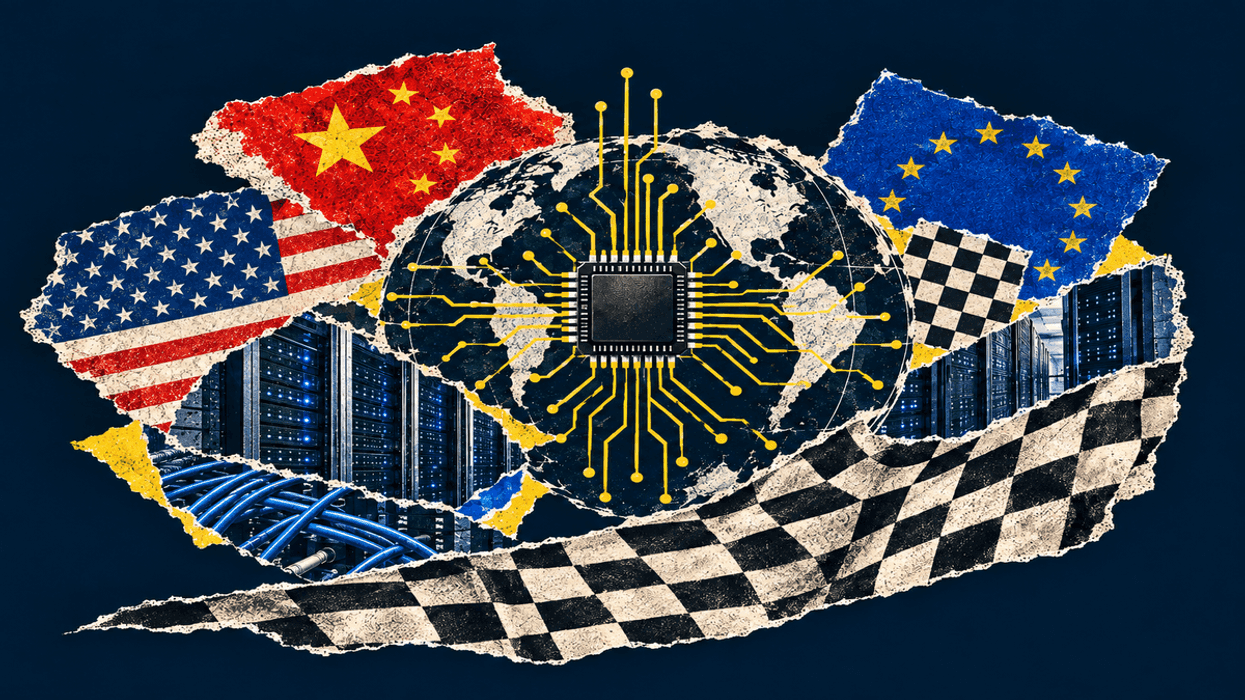
China grabbed headlines when Xi Jinping cracked down on e-commerce behemoth Alibaba, ride-hailing app Didi, cryptocurrencies, and even online gaming. Depending on who you ask, Xi did so because these firms were enriching themselves at the expense of what Beijing calls “societal harmony,” or rather threatening to become more influential than the ruling CCP. Since then, China’s tech giants have tempered their ambitions and signaled they’ll play ball — to Xi’s delight and their own chagrin.
In the US, meanwhile, an hours-long global outage of Facebook and its sister apps Instagram and WhatsApp — along with bombshell whistleblower revelations about the company putting profits over people — prompted a wave of congressional hearings about how Facebook’s algorithm hurts children and promotes online rage. But the momentum for Facebook to have its “Big Tobacco moment” was soon zapped by partisan gridlock in Washington, which is all but assured to continue this year.
The EU arguably made more progress than the Americans or the Chinese on regulating Big Tech. Brussels recently agreed to pass in 2022 a new law that'll punish anti-competitive practices in the digital realm by companies worth at least $80 billion. Separately, the EU is also working on legislation that would ban targeted ads for minors, as well as force Google and Facebook to open up their algorithms, combat disinformation, and be more transparent with users.
Still, none of this is enough for governments to seriously undercut Big Tech's wealth and influence. Nor to diminish its ability to invest in things like artificial intelligence, machine learning, or quantum computing — all of which will in the near future continue to shift the balance of virtual power in favor of tech companies.
What's more, governments won't rock the boat because their citizens are addicted to tech — more so in pandemic times. For almost two years, billions of people have relied on tech solutions to meet almost all their daily needs amid COVID restrictions. Most Chinese communicate, shop and pretty much do everything online on a single app: WeChat, whose use is so widespread that blocking it to punish its owner Tencent would be a non-starter even for the all-powerful Xi.
Tech firms, for their part, also have skin in the game. Big Tech also needs the digital space to be less a free-for-all because tech firms are now providing essential online infrastructure and other public goods that governments have traditionally been responsible for, such as national defense. Apple, Google, and Microsoft have committed billions to help the US government and American businesses bolster their cybersecurity.
Ineffective governance of the digital space by either governments or Big Tech will hurt both sides. And the fallout will in turn damage business and society in the form of more widespread misinformation, stifled innovation, and a greater risk of potentially dangerous tech getting into the hands of bad actors.
Just think of the Colonial Pipeline ransomware attack on steroids.