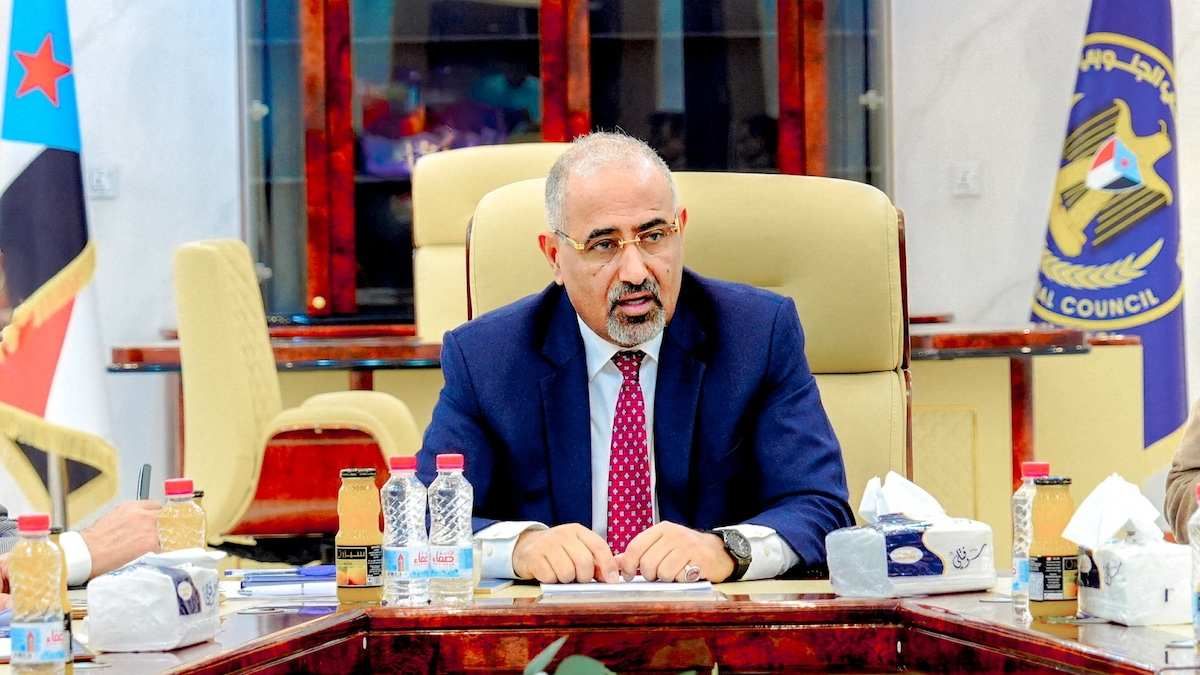
Yemeni separatist leader flees, exacerbating UAE-Saudi Arabia tensions
Yesterday, we reported that Yemen’s civil war is exposing tensions between the UAE and Saudi Arabia. The bad blood looks set to get worse, after the UAE – according to the Saudis – helped the separatist Southern Transitional Council leader Aidarous al-Zubaidi flee to Somaliland, an autonomous region of Somalia, before taking him to Abu Dhabi. Meanwhile, Saudi-backed Yemeni forces reportedly regained ground in Aden, the war-time capital of Yemen. The transfer of al-Zubaidi comes after the Saudi-backed Yemeni government recommended charges of high treason against him. Separately, the use of Somaliland for al-Zubaidi’s escape also suggests that a new alliance is budding between the UAE, Yemeni separatists, Somaliland, and Israel, underscoring how Yemen’s civil war is reshaping regional politics.
Minnesota’s Walz threatens to mobilize National Guard after ICE shooting
A US Immigration and Customs Enforcement officer shot and killedRenee Nicole Good, a 37-year-old mother of three, who had appeared to be driving away in Minneapolis yesterday. The shooting was caught on camera. In response, Trump said, “I want to see nobody get shot,” but suggested that Good, who had been protesting ICE actions, tried to run over the officer, though the footage suggested otherwise. Meanwhile, Minnesota Gov. Tim Walz, a Democrat, issued an order to ready the state’s National Guard, a move that theoretically could put it at odds with ICE, which has worked with the National Guard elsewhere. Whether this would lead to a direct confrontation between two armed forces is unclear, in part because Trump could federalize the National Guard under certain circumstances.
Trump to meet with Colombia’s Gustavo Petro
Sometimes you just gotta talk it out. Just days after US President Donald Trump accused Colombia’s leftwing president of selling cocaine and threatened to give him the Nicolás Maduro treatment, a phone call on Wednesday defused things. Petro and Trump – populists from opposite ends of the spectrum – have clashed over an array of issues, but a meeting in Washington is now in the works (note: the US will need first to restore Petro’s visa, which it cancelled last year after he attended a pro-Palestine rally in New York and called on US troops to disobey Trump). Colombia is one of Washington’s closest allies, receiving billions in aid as part of the “war on drugs.” But coca production there is still at record levels – driven by soaring demand in Europe and the US, and the Colombian government’s inability to eradicate coca crops, give farmers better options, and quash the cartels.