Skip to content
Search

Latest Stories

China

China moves to ban funky clothes

China street style

China street style

Make us preferred on Google

It’s been decades since China has felt the need to roll out new security laws, but in a post-COVID moment of sluggish economic growth, Chinese authorities are placing new emphasis on rules meant to keep people from rocking the boat. One proposed law in particular has drawn a big reaction across Chinese social media. Apparently, clothes really can hurt a nation’s feelings.

The draft of this law makes it a crime to wear, or force others to wear, clothing that “undermines the spirit or hurt the feelings of the Chinese nation.” Wearing clothes that authorities consider insufficiently Chinese could land you a 15 day jail sentence and a fine of the yuan equivalent of $680.


The first problem here is that there is no published description of what the new dress code demands, leaving citizens to guess what kind of tee-shirt, dress, or other clothing item might set off the alarm. Nor is it clear how police will decide whether the nation’s feelings have been hurt – and whether a young girl’s Korean boy band tee-shirt or a boy’s purple suit is the main culprit.

The larger problem is that the law signals yet again that the state neither knows nor cares what young people, those most likely to wear unconventional clothing, want. In a country where consumers have seen the value of the money in their pockets plunge to 16-year lows against the dollar, and where youth unemployment has surged to levels that persuaded authorities to stop publishing stats on the subject, new clothing restrictions that appear targeted at young people have set off waves of scorn online.

More For You

Is the US-China relationship reaching a breaking point?
- YouTube
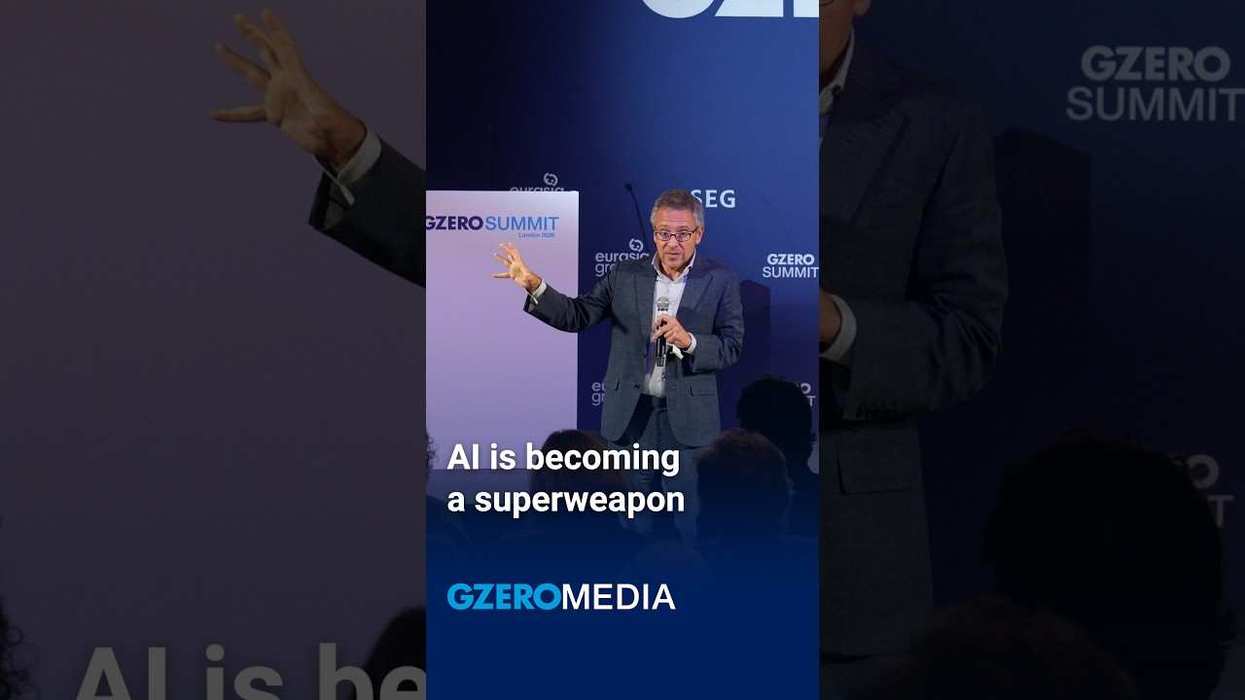
In his latest Quick Take, Ian Bremmer examines the stability of US-China relations and why he believes the period of relative calm between the two countries may be coming to an end. [...]
​Turkish President Tayyip Erdogan shakes hands with Saudi Crown Prince Mohammed bin Salman, next to Pakistan's Prime Minister Shehbaz Sharif.

Turkish President Tayyip Erdogan shakes hands with Saudi Crown Prince Mohammed bin Salman, next to Pakistan's Prime Minister Shehbaz Sharif, after signing a joint defence agreement in Mecca, Saudi Arabia, August 7, 2026.

Saudi Press Agency/Handout via REUTERS
Major new Middle East defense pact signed Saudi Arabia, Turkey, and Pakistan on a Friday signed a joint defense agreement that characterizes an attack on one as an attack on all. Although it doesn’t spell out specific obligations, the pact brings together Turkey’s formidable army (NATO’s second largest), Pakistan’s nuclear arsenal, and Saudi [...]
Kimi K3 is released by Moonshot AI at the World Artificial Intelligence Conference (WAIC) 2026 in Shanghai, China

Kimi K3, a new-generation AI model with 2.8 trillion parameters, is released by Moonshot AI at the World Artificial Intelligence Conference (WAIC) 2026 in Shanghai, China, July 20, 2026. It is currently the world's largest open-source model.

Oriental Image via Reuters Connect
On Monday, Beijing-based Moonshot AI released Kimi K3 for public download, an “open-weight” model that made headlines last week for reportedly matching – and in some cases outperforming – the most advanced systems from US rivals at a fraction of the cost. [...]
Why AI needs a global referee
- YouTube
In this “ask ian,” Ian Bremmer argues that the debate over whether the United States or China will lead artificial intelligence is overshadowing a more important question: who will govern a technology advancing faster than governments can regulate? [...]