Search
AI-powered search, human-powered content.
scroll to top arrow or icon

Leaders at Davos are turning "anxiety into action"

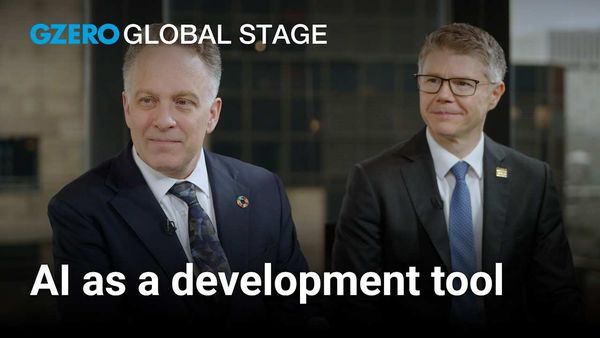
The shifting geopolitical landscape and uncertainty surrounding the future of AI have stirred anxiety among those gathered in Davos. Yet, there are glimmers of hope. “The most important thing for me is really to turn the anxiety into action," said Teresa Hutson, Corporate Vice President of Microsoft. She emphasizes the need for organizations, businesses, and individuals to tackle global challenges with proactive, “action-oriented optimism.” Only then does she believe we can start to solve problems that have so far felt unsolvable.

Others, like Annemarie Hou, Executive Director of the UN Office for Partnerships, share this hope. She sees promise in the business sector’s commitment to the Sustainable Development Goals at Davos as a testament. She remarks, "It's up to all of us right now, in the moment, to continue to push as far as we can and get the world as far as we can by 2030."

This conversation is presented by GZERO, in partnership with Microsoft, from the 2025 World Economic Forum in Davos, Switzerland. The Global Stage series convenes global leaders for critical conversations on the geopolitical and technological trends shaping our world.
Follow GZERO coverage of Davos here: https://www.gzeromedia.com/global-stage

More from Global Stage

Can we use AI to secure the world's digital future?

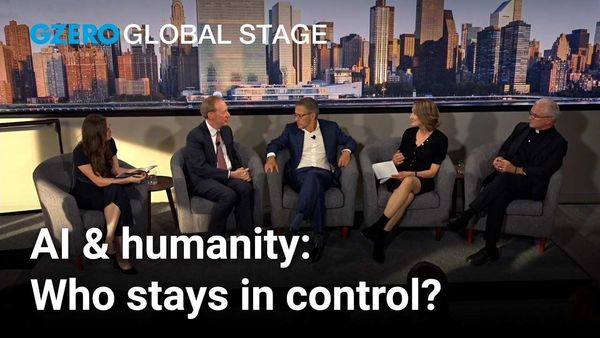
How do we ensure AI is safe, available to everyone, and enhancing productivity? It’s a big topic at this year’s UN General Assembly. That’s why GZERO’s Global Stage livestream brought together leading experts at the heart of the action for “Live from the United Nations: Securing our Digital Future,” an event produced in partnership between the Complex Risk Analytics Fund, or CRAF’d, and GZERO Media’s Global Stage series, sponsored by Microsoft.

Is the Europe-US rift leaving us all vulnerable?

As the tense and politically charged 2025 Munich Security Conference draws to a close, GZERO’s Global Stage series presents a conversation about strained relationships between the US and Europe, Ukraine's path ahead, and rising threats in cyberspace.

How to prepare the global economy for the age of AI

At the 2026 World Bank/IMF Spring Meetings, GZERO’s Tony Maciulis asked Microsoft's Vickie Robinson what it will take to prepare economies for the age of AI and how quickly it needs to happen.

A full-stack approach to AI

At the 2026 World Bank/IMF Spring Meetings, GZERO’s Tony Maciulis spoke with Microsoft’s Vickie Robinson and the World Bank Group’s German Cufré on why AI readiness depends on closing the digital access gap.

Gender gap in AI job displacement

Who benefits from AI and who is left behind? Speaking at the United Nations, Sarah Steinberg highlighted the disproportionate impact of AI on women in the workforce. One in three women works in a job "likely to be disrupted or significantly changed by AI compared to one in four men globally,” Steinberg said. At the same time, women account for only a third of those building AI skills, creating a skills gap that could limit access to emerging jobs.

How can AI improve everyday life for citizens?

How can artificial intelligence improve everyday life for citizens? Speaking at the United Nations, Parvathaneni Harish highlighted India’s approach to digital public infrastructure. “Today in India, the cost of access to internet is the lowest in the world… and data usage per capita is one of the highest,” he said.