Skip to content
Search

Latest Stories

GZERO AI

Meta’s AI is being used by Chinese military researchers

​The Meta logo is seen on a mobile phone with the Chinese flag in the background in this photo illustration.

The Meta logo is seen on a mobile phone with the Chinese flag in the background in this photo illustration.

Photo by Jaap Arriens / SIpa USA via Reuters

Meta, the parent company of Facebook and Instagram, has taken a different approach to the AI boom than many of its Silicon Valley peers. Instead of developing proprietary large language models, Meta has championed open-source models that are free and accessible for anyone to use. (That said, some open-source advocates say it’s not truly open-source because Meta has usage rules.)


But because of Meta’s openness, Chinese researchers were able to develop their own AI model — for military use — using one of Meta’s Llama models, according to a paper they published in June, but first reported by Reuters on Nov. 1.

Chinese university researchers, some of whom have ties to the People's Liberation Army, developed a model called ChatBIT using Llama 2 — first released in February 2023. (Meta’s top model is Llama 3.2, released in September 2024.) In the paper reviewed by Reuters, the researchers said they built a chatbot “optimized for dialogue and question-answering tasks in the military field.” It will be able to be used for “intelligence analysis, … strategic planning, simulation training, and command decision-making,” the paper said.

Llama’s acceptable use policy prohibits using the models for “military, warfare, nuclear industries or applications [and] espionage.” Meta told Reuters that the use did violate the terms and said it took unspecified action against the developers but also said the discovery was insignificant. “In the global competition on AI, the alleged role of a single, and outdated, version of an American open-source model is irrelevant when we know China is already investing more than a trillion dollars to surpass the US on AI,” Meta said.

Open-source development has already become a hot-button issue for regulators and tech advocates. For example, the California AI safety bill, which was vetoed by Gov. Gavin Newsom, became controversial for mandating developers have a “kill switch” to shut off models — something that’s not possible for open-source developers who publish their code. With an open-source model in China’s hands — even an old one — regulators may have the fodder they need to try and crack down on open-source AI the next time they try to pass and enact AI rules.



More For You

What we learned from a week of AI-generated cartoons
Courtesy of ChatGPT
Last week, OpenAI released its GPT-4o image-generation model, which is billed as more responsive to prompts, more capable of accurately rendering text, and better at producing higher-fidelity images than previous AI image generators. Within hours, ChatGPT users flooded social media with cartoons they made using the model in the style of the [...]
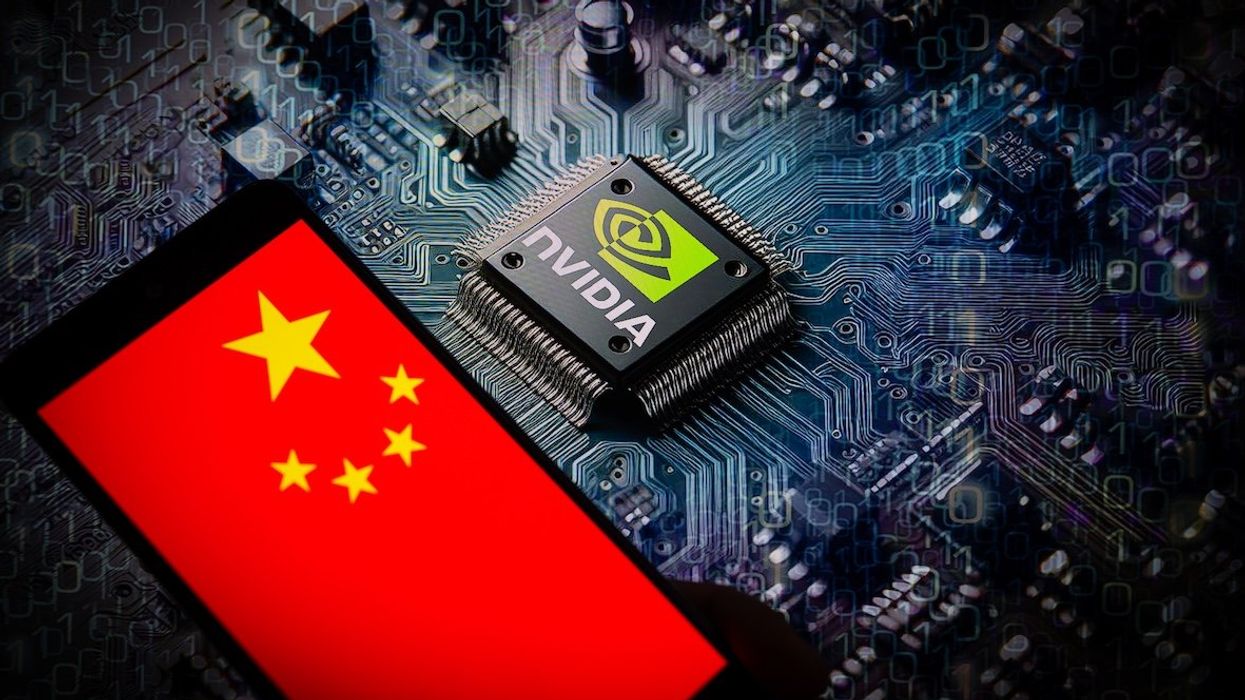
The flag of China is displayed on a smartphone with a NVIDIA chip in the background in this photo illustration.

The flag of China is displayed on a smartphone with a NVIDIA chip in the background in this photo illustration.

Jonathan Raa/NurPhoto via Reuters
H3C, one of China’s biggest server makers, has warned about running out of Nvidia H20 chips, the most powerful AI chips Chinese companies can legally purchase under US export controls. [...]
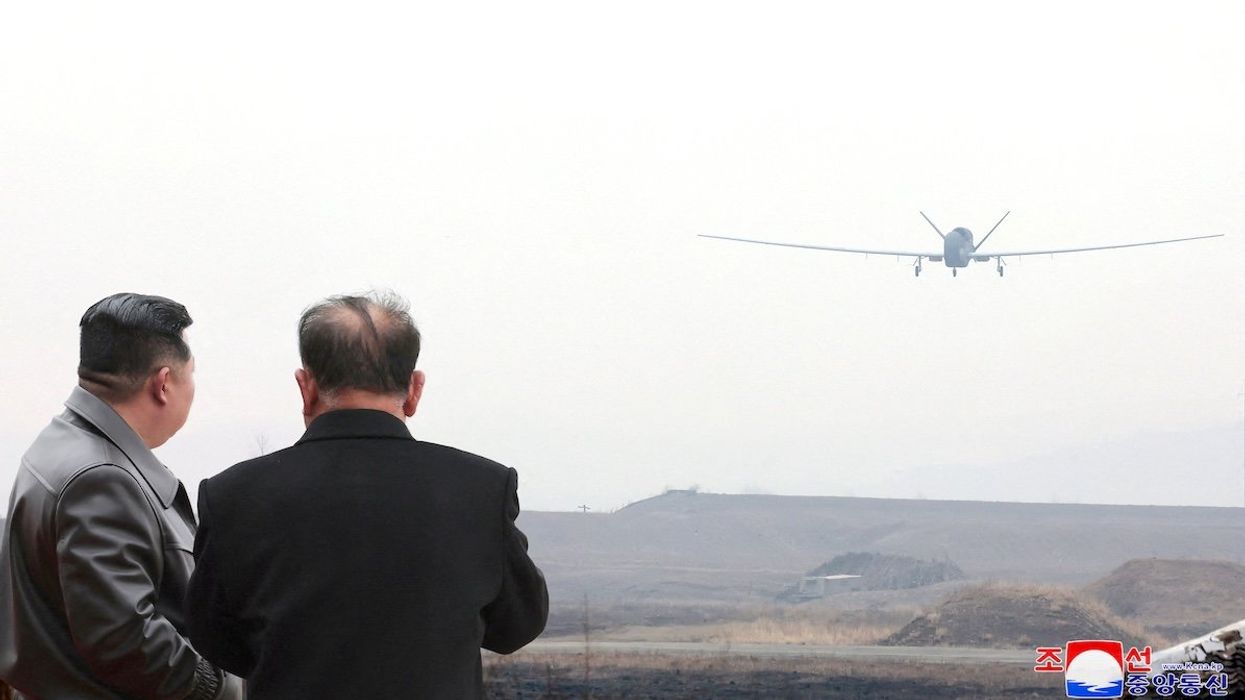
​North Korean leader Kim Jong Un supervises the test of suicide drones with artificial intelligence at an unknown location, in this photo released by North Korea's official Korean Central News Agency on March 27, 2025.

North Korean leader Kim Jong Un supervises the test of suicide drones with artificial intelligence at an unknown location, in this photo released by North Korea's official Korean Central News Agency on March 27, 2025.

KCNA via REUTERS
Hermit Kingdom leader Kim Jong Un has reportedly supervised AI-powered kamikaze drone tests. He told KCNA, the state news agency, that developing unmanned aircraft and AI should be a top priority to modernize North Korea’s armed forces. [...]
The logo for Isomorphic Labs is displayed on a tablet in this illustration.

The logo for Isomorphic Labs is displayed on a tablet in this illustration.

Igor Golovniov/SOPA Images/Sipa USA via Reuters
In 2024, Demis Hassabis won a Nobel Prize in chemistry for his work in predicting protein structures through his company, Isomorphic Labs. The lab, which broke off from Google's DeepMind in 2021, raised $600 million from investors in a new funding round led by Thrive Capital on Monday. The company did not disclose a valuation. [...]