Over his first month in office, President Donald Trump has presented a range of policy prospects as possible. He has also undertaken a wide number of presidential actions. Together, these measures have shifted the global context, leaving partners and rivals to orient to a vastly changing reality and wonder how seriously they should take him.
Trade dissonance
Despite campaigning on US trade imbalances and promising to impose global tariffs, many doggedly doubted Trump’s intentions as president. When he suggested on Truth Social last December that his administration would introduce 25% tariffs on Canada and Mexico by Feb. 1, with a 10% additional tariff for China, the market held its breath. A common refrain of wait and see made the rounds. Colombia’s near-miss in late January when Trump threatened to escalate tariffs if the country did not accept military deportation flights sparked concern but felt further afield.
The mixed response to Trump’s tariff threats belies a cognitive dissonance that surrounds him and his administration. But there’s one thing anyone who’s followed Trump’s political career over the last decade should know: to believe him when he tells us what he intends to do. When he offers up an idea in a press conference, lists it on a webpage as a promise to be kept, posts about it on Truth Social, repeats it hundreds of times on the campaign trail, puts policy in place around it as president, and establishes a new governmental agency (the External Revenue Service) to execute, it is a pretty safe bet he plans to impose the tariffs.
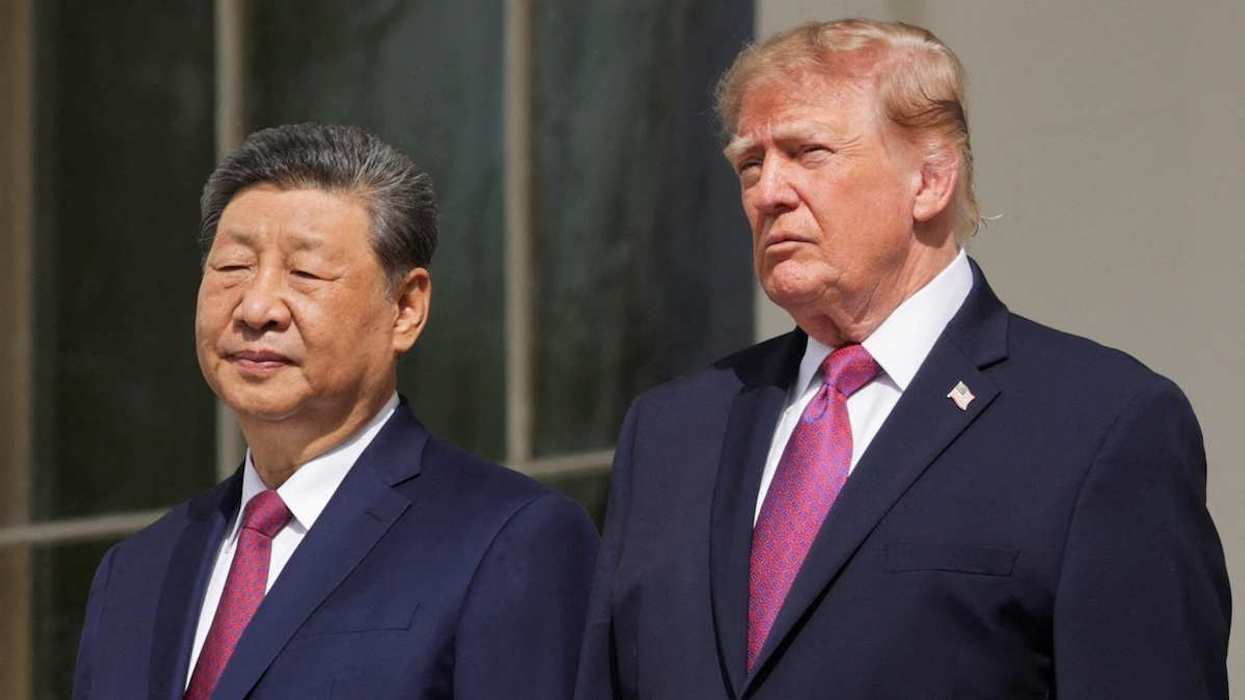
On Feb. 1, the Trump administration formally announced tariffs on Canada and Mexico, with an additional 10% tariff on imports from China. When both Canadian and Mexican leadership reached out to Trump with commitments on border safety and curbing the flow of illegal drugs, the president agreed to a 30-day tariff reprieve. China offered no such concessions, and now the two are locked in a potentially accelerating dance of trade threats and investigations. With incoming levies on steel and aluminum, the Trump administration has already shown that it plans to rely over and over on pulling the tariff lever to further its trade agenda. This is the truth.
Foreign aid dismantling
As the new administration pursued its trade plan ambitions, details of another policy shift emerged: the apparent unwinding of the US Agency for International Development. The sudden reversal in 60 years of US foreign aid policy caught many working in the agency off-guard and sent ripples across the development community. Global headlines highlighted impacts on health missions, sustainability and climate initiatives, and frontline staff in Ukraine. Long a foundational component of American soft power, a US retrenchment on foreign aid likely opens the door for other global participants like China to step through.
Even with the fallout tally still being counted, the USAID decision was a foreseeable reaction to developing facts on the ground. Trump signed an executive order on his first day in office “reevaluating and realigning US foreign aid.” According to the order, “The United States foreign aid industry and bureaucracy are not aligned with American interests and in many cases antithetical to American values.” Trump immediately implemented a 90-day pause in US foreign development assistance. Likewise, in his capacity as head of the new Department of Government Efficiency, Elon Musk has persistently targeted USAID as a “criminal organization” and “beyond repair.”
Drowned out by attention on some of the administration’s more headline-grabbing maneuvers like an end to “Birthright Citizenship” and an extended pause on the TikTok ban, the impact on US foreign aid was initially overlooked. But the underlying context was there. This is another truth.
Middle East dismay
Trump saved the boldest declaration of his young administration for the arena of US hard power. Last week, Trump proposed an alternative trajectory for the Middle East: He repeatedly called for Egypt, Jordan, and others to accept millions of Palestinians from Gaza. At a press conference following meetings with Israeli Prime Minister Bibi Netanyahu, Trump took it a step further, suggesting that “The US will take over the Gaza Strip, and we will do a job with it too.”
Trump’s plan to “own” Gaza and convert it into the “Riviera of the Middle East” stunned the global audience. While Trump’s plans struck like lightning, they were not without prior seeding. According to reports, a thread of redeveloping Gaza has been woven at times throughout the Trump presidential campaign, including by the president’s son-in-law Jared Kushner early last year. In response, voices ranging from the Crown Prince of Saudi Arabia Mohammed bin Salman to the French foreign ministry raised deep concerns. Even still, as farfetched as Trump’s Gaza ambitions may seem, they provide a barometer of how far the current administration is willing to push the envelope. A fabrication, for now, but with designs on converting some kernel – “a concept of a plan” – into reality.
In describing the “historic proposal” for the US to take over Gaza, White House Press Secretary Karoline Leavitt explained that “Insanity is doing the same thing over and over again and expecting different results.”
Through a breakneck pace of policy change and action, the Trump administration has demonstrated a willingness to rethink the “same thing.” Everyone else is left to calibrate to the new dynamics, pondering if it just might all turn out to be truths.
Lindsay Newman is a geopolitical risk expert and columnist for GZERO.