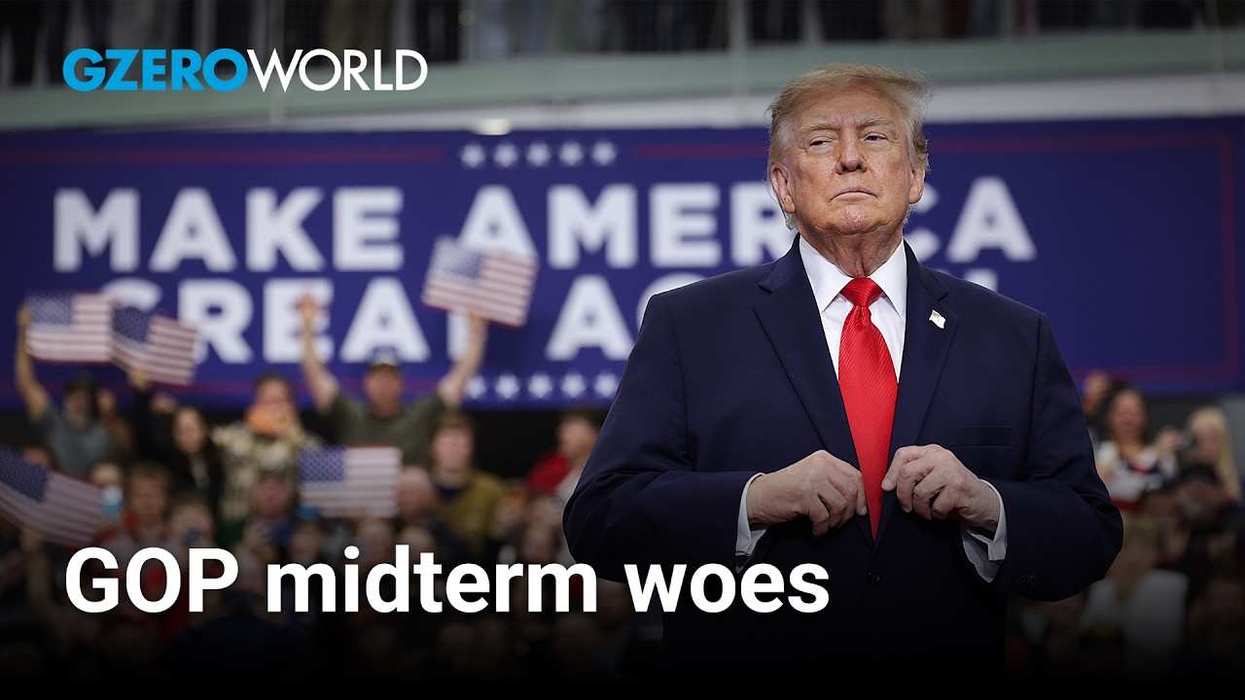
Six weeks into Donald Trump’s second presidency, he delivered his first major address. Speaking before a joint session of Congress late Tuesday, he highlighted some of the nearly 100 executive orders he has signed, touted cuts to the federal government, and outlined his bold vision for reshaping the US over the next four years.
Trump began by focusing on culture war issues, including the elimination of DEI programs and a ban on transgender athletes in competition. He tied these topics to the Department of Government Efficiency’s mission to reduce government waste, listing what he called “woke” programs that had been defunded. He also emphasized his administration’s success in strengthening US border security and immigration enforcement, pointing to a 25-year low in border crossings during his first month in office and the passage of multiple immigration bills through Congress.
Trump blamed the country’s economic struggles — such as high grocery prices and egg shortages — on Joe Biden’s administration. As for his approach, Trump touted populist economic policies, including eliminating taxes on tips, overtime pay, Social Security benefits, and car payments for US-made vehicles. He also urged Congress to extend his 2017 tax cuts and assured that DOGE initiatives would save taxpayers money.
Trump’s speech notably came amid market turmoil following his newly imposed tariffs on Canada, Mexico, and China. On Monday, the S&P 500 dropped 1.2%, wiping out its gains since Election Day, while the Nasdaq declined 0.4%. Trump announced additional reciprocal tariffs set to take effect on April 2, acknowledging they could cause short-term economic pain and urging American farmers to “bear with me.” During his first term, Trump secured tariff relief from China for the agriculture industry ahead of the midterms.
On Ukraine, Trump spoke at length about brokering a peace deal, reading a letter from President Volodymyr Zelensky stating that Ukraine was ready to negotiate and commit to a minerals agreement. He criticized Europe for spending more on Russian gas than on Ukraine’s defense and emphasized the importance of engaging both sides in diplomacy. “If you want to end wars, you have to talk to both sides,” he said.
Trump also argued that the US needed Greenland for “international world security.” He extended an open invitation, saying Greenland would be welcomed into the US “if you choose,” before adding moments later, “I think we’re going to get it one way or the other.”
What about the Democrats? Partisan tensions flared from the start of the speech. Still, Democratic boos were quickly subdued when Rep. Al Green from Texas was removed from the chamber after repeatedly shouting, “You have no mandate to cut Medicaid!” at the president. Democratic protests then became more restrained. Many members silently expressed their opposition through their attire — women dressed in pink, while men wore blue and yellow ties in support of Ukraine. Later, a handful of members walked out, revealing black t-shirts emblazoned with the word “RESIST.”
Following Trump’s speech, Democrats made their appeal to the American people. Michigan Sen. Elissa Slotkin called for a return to bipartisanship and outlined key policy priorities, including lowering costs, strengthening national security – both at the border and abroad – and defending American democracy. She criticized Trump for prioritizing billionaires and for abandoning US allies in favor of autocrats.
Slotkin’s speech was concise, though likely delivered after many Americans had already turned off their televisions. Still, it marked the first time Democrats had formally outlined a party platform since losing the White House and both chambers of Congress in November.