Even still, with six months under their belt, US allies and adversaries continue to be confounded by the pace of dynamics coming their way. The influx of volatility is largely treated as an unknown variable to be built into strategic conversations and planning. An imperative to hold space for the “known unknowns” that will require navigation and policy response. The United Kingdom’s 2025 National Security Strategy released in June, for instance, labels this moment “an era of radical uncertainty” with no “stable equilibrium” in sight.
For the US administration, dysregulation is part of the end game. The intention is keeping global stakeholders on their toes, or as the White House calls it, “Keeping America in the Driver’s Seat.”
Security sphere uneasiness
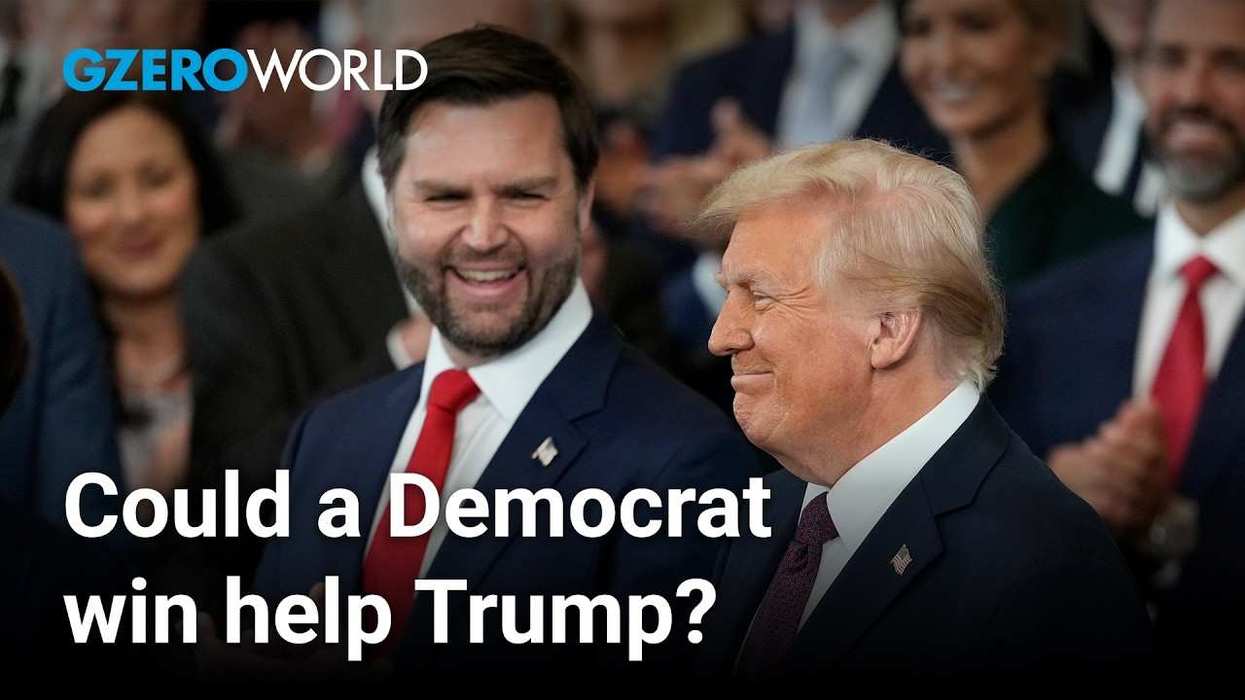
Without a clear sense of what lies ahead, the working global response is to brace for impact, hope the ripples emerging from the US are not directed your way, and when they are, to do the best to ride the waves. In Europe, where the memory of US Vice President JD Vance’s remarks at this year’s Munich Security Conference still brings a shudder, there is a fleeting sense of relief at surviving June’s NATO Summit unscathed. A commitment to invest 5% of annual GDP on core defense requirements and defense- and security-related spending by 2035 feels like a fair price to keep the US engaged. After a decade or so wandering through the wilderness and being chided by successive US presidents about fair dues, European capitals find themselves buoyed by a reenergized NATO alliance.
With the hurdle of the NATO Summit cleared, Europe returns its focus to another summer offensive in Ukraine. Initial optimism that a change in the US administration might provide exit ramps for the war has subsided. Trump’s own promises to bring the war to an end quickly have been frustrated by the realities of an intractable conflict and the limits of relational diplomacy. Amidst an intensifying Russian missile and drone campaign of late, Europe is not sure which messaging from Washington is noise and which is signal. Reporting that the US Defense Department would halt the delivery of air defenses and artillery to Ukraine as part of a stockpile review had a chilling effect. Trump’s subsequent critical comments of Russian President Vladimir Putin at a US Cabinet meeting, alongside plans to sell weapons bound for Ukraine to NATO allies, reduced some of Europe’s anxiety. But each time Europe thinks it is doing a two-step with Trump only to find itself facing radical uncertainty, the known unknowns leave a mark.
A cresting trade tidal wave
Alongside security, the other major wave rippling around the globe this summer is a trade tidal wave. Just under the wire, the Trump administration extended implementation of so-called “reciprocal tariffs” from July 9th to August 1st. According to the White House, the further pause was based on “information and recommendations from senior officials, including information on the status of trade negotiations.” Thus far, a “Liberation Day” target of 90 deals in 90 days has resulted in trade agreements with the UK and Vietnam and a temporary trade truce with China (even as it has imposed new export restrictions on rare earths).
While the Trump team will be privately disappointed by the number of deals achieved to date, it is unlikely to be discouraged. As the world looks to interpret what comes next on trade, global stakeholders would do well to hold firm to a couple of framing principles. The first is that the US administration is ideological on trade, and has positioned these ideals at the center of its current-term ambitions.
The second grounding principle is that the president views himself as dealmaker-in-chief. He prefers to anchor negotiations by naming a price early in the process: in this case the Liberation Day reciprocal tariff rates. The anchoring position may not be where negotiations land, but it has the effect of shifting perspectives and forcing behavioral change. Europe’s 2025 NATO defensive spend commitments provide Trump with proof that this approach (plus patience) works. Likewise, Canadian Prime Minister Mark Carney’s rescission of a digital services tax (DST), disfavored by the US administration, is another data point for Trump’s negotiating strategy. Canada, for its part, is being repaid for its cooperation with a renewed threat of 35% tariffs on US imports.
Given all its levers of power, the US administration has taken to a tariff-letter-writing campaign. South Korea, Brazil, Philippines, Malaysia and a dozen or so others have been the recipients of letters notifying them of US willingness to continue its trading relationship but on new terms. What gets overlooked by too narrow a focus on the latest trade threats, and viral memes suggesting “Trump always chickens out,” is that against the wider perspective the US administration has already succeeded. Whether Brazil is hit with 50% tariffs over Trump’s displeasure with former Brazilian President Jair Bolsonaro’s legal investigations, whether Japan’s government falls over the precariousness that the threatened 25% tariffs have wrought, whether copper imports face 50% duties now and pharmaceuticals 200% in a year’s time or not; trade is at the top of everyone’s priorities.
The Trump administration has set a target of a new Golden Age for the American people. Through adopting an elusive approach to security expectations and defensive support, unsettling the global trade infrastructure, exporting risk, the president makes clear the US will be driving the agenda. Everyone else is sitting in the passenger seat.