Just when you thought tensions in the Middle East couldn’t get much worse … a pair of explosions rocked the Iranian city of Kerman on Wednesday, killing scores of people.
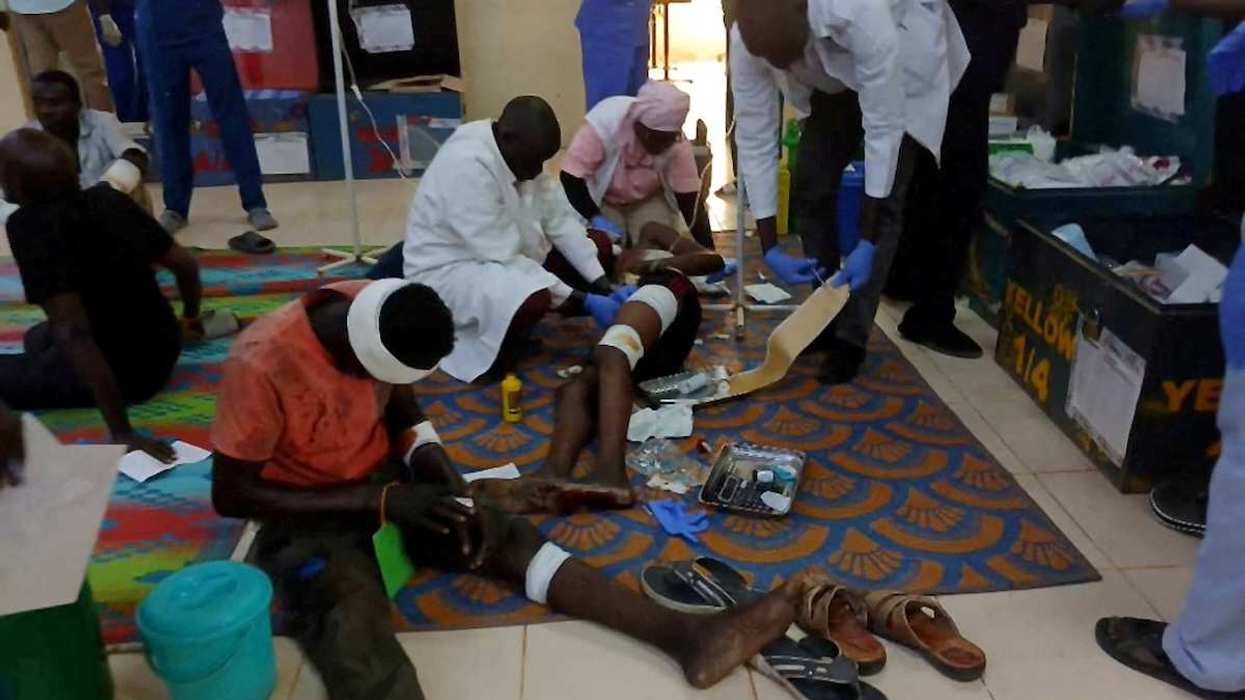
Wednesday’s explosions in Iran hit near the grave of Qassim Soleimani, the prominent Iranian general killed in 2020 by a US drone strike, as people gathered to commemorate the anniversary of his assassination. At least 84 people were killed.
Iranian officials described the incident as a terrorist attack, and Iranian President Ebrahim Raisi appeared to blame Israel.
“I warn the Zionist regime, do not doubt that you will pay a heavy price for this crime and the crimes you have committed,” Raisi said in a televised address.
Raisi's political deputy, Mohammad Jamshidi, also blamed Israel and the US.
No one has claimed responsibility. The US has denied involvement and said it saw no signs that Israel was behind the blasts.
The explosions come amid growing fears that the region is on the brink of a broader conflict as Israel finds itself entangled not only with its war against Iran-backed Hamas militants in Gaza but also in tit-for-tats with other Iran-backed militant groups like Hezbollah in Lebanon. On Tuesday, Israel was accused of killing a senior Hamas leader with a drone strike in Beirut – but Israeli leaders have not claimed responsibility.
Was it Israel? While there is plenty of tension between Israel and Iran at the moment, the Jewish State is unlikely to be behind the explosions, says Gregory Brew, an Iran expert at Eurasia Group.
“For one thing, the attack doesn’t fit the M.O. of previous Israeli operations in Iran, which generally go after specific targets of military or strategic significance,” he says.
Also, while this was a terrorist attack designed to inflict maximum civilian casualties, Brew says “it seems more likely it was the work of terrorist groups active in Iran, including Islamist militants with ties to ISIS, who have carried out such attacks in the past.”
Iran has blamed Sunni terror groups like the Islamic State in Khorasan, also known as ISIS-K, for previous terror attacks.
What will Iran do? Raisi warned Israel that Iran’s response to the blasts would be “severe.”
Picking a fight with Israel (which is believed to have nukes) would almost undoubtedly draw in the US (a nuclear nation) and put Iran in an exceptionally precarious position. Iran (which has no nukes, despite recent advances) would be outmatched on multiple levels in a conventional fight against Israel and its powerful allies, which also can decimate Iranian proxies across the region.
Tehran has so far sought to avoid a regional war, even as its proxies clash with Israel and the US, precisely because of the “tremendous damage” it would do to Iran’s security position, says Brew.
But if Tehran does make the dangerous decision to escalate the situation, the fight “would likely be a proxy war, though Iran would do whatever it could to support Hezbollah and other groups with arms, funds, and personnel. Iran is loath to risk its own military assets in a fight outside of Iranian territory,” adds Brew.