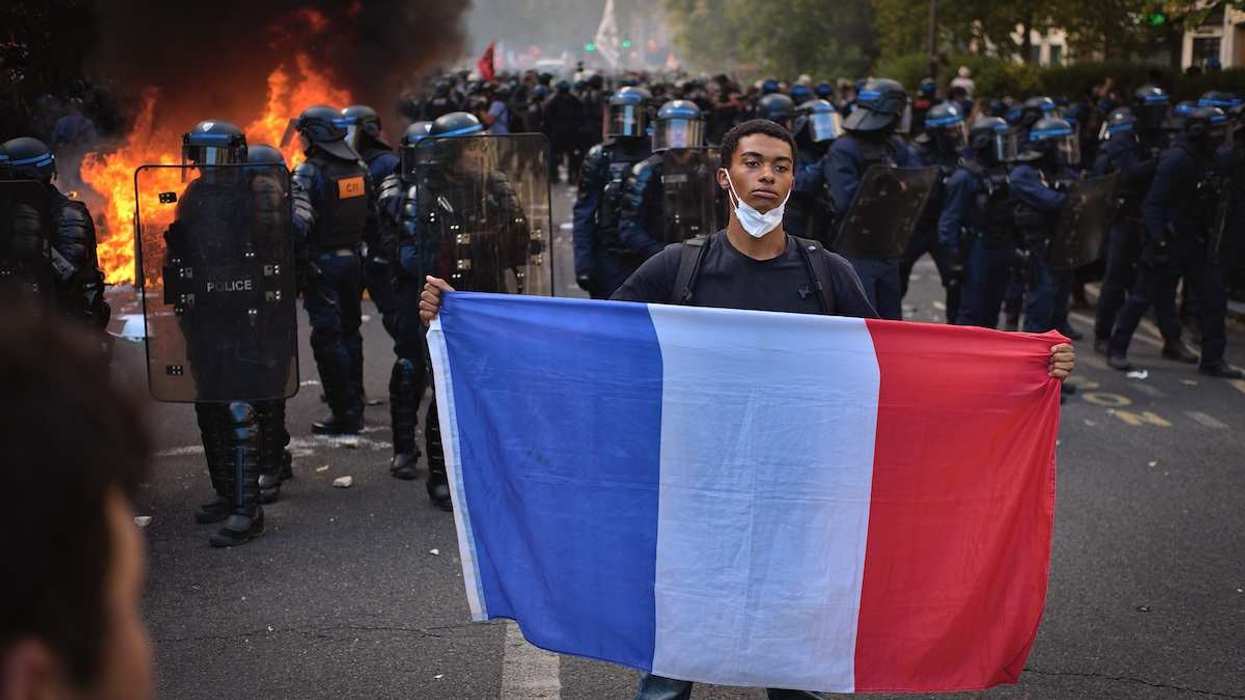
As protests provoked by the police killing of George Floyd continue across the United States, demonstrators are demanding police reform.
The statistics are grim: US police detain and kill far more people than those in any other developed countries. The rate of fatal police shootings in the US is thirty times higher than in Germany. The rate of deaths in police custody is more than double Australia's and six times higher than in the UK.
Crucially, the data show that black people – in particular black men – are disproportionately victimized. US police use force with black suspects nearly four times more frequently than with whites, according to a study by the Center for Policing Equity.
But what exactly does "police reform" mean? Calls to "defund" the police have become a rallying cry. There is a wide range of demands from protesters and activists. The proposals fall into two broad categories.
Redefine police behavior.
Some activists want to start by tightening police rules. The most prominent set of recommendations here are the "8 Can't Wait" reforms – a list of eight measures developed by Campaign Zero, an advocacy group that grew out of the Black Lives Matter protests of 2014.
The measures include banning chokeholds, compelling officers to try de-escalation before using lethal force, and requiring officers to report all threats and uses of force on the job. You can read the full list here.
Campaign Zero says it's a cost-free way to swiftly and substantially decrease police violence. But it's largely up to the country's 18,000 local police departments to adopt the measures. Some big city police chiefs and union bosses have pushed back. They say these rules are unnecessary or that they will make it harder for officers to respond adequately to dangerous situations.
Redefine policing altogether.
Many people want to go much further, by taking some of the funding earmarked for police and redirecting it towards social services, health care, and education, particularly in low-income communities.
Supporters of this approach – sometimes called "defunding", though better described as "reorienting" — argue it would reduce crime by addressing the root socioeconomic causes of criminality, and reduce police brutality by drawing down the involvement of police in situations where excessive force is common – mental health or drug abuse emergencies, for example. Critics worry that reducing police funding will make cities less safe, particularly in poorer neighborhoods where violent crime is more prevalent. And powerful police unions are hardly keen on seeing their departments lose resources.
A local issue or a national one?
Unlike in most other countries, funding and oversight of police in the US happens mostly at the local level.
But activists are calling for the federal government to act in a few important ways: One is to weaken federally-mandated protections for police officers who are accused of misconduct. Another is to limit police departments' access to military-style SWAT equipment. The militarization of police, which began during the "War on Drugs" in the 1990s, has contributed to the excessive use of force, particularly against people of color.
Lastly, Congress does appropriate several hundred million dollars a year for police training across the country. Activists say that by attaching stricter conditions and greater oversight to that money, Congress could help to change local police approaches in a way that would benefit both police departments and the communities they serve.