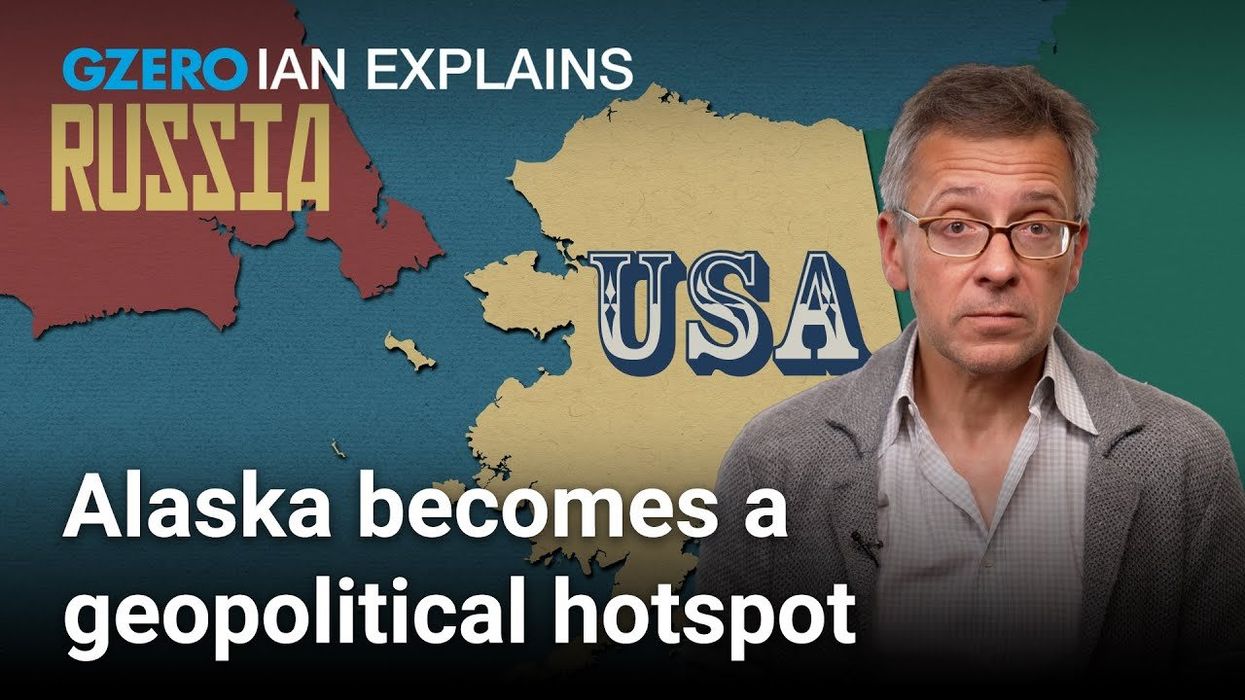
Ian Explains: Alaska is not just a state, it's a geopolitical outpost
August 10, 2024
Global Stage LIVE from United Nations WATCH REPLAY
On Ian Explains, host Ian Bremmer makes complex issues about global politics understandable. Ian Explains is a weekly segment on GZERO WORLD with Ian Bremmer, GZERO's weekly program about global news and current affairs.
Amid Russia's growing territorial aggression and a fast-warming Arctic, Alaska's physical place in the world has become more geopolitically relevant than ever. Alaska's northern coastline makes the US one of six countries with exclusive economic zones in the Arctic Circle. And while no country owns the North Pole—it isn't even land—it is constantly shifting sea ice, which is going to melt. But as that happens, the Arctic is opening up, and countries are now racing to lay claim to untapped deposits of oil, natural gas, and rare earth minerals, newly accessible shipping routes, and strategic military positions between North America and Eurasia.
Russia is winning by most metrics. The Russian government has more than three dozen polar icebreakers in its fleet, compared to two, not two dozen, two in the United States, giving it a strategic and operational advantage. Russia accounts for nearly half the Arctic population, more than half its coastline, and the Arctic industry. Moscow has spent years building up military outposts in the region as polar ice melts and its northern waters become exposed.
Russia's also increasing cooperation in the region with China, which sees the Arctic as an important part of its strategic economic and environmental interests. China is believed to be exploring a military presence there. NATO countries suspended political-level meetings with Moscow, and all international research projects have been put on hold. Until Arctic states can find a way to work together, rising tensions and a zero-sum game of territorial ambition will give the most remote part of the planet a lot more of our attention.
New digital episodes of GZERO World are released every Monday on YouTube. Don''t miss an episode: Subscribe to GZERO's YouTube channel and turn on notifications (🔔).




Keep up with what’s going on around the world - and why it matters.