Poland backs down on contentious media law. Poland’s populist President Andrzej Duda has vetoed a law that would have barred companies outside of the European Economic Area from owning a stake in Polish media corporations. Critics say the now-nixed law was aimed at silencing US-owned news channel TVN24, which has covered Warsaw’s increasing authoritarian tendencies in recent years. Indeed, Washington was blindsided on December 17 when Poland’s parliament adopted the new law, saying it violates a trade and economic agreement between the two countries. Duda’s ruling Law and Justice Party, meanwhile, which heads one of Europe’s most “illiberal” governments, says the legislation was not aimed at ally Washington, but rather at freezing out hostile actors – like Russia – from its media ecosystem. Duda has been in a tight spot: the nationalist leader previously said he supported the proposed legislation, but he has clearly decided that a deepening row with Washington amid rising inflation and a COVID spike at home is not worth the headache.
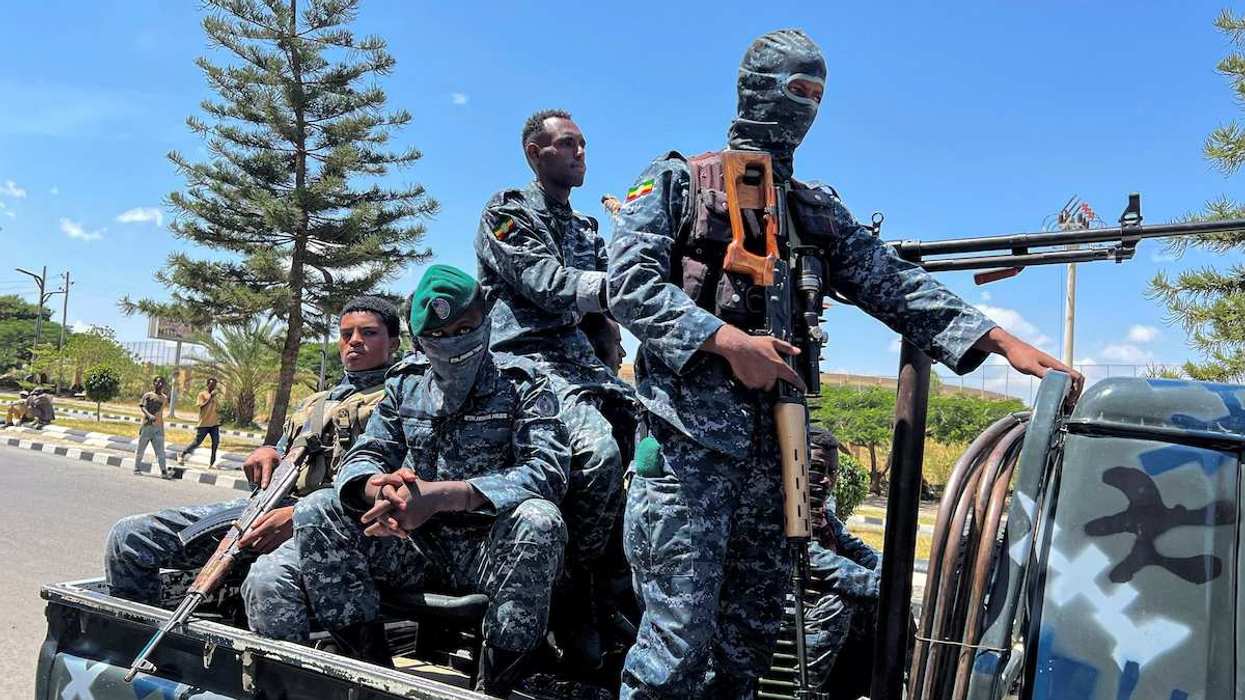
Somali president and PM clash. The president of Somalia on Monday moved to depose the country’s prime minister as part of an escalating struggle for power that could plunge the fragile East African country into chaos. President Mohamed Abdullahi Mohamed accuses PM Mohammed Hussein Roble of stealing land from the armed forces. The PM, meanwhile, says this is a bogus charge intended to halt ongoing parliamentary elections. Earlier this year, President Mohamed’s attempt to extend his term by two years provoked a violent backlash. He walked that back as part of a tenuous power-sharing agreement with PM Roble, which included a plan to hold fresh elections by the end of 2021. But so far, those elections — run under a complex system in which traditional elders select parliamentary delegates to elect the president — have been only partially completed. The clash between the country’s two most powerful men, who hail from rival clans, threatens to split the country’s armed forces and other security services. The powerful jihadist militants of al-Shabaab, meanwhile, who have waged war on the Somali government since 2007, are happy to have a distraction than can help them carry out deadly attacks. The big loser in this drama are the six million Somalis (roughly a third of the population) who the UN warns “urgently need humanitarian support.”
Turkey launches terror probe of Istanbul city employees. The Turkish government is investigating whether more than 400 employees of the Istanbul municipal government have ties to terrorist or militant groups. Tensions between Istanbul and the national government have run particularly high since 2019, when popular opposition leader Ekrem Imamoglu defeated the candidate of President Recep Tayyip Erdogan’s ruling AKP party in mayoral elections. And since a failed 2016 coup, Erdogan's government has jailed or removed tens of thousands of officials across the country for alleged ties to militant or religious groups that are at odds with Ankara. Critics of Erdogan’s government say the Istanbul terrorism probe is meant to weaken Mayor Imamoglu, who is seen as a potential rival to the increasingly unpopular Erdogan in 2023 presidential elections. And here, in case you missed it, is Signal's imaginary look at President Erdogan’s seemingly crazy economic policies… from his own perspective.