Skip to content
Search

Latest Stories

popular

What We’re Watching: China's zero-COVID shift, Russia's fertilizer deal, Ramaphosa's corruption probe, EU's oil wrangling

​People in Hong Kong hold sheets of paper in protest over coronavirus disease restrictions in mainland China.

People in Hong Kong hold sheets of paper in protest over coronavirus disease restrictions in mainland China.

Reuters

China hints zero-COVID shift, censors online protesters

Chinese people who can't wait to ditch zero-COVID — basically everyone except the government — got a glimmer of hope Thursday, when the senior official overseeing the policy said that China was entering a "new stage" in taming the virus. Although what that means is unclear, his comments follow moves by several big cities to relax lockdown rules. Meanwhile, now that most COVID protesters are off the streets, Xi Jinping's censors have taken the fight to cyberspace. They'll have to get creative because Chinese netizens are now ranting about zero-COVID with the online equivalent of the now-verboten blank sheets of paper: sarcastic memes or words that sound similar to Xi or resign. Interestingly, the government outsources content moderation to social media companies that use a mix of humans and artificial intelligence. Exhaustion with zero-COVID might be the biggest test to date of a system that’s not designed to be perfect but rather effective enough at wiping out critical voices.


Some rare good food news out of Ukraine

The UN says it is on the verge of brokering a deal to resume Russian ammonia exports via a Black Sea port in Ukraine. What’s ammonia anyway? The smelly gas is a key ingredient in nitrate fertilizer, which is needed to help plants and seeds grow. Russia and Ukraine are both major global exporters of grain and fertilizer, and disruptions to the output of both due to the ongoing war have led to a global food crisis that’s plunged some 47 million people into “acute hunger,” with import-reliant Africa and the Middle East particularly hard hit. The resumed use of this ammonia pipeline is crucial to avoiding mass food shortages in a year’s time. This comes after a deal brokered by Turkey in the summer saw grain exports pick up again after a Russian blockade caused global shortages and record-high food inflation in developed and emerging economies while bringing poor countries like Somalia to the brink of famine.

A weakened Ramaphosa likely to stay on

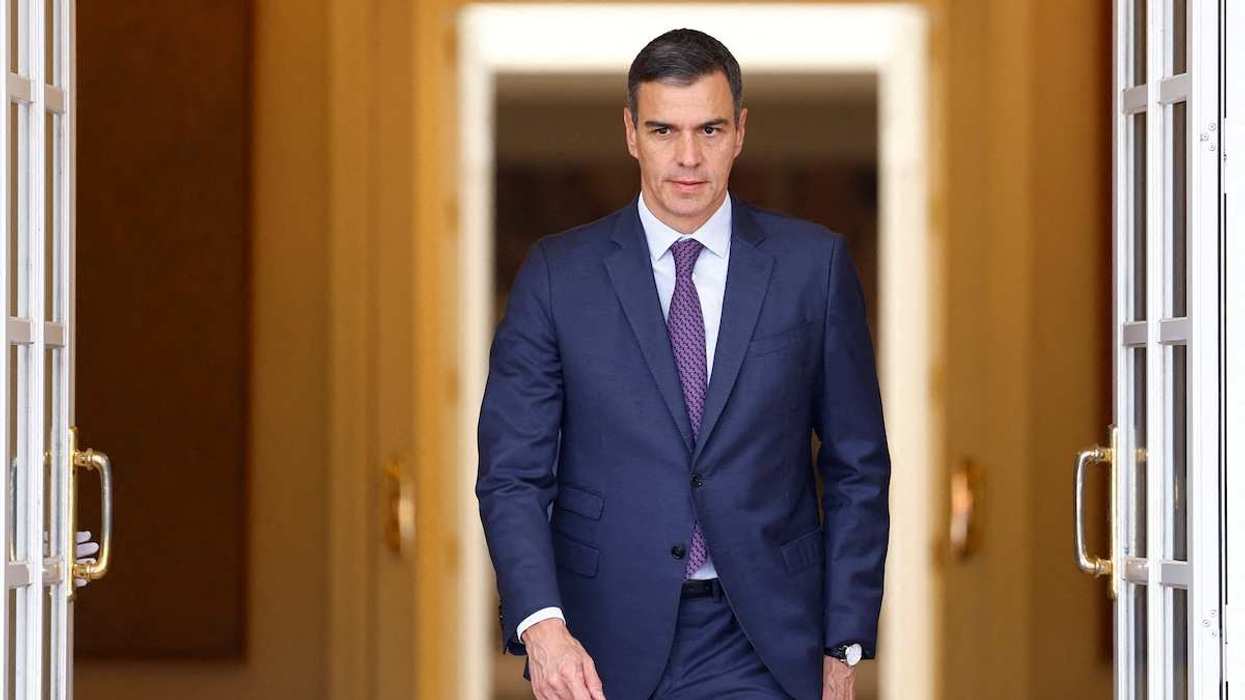
South Africa’s embattled President Cyril Ramaphosa could be forced out of office after an independent body found he may have covered up the theft of a large wad of cash from his game farm in 2020. It’s alleged that Ramaphosa, who was elected in 2018 to head the African National Congress – Nelson Mandela’s party – on an anti-corruption platform, illegally stashed up to $4 million at his farm and paid off thieves who stole $580,000 stuffed under his couch (you can’t make this stuff up)! Ramaphosa’s political future now hangs in the balance as he waits for the ANC to vote on Dec. 16 on whether he should lead them into the next general election in 2024 and for parliament to decide whether to impeach him. It is unlikely given that a two-thirds majority – including half of ANC’s parliamentarians – would need to back the motion. Though the ANC has been plagued by infighting since Ramaphosa replaced party stalwart Jacob Zuma in 2018, not enough ANC members will be willing to switch sides to show Ramaphosa the door.
A crude 60-dollar ceiling

Put a cap on it — a $60 cap, to be precise. That’s what the European Commission is asking all 27 EU member states to pay, maximum, per barrel of Russian oil from now on. The move, which requires unanimous EU approval, is meant to undermine the Russian war machine in Ukraine – the EU is Russia’s largest oil customer. But how much impact would it have? Russia sells its crude for about $20 per barrel less than Brent, the international standard. With Brent prices in the $80s, a $60 cap might be more of a fly than a buzzsaw for the Kremlin. Some of the EU’s more brazen Russia hawks — Poland and the Baltics — wanted a (knee)cap of just $30. Washington and other EU members worried that if the cap was too low, Russia would cut off oil exports to the EU entirely, sending energy prices soaring. A separate European ban on seaborne Russian oil is set to come into effect on Monday. The EU hopes the price cap will be agreed upon by members and other G-7 countries by then.

More For You

​Miami Mayor-elect Eileen Higgins points as she thanks her staff and supporters on the night of the general election, on Tuesday, Nov. 4, 2025.

Miami Mayor-elect Eileen Higgins points as she thanks her staff and supporters on the night of the general election, on Tuesday, Nov. 4, 2025.

Carl Juste/Miami Herald/TNS/ABACAPRESS.COM
For the second time in a month, Republicans lost a mayoral race in a state US President Donald Trump has called home. This time it happened in Florida.Democrat Eileen Higgins defeated Republican Emilio González in Miami’s mayoral election on Tuesday to become the first female leader of Florida’s largest city, and the first Democrat to win this [...]
It’s official: Trump wants a weaker European Union

Trump, Putin, and Zelensky surrounded by tanks and negotiators.

The transatlantic relationship isn’t at a crossroads, it’s past one. America’s new National Security Strategy confirms what Europeans have feared since Vice President JD Vance’s speech in Munich last February: Washington now sees a strong, unified European Union as a problem to be solved, not an ally to be supported.The Trump administration’s NSS [...]
Members of security forces stand guard outside a polliong station, a week late in a special election, after the local governing party kept voting closed on election day, amid accusations of sabotage and fraud, in a presidential race still too close to call as counting continues, in San Antonio de Flores, Honduras, December 7, 2025.

Members of security forces stand guard outside a polliong station, a week late in a special election, after the local governing party kept voting closed on election day, amid accusations of sabotage and fraud, in a presidential race still too close to call as counting continues, in San Antonio de Flores, Honduras, December 7, 2025.

REUTERS/Leonel Estrada
More than a week after Hondurans cast their ballots in a presidential election, the country is still stuck in a potentially-dangerous post-election fog. With 97% of votes tallied, the race remains a dead heat: former Tegucigalpa Mayor Nasry Asfura, who has been backed loudly by US President Donald Trump, holds a paper-thin one-point edge over [...]
Trump’s new national security strategy targets Europe
- YouTube
In this Quick Take, Ian Bremmer unpacks the Trump administration’s new national security strategy, particularly its heightened focus on Europe. [...]