Worried Sick

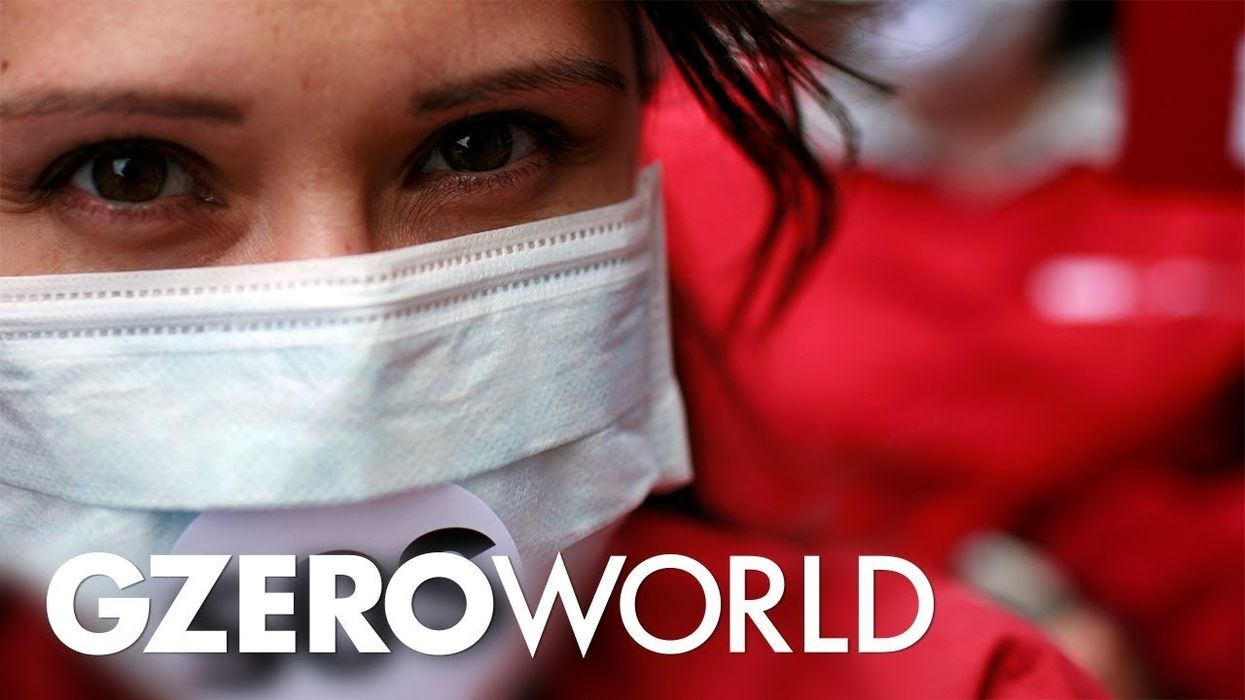
The "Spanish flu" virus of 1918 killed an estimated 50 million people, more than all the deaths in World War I combined. While global public health efforts have greatly improved mortality rates in more modern outbreaks, experts say the next pandemic is a matter of "when," not "if." In this episode, Ian Bremmer takes a look how diseases spread and become global. His guest, Dr. Anthony Fauci, is a leading epidemiologist and director of the National Institute of Allergy and Infectious Diseases at the NIH.


Dr. Fauci breaks down some of the biggest health threats facing the world today: HIV/AIDS, Ebola, malaria, tuberculosis, influenza, and the recent rise in cases of measles brought on by the misguided anti-vaccine movement.

Also on the show: Five years after his Ebola diagnosis made international news, NYC's Dr. Craig Spencer tells GZERO Media what he learned from the experience and what his life is like today.

Expanding access to skill-building programs and resources can create a pipeline of talent in local communities.

Bank of America is working with local organizations to fuel economic opportunity — including a $25M investment in community colleges, HBCUs and Hispanic-serving institutions.

The world has changed dramatically since the terrorist attacks on New York And Washington on September 11, 2001. Pop culture has evolved — significantly — as have the ways we eat, communicate, work, and get our information about the world.

Geopolitically, the past two decades have been transformative, and these developments have impacted how many observers reflect on the post-9/11 era.

Here are three examples of big geopolitical shifts over the past two decades, and how they may influence our understanding of global events today.

More Show less

Joe Biden has been looking for a way out of Afghanistan for decades, and regardless of how ugly things get, he's not turning back. After Trump reached a deal with the Taliban in 2020 to end the war, Biden decided to stick with the arrangement, overruling his own generals. Ian Bremmer explains that while he agrees with Biden's decision to get out, he did not foresee the incompetence of the execution. In that sense, the last few weeks have constituted the greatest foreign policy crisis for President Biden to date, and one that was largely self-imposed. Ian looks at four key failures led to this disaster on GZERO World.

Watch the episode: Afghanistan, 2021: Afghan & US military perspectives as the last soldier leaves

Listen: There's a desperate need in the US to improve our infrastructure, much of which was built when the population was half the size it is today. After decades of neglect, President Biden's infrastructure plan is poised to pump a trillion dollars into the economy to not just modernize bridges and roads, but also boost manufacturing, R&D, clean energy, climate resilience and more. What could this investment mean for the economy, politics, and your bottom line as an investor?

More Show less

As pivotal as they were, there was certainly nothing inevitable about the September 11th attacks — or their aftermath. Here we imagine five separate scenarios for how things might have gone differently.

More Show less

In the narrowest sense, the 9/11 attacks were something that happened only in New York, Washington, and a field in Pennsylvania. But how the US responded — unleashing an open-ended Global War on Terror, launching wars and nation-building occupations in Afghanistan and Iraq, and dramatically reshaping the government's powers of surveillance at home — sent shockwaves around the world.

In many places, the effects are still felt: in the shattering of the MIddle East, in the rise of China, in the upheavals of South Asia, or in the newly complicated relationships between Washington and old allies in Europe and Turkey. And remember when the US and Russia were — for a few weeks there — seemingly the closest of friends?

We asked analysts at Eurasia Group, our parent company, to give us a quick recap of how 9/11 and its aftermath have affected the regions they cover. Enjoy.

More Show less

What do you do when the thing that has helped to make you a rich, prosperous, and healthy democracy is also destroying the planet that you want to save? That's the choice before the roughly five million people of Norway as they head into a pivotal election on September 13.

More Show less

For Michael Chertoff, former US secretary of Homeland Security from 2005 to 2009, the fact that America has not experienced a single attack by foreign terrorists since 9/11 proves that the US was "successful" in its strategy to prevent terrorism. That "was not an accident and there was a deterrent effect to be honest — had we been lax, more would have tried." Chertoff pushes back against the notion that the US government wasn't transparent enough about the intelligence it was collecting, and credits those efforts with foiling the plot to blow up airplanes mid-air from Heathrow to the US in 2006. Watch his interview with Ian Bremmer on this episode of GZERO World.

Subscribe to GZERO Media's newsletter, Signal

GZEROMEDIA

Subscribe to GZERO Media's newsletter: Signal

S2 Episode 1: What infrastructure spending means for you

Living Beyond Borders Podcasts

Is the US safer from terrorism 20 years after 9/11?

GZERO World Clips

GZEROMEDIA

Subscribe to GZERO Media's newsletter: Signal