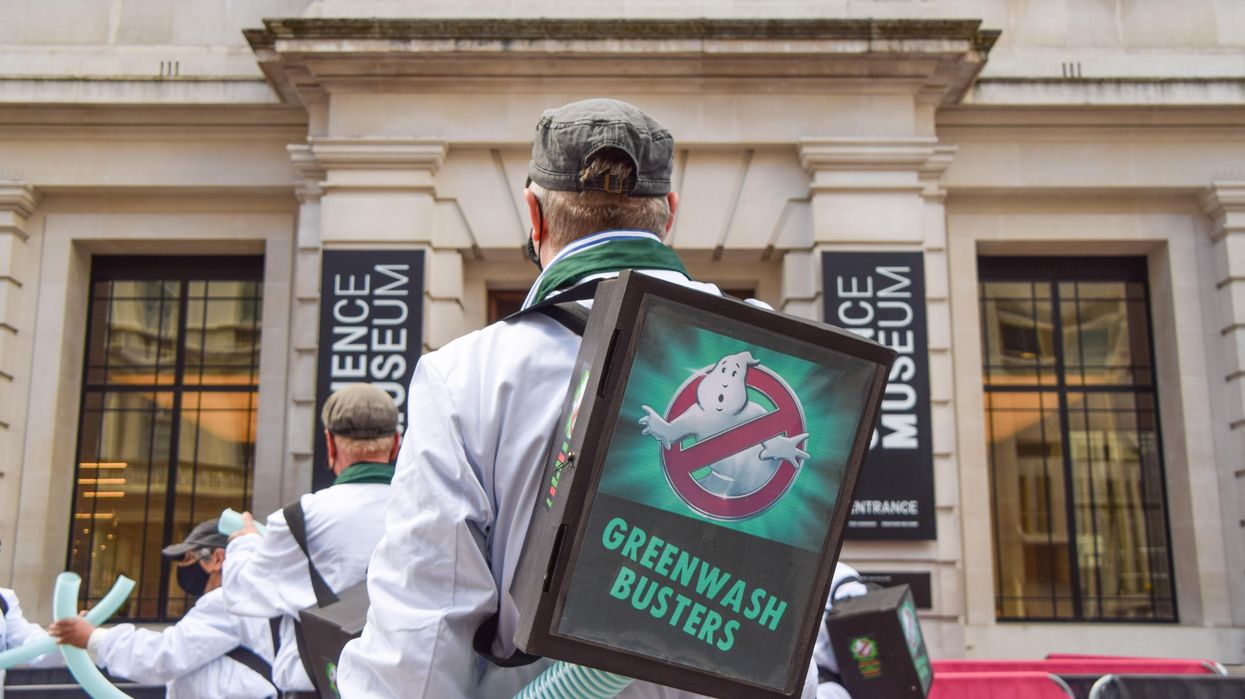

If you're watching what's happening this week at the COP26 climate summit, you'll probably hear this buzzword a lot: greenwashing. But the term is often thrown around carelessly, so let's take a minute to explain what it actually means, why corporations do it, and what, if anything, can be done about it.
So, what is greenwashing? In very simple terms, it's when a company or an organization willingly misleads the public about what it's doing or plans to do to better protect the environment through its business practices. A good example is Coca-Cola, which markets its packaging as sustainable despite being the world's top plastic polluter.
Governments, for their part, don't greenwash directly but often enable it — for instance by protecting the greenwashers themselves. In the lead-up to COP26, leaked documents revealed how Australia, Japan, Saudi Arabia and other powerful nations lobbied the UN to downplay the need to cut fossil fuel consumption in order to fight global warming, precisely one of the COP26 main goals.
Greenwashing isn't new. It's been around since 1986, when an American environmentalist coined the term to describe how hotels often encourage guests to reuse towels as a way to save the environment — when it's really about saving the hotels money on water and laundry bills. Much has changed since, but the principle remains the same: some companies are being sneaky about what they're actually doing on climate.
What makes greenwashing worse than corporations dragging their feet on curbing emissions because they can't afford it yet, which is legitimate, is that greenwashers are dishonest. For instance, the world's top banks boast their ESG bonafides for eco-conscious investors while putting money into agribusinesses that destroy the Amazon.
For there to be greenwashing, though, there must be intent. Failing to meet your emissions reduction targets is not greenwashing, but setting fake goals you know are not achievable, is.
A company that fails to meet its 2050 net zero emissions targets because of supply chain factors beyond its control may be poorly run, incompetent, or just plain unlucky. But that's different than, say, Big Oil majors deliberately omitting the dirtiest parts of their operations in order to claim that they'll become carbon-neutral by the same deadline. (No wonder the entire industry has been shut out of COP for the first time.)
Why is greenwashing so effective for corporations? For one thing, it's much easier to change perceptions of what you do than to change your own behavior, which will cost you time and money. The best way to continue polluting like there's no tomorrow is to gaslight your customers and shareholders worried about the climate crisis.
In other words, you only pay lip service to your own pledges to de-carbonize, but as long as people buy your product and the stock price goes up, who cares if only some tree huggers say you're greenwashing?
For another, greenwashing is hard to police because regulation hasn't kept up or isn't being enforced. What's more, what qualifies as "sustainable" is often up to industry-wide bodies that treat greenwashers with kid gloves. Take for example the Forest Stewardship Council's 2020 decision to certify IKEA's illegal Ukrainian timber as "green."
Still, greenwashing is becoming harder to pull off these days. Playing fast and loose with environmental pledges is now a serious risk for companies as national enforcement gets tougher, and investors grow a conscience.
Earlier this year, a court in the Netherlands ordered Shell to slash its emissions by a whopping 45 percent over 2019 levels by the end of the decade for violating the human rights of the Dutch people by extracting fossil fuels. Activist investors are now pushing to break up the world's fourth-largest oil and gas company to force Shell transition to clean energy.
Moreover, it's becoming increasingly popular for governments — which likely won't agree on much in Glasgow — to go after individual greenwashers instead of making all businesses go green. At a time of growing outrage at greedy corporations burning the planet to fatten their profit margins, scapegoating them for the worsening climate crisis is an easy sell.