Skip to content
Search

Latest Stories

GZERO AI

Antitrust is coming for AI

A general view of the U.S. Federal Trade Commission (FTC) building, in Washington, D.C., on Wednesday, October 20, 2021

A general view of the U.S. Federal Trade Commission (FTC) building, in Washington, D.C., on Wednesday, October 20, 2021

Graeme Sloan/Sipa USA via Reuters Connect

The US government's two antitrust regulators struck a deal to divvy up major investigations into anti-competitive behavior in the AI industry. The Justice Department will look into Nvidia’s dominance over the chip market, while the Federal Trade Commission will investigate OpenAI and its lead investor, Microsoft.


In December, the FTC opened a preliminary inquiry into Microsoft's $13 billion stake in OpenAI, which makes ChatGPT. It’s an non-traditional deal, in which Microsoft receives half of OpenAI’s revenue until the investment is repaid, rather than traditional equity. But Microsoft also flexed its muscles after the sudden ouster of OpenAI CEO Sam Altman last year, offering to hire him and any defecting OpenAI employees, effectively pressuring the company to rehire him — which it did soon after. The UK’s Competition and Markets Authority also began probing the relationship between the two firms in December.

Meanwhile, Nvidia has become the undisputed leader of the AI chip industry with their powerful graphics processors powering the training and operation of generative AI models. The company recently disclosed in a filing with the US Securities and Exchange Commission that its pole position and market dominance has attracted regulatory scrutiny from the United Kingdom, though it didn’t specify the nature of the inquiry.

Noah Daponte-Smith, a United States analyst for Eurasia Group, sees this announcement “largely as a messaging exercise intended to show that DOJ [and] FTC will be just as dogged on antitrust issues in the AI space as in the rest of the Big Tech arena.” He sees the decision as more of a continuation of Biden’s aggressive antitrust regime than a policy position on the regulation of AI.

“My sense is that AI regulation will have to occur more through Congress and through executive actions not focused on competition,” he added.


More For You

What we learned from a week of AI-generated cartoons
Courtesy of ChatGPT
Last week, OpenAI released its GPT-4o image-generation model, which is billed as more responsive to prompts, more capable of accurately rendering text, and better at producing higher-fidelity images than previous AI image generators. Within hours, ChatGPT users flooded social media with cartoons they made using the model in the style of the [...]
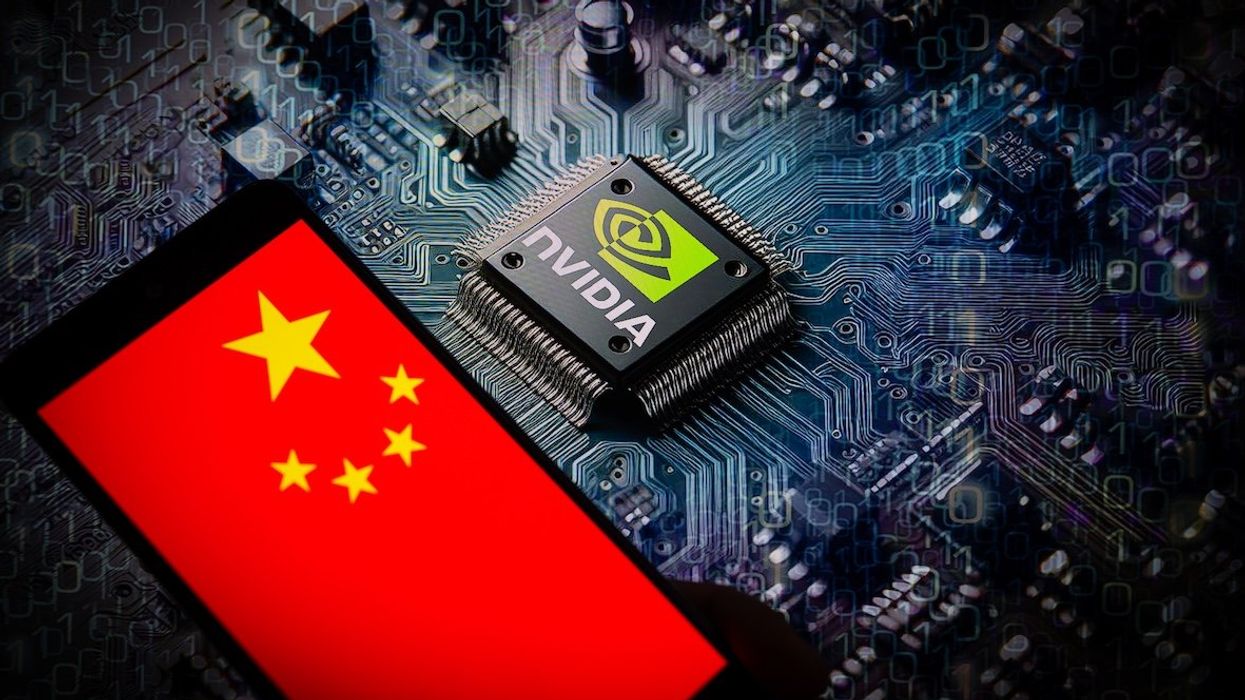
The flag of China is displayed on a smartphone with a NVIDIA chip in the background in this photo illustration.

The flag of China is displayed on a smartphone with a NVIDIA chip in the background in this photo illustration.

Jonathan Raa/NurPhoto via Reuters
H3C, one of China’s biggest server makers, has warned about running out of Nvidia H20 chips, the most powerful AI chips Chinese companies can legally purchase under US export controls. [...]
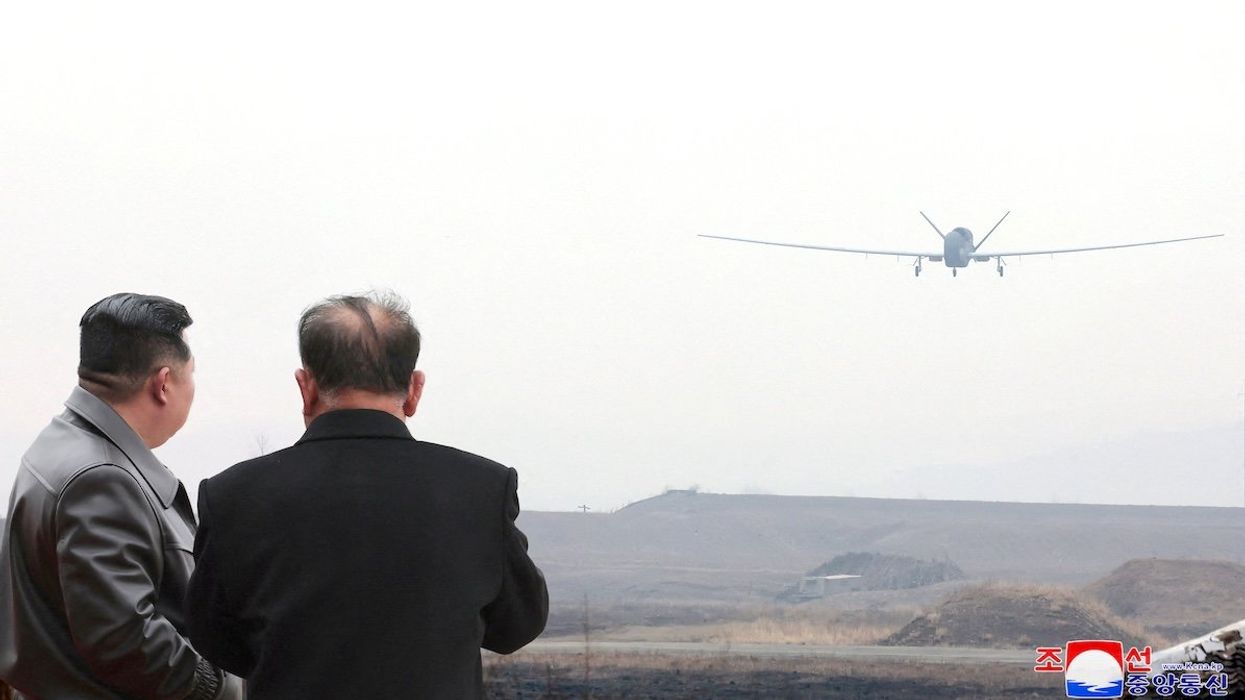
​North Korean leader Kim Jong Un supervises the test of suicide drones with artificial intelligence at an unknown location, in this photo released by North Korea's official Korean Central News Agency on March 27, 2025.

North Korean leader Kim Jong Un supervises the test of suicide drones with artificial intelligence at an unknown location, in this photo released by North Korea's official Korean Central News Agency on March 27, 2025.

KCNA via REUTERS
Hermit Kingdom leader Kim Jong Un has reportedly supervised AI-powered kamikaze drone tests. He told KCNA, the state news agency, that developing unmanned aircraft and AI should be a top priority to modernize North Korea’s armed forces. [...]
The logo for Isomorphic Labs is displayed on a tablet in this illustration.

The logo for Isomorphic Labs is displayed on a tablet in this illustration.

Igor Golovniov/SOPA Images/Sipa USA via Reuters
In 2024, Demis Hassabis won a Nobel Prize in chemistry for his work in predicting protein structures through his company, Isomorphic Labs. The lab, which broke off from Google's DeepMind in 2021, raised $600 million from investors in a new funding round led by Thrive Capital on Monday. The company did not disclose a valuation. [...]