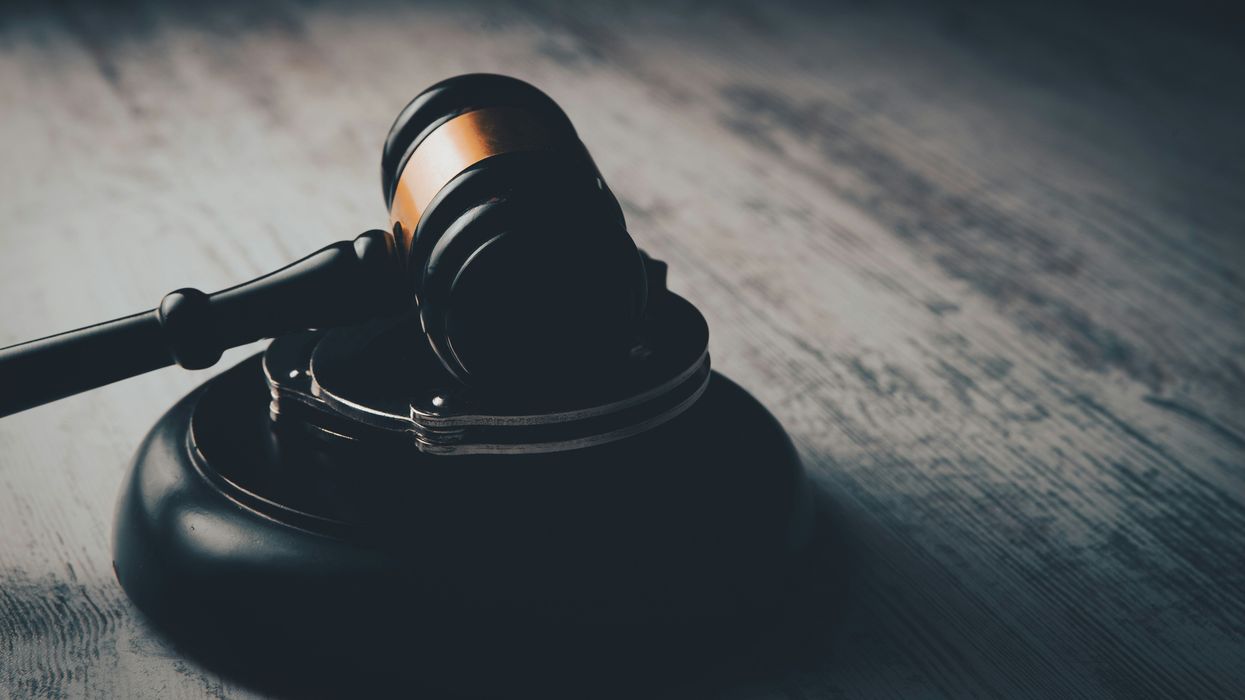
Four years after President Donald Trump’s initial unsuccessful attempt to ban TikTok on national security grounds, Congress succeeded in passing bipartisan legislation to force the app's removal, which former President Joe Biden signed into law. The ban, requiring mobile app stores, cloud hosts, and internet service providers to drop TikTok, was upheld by the Supreme Court on Friday despite challenges from TikTok, content creators, and free speech advocates who argued it violated the First Amendment.
Yet TikTok’s presence in America continues through an unusual turn of events. After briefly going offline in the US late Saturday, the app resumed service on Sunday ahead of President Trump’s inauguration on Monday, with the new president issuing an executive order late Monday to keep TikTok operational for another 75 days. This executive intervention, however bizarre since Trump initiated the effort to ban TikTok during his first term, also raises complex legal questions about presidential authority to override — or ignore — congressional legislation.
Throughout this political saga, a fundamental question remains: What exactly is TikTok’s threat to national security? Critics typically focus on two main concerns: China’s potential access to American user data and its ability to influence public opinion through the app’s content algorithm.
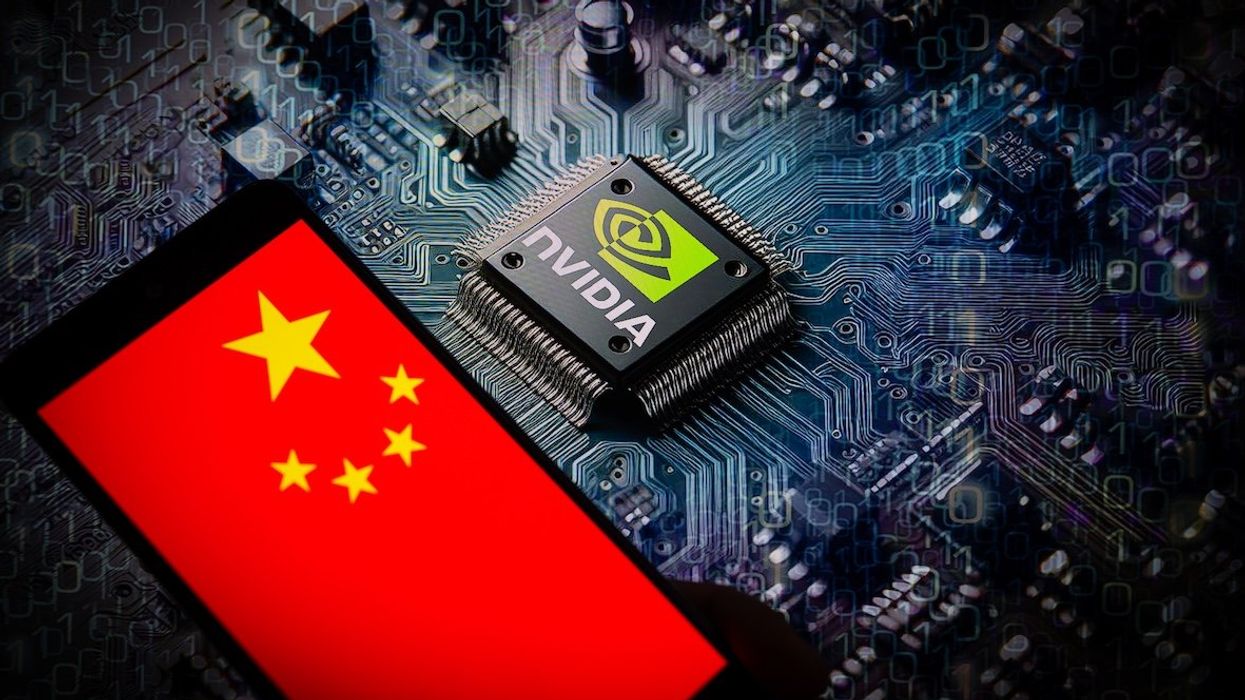
While TikTok stands as one of the world’s most sophisticated implementations of artificial intelligence in social media, its role in the broader US-China AI competition is nuanced. The platform’s AI capabilities, though powerful, operate largely parallel to rather than directly within the ongoing technological rivalry between the two nations, which is more focused on large language models, generative AI, and the advanced chips that power these systems.
“TikTok is AI, but not the kind that is fueling today’s global AI race,” explained Tinglong Dai, a professor at Johns Hopkins Carey Business School. “Its recommendation engine is more akin to reinforcement learning, the AI technique behind AlphaGo, the DeepMind system that mastered the board game Go by training against itself. Unlike generative AI models like ChatGPT, TikTok's AI isn’t about creating – it’s about optimizing engagement and influence.”
This distinction is important. While attention has focused on TikTok’s data collection practices, experts suggest the more significant concern lies elsewhere. After all, TikTok collects about as much data from users as any other social media app.
Kenton Thibaut, senior resident China fellow at the Atlantic Council’s Digital Forensic Research Lab, said that data collection would become a bigger issue if the US were to enter formal conflict with China. “Should the US end up in a conflict with China, it is the device-level compromises that the app represents” — such as collecting real-time location data — “that, in my opinion, pose a much greater potential threat than the data-gathering or algorithmic manipulation concerns that are currently at the fore of the conversation surrounding the app,” she said.
But TikTok’s algorithm is more relevant to the AI race than the data it collects, according to Xiaomeng Lu, director of geo-technology at Eurasia Group. “That’s why China indicated that ByteDance can’t sell TikTok’s AI recommendation algorithm without government approval last time around, and is very likely still holding that view,” she said.
The potential value of this algorithm hasn’t gone unnoticed by the private sector. Perplexity AI’s recent bid to merge with TikTok’s US operations, reportedly valued at “well north of $50 billion,” suggests that TikTok’s recommendation system might be valuable for advancing the capabilities of an AI search engine like Perplexity.
However, Anton Dahbura, executive director of the Johns Hopkins University Information Security Institute, offers a more skeptical view: “I have no reason to doubt that TikTok’s algorithm is very good, but given the state of many software technologies today, it isn’t irreproducible,” he said. “However, controlling the flow of information on such a scale and for nefarious purposes by any company should be recognized as unethical, irresponsible, and hopefully someday, illegal.”
The real concern, according to Dai, extends beyond mere technology: “The bigger story isn’t TikTok’s data or even ByteDance's dominance — it’s Xi Jinping’s global ambitions. TikTok gives China an unprecedented ability to shape what Americans see, think, believe, and even dream.”
With TikTok poised to survive in the United States under President Trump’s conditional approval, pending a potential partial sale, the platform represents an unprecedented scenario in American media: Never before has such an influential platform, powered by sophisticated AI and used by millions of Americans, remained under the potential influence of an adversarial nation. But politics makes the strangest bedfellows: TikTok CEO Shou Zi Chew attended Trump’s inauguration on Monday, an assurance that Trump will rewrite the typical bounds of the US-China relationship, perhaps even softening his stance on China if he feels like it serves him well.