VIDEOSGZERO World with Ian BremmerQuick TakePUPPET REGIMEIan ExplainsGZERO ReportsAsk IanGlobal Stage
Site Navigation
Search
Human content,
AI powered search.
Latest Stories
Sign up for GZERO Daily.
Get our latest updates and insights delivered to your inbox.
Global Stage: Live from Munich
WATCH RECORDING
GZERO World Clips
Highlights from the GZERO World with Ian Bremmer weekly television show.
Presented by
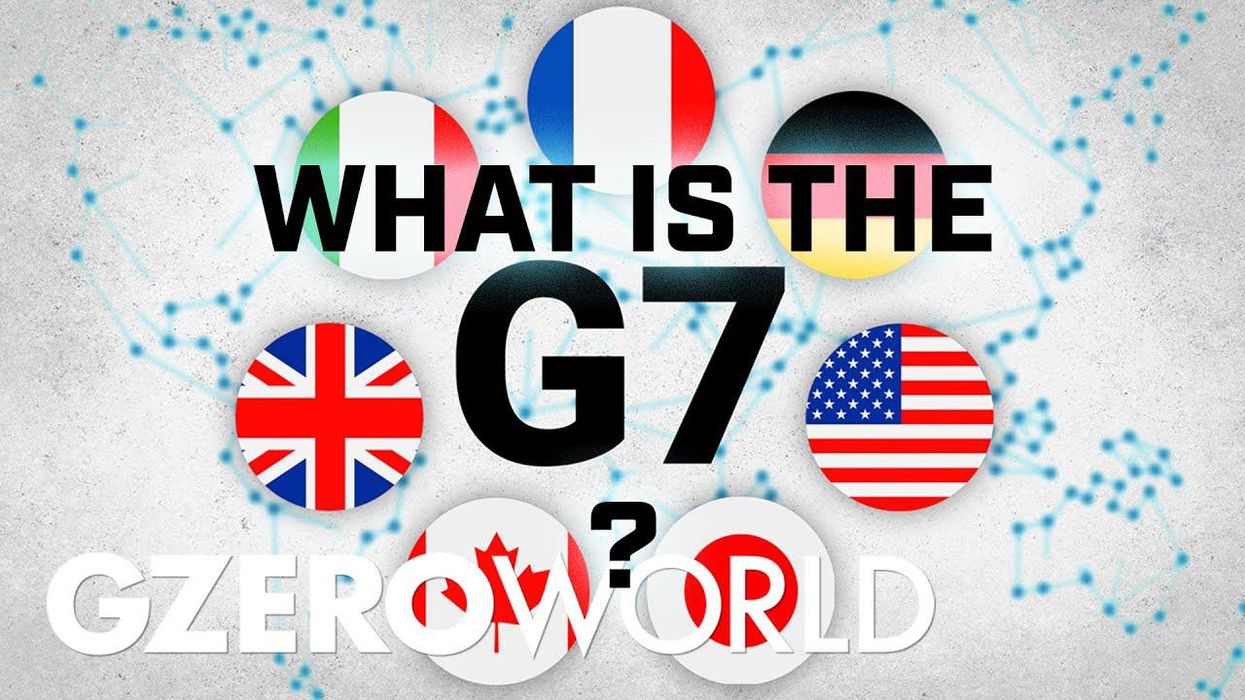
President Biden's first G7 Summit as America's President also marks the first time those world leaders have gathered in person since the start of the COVID pandemic. Want to know a little more about the group, and why it exists in the first place? You came to the right place. We're called GZERO, after all!
The G7 actually began as the G6, when the leaders of France, West Germany, the USA, Japan, the UK and Italy met in a Chateau outside of Paris to squabble their way out of an oil shock and financial crisis. They had so much fun they agreed to do it every year. They even let Canada join the party in 1976, making it the G7.
But in the 1980s, Cold War politics took over and the focus shifted eastward to Tehran and Moscow. Longstanding conflicts between Iran and Iraq turned into all-out war, and a Soviet boondoggle in Afghanistan captured the group's attention. The G7 became defined as much by what it stood against (communism, authoritarianism) as what it stood for.
After the Soviet Union fell in the 1990s, a newly-humbled Russia got the invite, and joined! That made it the G8 for a while, but you knew that wasn't going to last. In 2014, with President Putin's decision to invade Crimea, the other seven said "Do svidanya."
In the years since, internal divisions and the rise of alternative institutions such as the G20 have led the world to question the G7's relevance—even though it still represents around 40% of global GDP ( but only 10% of the world's population.) And there's China, which has never been a part of the G7 and whose rise poses an economic, ideological, and security challenge to the group.
This recent summit will surely be one of the most important. How they handle the "converging crises," as President Biden has said, of vaccine distribution, economic recovery, and climate change will be the test…of whether the G7 matters, especially in our GZERO World.
Watch the episode of GZERO World with Ian Bremmer: Has Biden convinced the G7 "America is back"?
Keep reading...Show less
More from GZERO World Clips
The Pentagon’s growing grip on AI
March 17, 2026
GZERO World with Ian Bremmer
Mar 16, 2026
Ian Explains
Mar 13, 2026
Can Trump turn the economy around before the midterms?
March 12, 2026
Trump bashes globalization, but Americans still buy foreign
March 10, 2026
Trump's tariff pivot after SCOTUS ruling
March 09, 2026
The Supreme Court checks Trump’s tariff power
March 06, 2026
Tehran's best and worst-case scenarios
March 06, 2026
Almost everyone in Iran “just waiting for Ayatollah Khamenei to die”
February 28, 2026
Is the US on the brink of war with Iran?
February 28, 2026
Daalder: "A ceasefire is not in the interest of Ukraine"
February 24, 2026
How Europe is moving on from Trump's America
February 23, 2026
Europe can no longer count on the US
February 20, 2026
Froman: The world is "adjusting" to Trump's tariff power
February 17, 2026
President Trump against the world
February 16, 2026
How the US went from global cop to king of the jungle
February 13, 2026
How Singapore navigates a fragmented world
February 02, 2026
Singapore thrived on globalization. Now what?
January 30, 2026
Can Europe stay united?
January 23, 2026
One year into Trump 2.0: How the world has changed
January 18, 2026
How Trump transformed the US presidency
January 16, 2026
Frank Fukuyama on Venezuela: "This is a nation-building exercise"
January 13, 2026
Maduro is gone. What happens now?
January 12, 2026
Venezuela after Maduro and Trump unleashed
January 09, 2026
GZERO Series
GZERO Daily: our free newsletter about global politics
Keep up with what’s going on around the world - and why it matters.