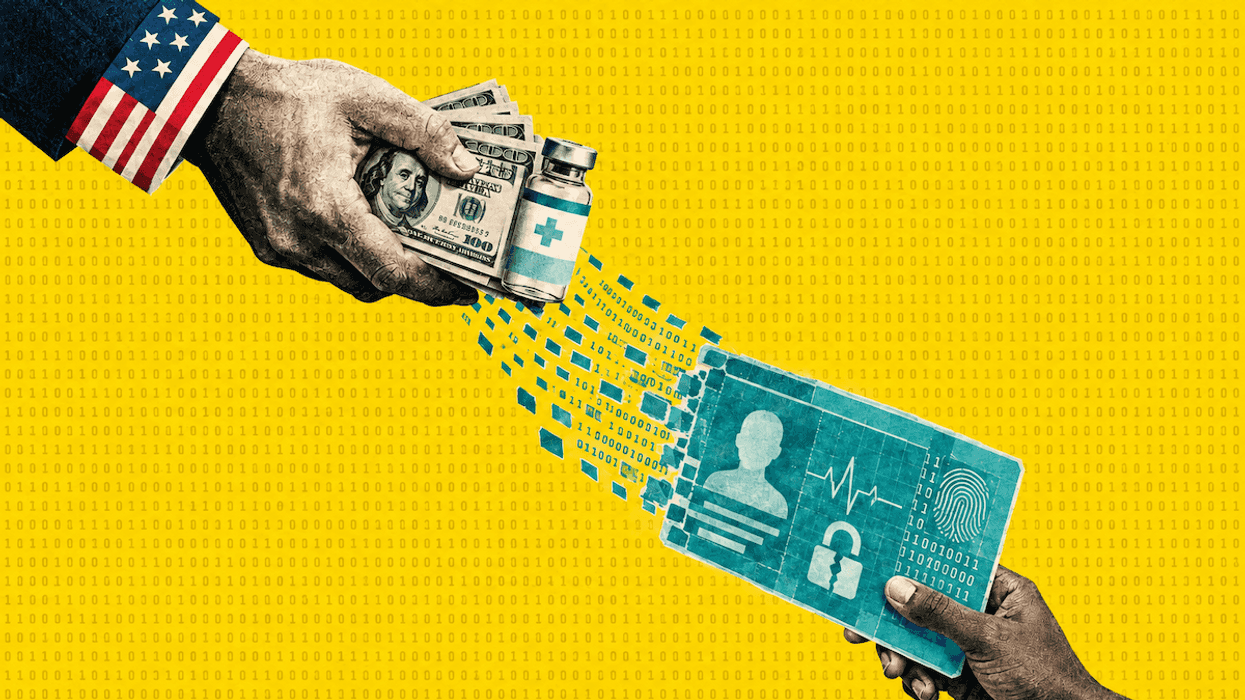
$6.5 million: The disgraced cryptocurrency firm FTX, whose founder is on trial for a litany of fraud charges, is trying to claw back as much money as it can to pay off investors, lenders, and customers. Founder Sam Bankman-Fried, a devotee of effective altruism — a kind of philosophical commitment to philanthropy — gave $6.5 million last year to the Center for AI Safety, a US-based nonprofit. Now, FTX’s bankruptcy-era leadership is looking at whether they can get the money back.
$32 billion: At an AI forum last week, Senate Majority Leader Chuck Schumer said the US government needs at least $32 billion to fund AI development in the coming years. The number is derived from a 2021 report by the now-defunct US National Security Commission on Artificial Intelligence, a Trump-era commission led by former Google CEO Eric Schmidt. It’s unclear how close Schumer is to getting his desired funding through Congress — the government notably spent $3.3 billion on AI-related contracts in 2022 alone — but he noted that almost all of the forum’s attendees were in agreement that “robust, sustained federal investment” is needed.
18,000: A whopping 18,000 organizations are using Microsoft’s new artificial intelligence tools — dubbed Azure OpenAI. Microsoft has invested $13 billion into OpenAI since 2019, and the PC giant’s most recent earnings report indicates that the big bet may already be paying off.
30: One year after the Biden administration issued stringent rules limiting sales of high-powered semiconductors to China, it revised them this month to close big loopholes. (Chinese firms were still buying lower-grade chips necessary to power their artificial intelligence models, and using third-party countries to acquire them.) Nvidia, among the most powerful names in graphics chips, must halt shipments of its products to China under recently revised US regulations.
$2 billion: Google agreed to invest $2 billion in Anthropic, the AI startup behind the chatbot Claude. The company was founded in 2021 by ex-employees of OpenAI and has quickly grown into a $4 billion business, after its most recent funding round this summer. Google’s cash infusion comes mere weeks after Amazon pledged $4 billion to Anthropic in late September.