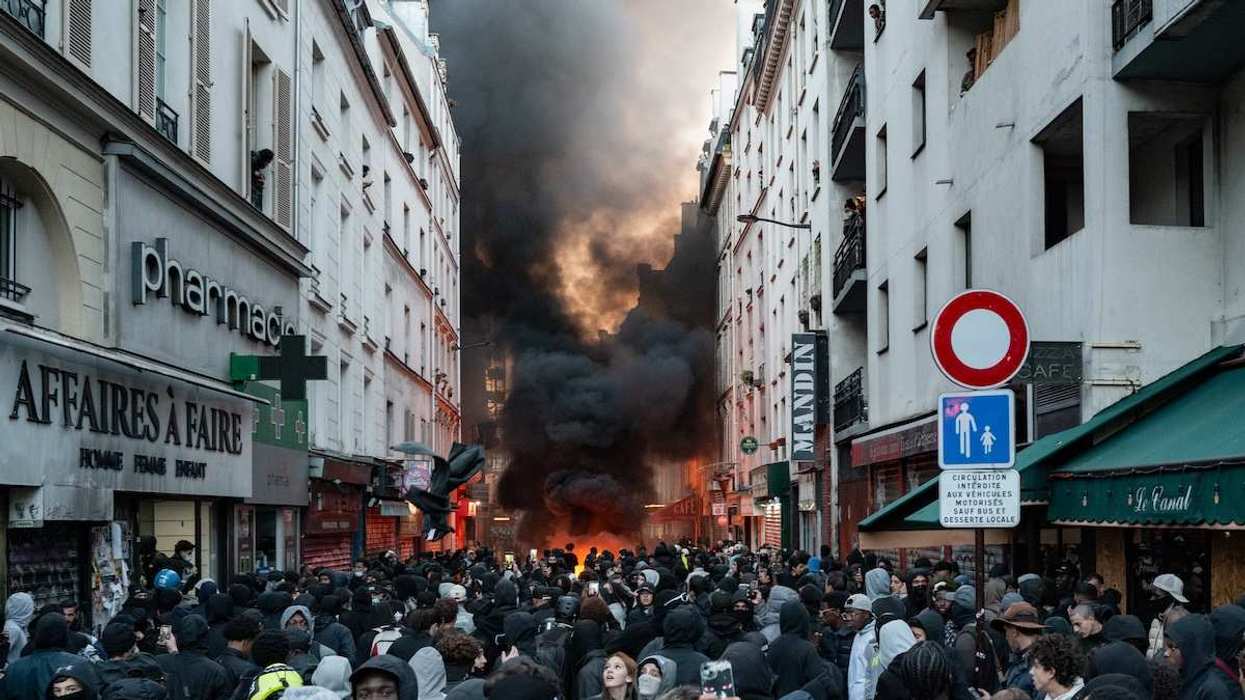
Ethiopia's civil war has now reached a crucial moment. Anti-government forces are approaching Addis Ababa, the country's capital, and look set to take control there very soon. "The important question," warns Connor Vasey, Ethiopia analyst at Eurasia Group, "is on what terms they would do so: with the prime minister and his government conceding or with their violent removal."
The background: In 2018, Abiy Ahmed became Ethiopia's prime minister, ending 30 years of rule by power brokers from the Tigrayan ethnic group. His pledge to bring Ethiopians of all ethnicities together, to build a modern national identity for his country, and his decision to end the country's long war with Eritrea won him the 2019 Nobel Prize.
But anti-government violence in the Tigray region, home to about six million of Ethiopia's 115 million people, pitted Abiy's government against the Tigray People's Liberation Front (TPLF), which had won power in local elections that Abiy's government refused to recognize.
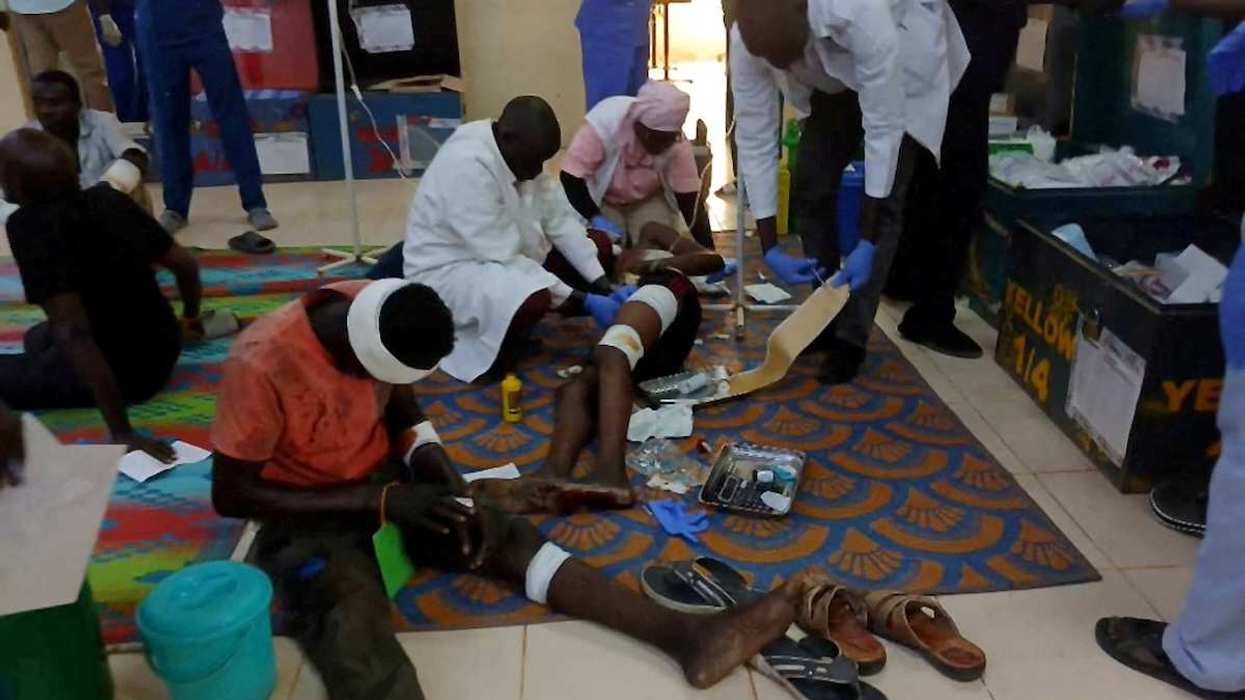
In November 2020, Abiy launched an assault on TPLF forces, and the fighting that followed killed thousands of people and has driven more than two million from their homes. The UN says all sides in this conflict have committed atrocities, including rape and the murder of civilians.
By July 2021, the bloodshed had spilled over into the neighboring Afar and Amhara regions, and in August, Abiy called for "all capable Ethiopians" to take up arms to defend themselves against the rebel forces. This only encouraged opposition fighters to believe the government lacked confidence in its own military. The TPLF then teamed up with the Oromo Liberation Army (OLA), capable militants who fight in the name of Ethiopia's largest ethnic group. The OLA has already consolidated major territorial gains in the Oromia region, which surrounds the capital.
This Tigray-Oromo alliance is now demanding Abiy's surrender or ouster, and it insists that government officials must be charged with war crimes. On November 4, Ethiopia's parliament declared a state of national emergency.
The United States is now trying to broker a ceasefire to avoid a battle inside the capital. The problem, says Eurasia Group's Vasey, is that "both sides know talks are necessary to avoid further bloodshed and disruption but are stuck on the belief they can beat the other side into irrelevance before negotiations begin."
What happens next will matter for decades. A diplomatic deal would save lives, limit the number of refugees seeking sanctuary, and protect Ethiopia's economy — one of Africa's strongest — from potentially catastrophic and lasting damage. But even a deal could quickly unravel, as victorious forces fight over spoils and seek revenge against rivals.
A violent overthrow of the government, on the other hand, "is clearly the worst outcome for Ethiopia," warns Vasey, "because there is no government-in-waiting with nationwide legitimacy that can manage the political, economic, and human fallout."
A vacuum of power in the capital would paralyze Ethiopia's government and create economic upheaval in every region of the country. That, in turn, could multiply the number of refugees seeking sanctuary. In fact, neighboring Kenya has already tightened its 500-mile border with Ethiopia.
Paralysis in Addis would also prevent the Ethiopian government from playing its important role as a peace-broker in South Sudan and a bulwark against terrorist groups across East Africa.
Unfortunately, that worst-case scenario — a violent overthrow of Abiy's government — looks all too likely at the moment, because a prime minister and government officials facing the prospect of war crimes charges don't have much incentive to stand down their soldiers. "We will sacrifice our blood and bone to bury this enemy and uphold Ethiopia's dignity and flag," Abiy declared this week.