Almost two weeks after a military junta seized power in the West African state of Niger, the situation is becoming increasingly unstable, and hopes are fading fast that constitutional order can be restored.
The latest. On Thursday, members of ECOWAS, a West African bloc of 15 nations currently led by Nigeria, announced that they had standby forces in place ready to intervene militarily to reinstate ousted President Mohamed Bazoum, who became Niger’s first democratically elected leader in 2021.
In response, junta militants, led by Gen. Abdourahmane Tchiani, said they would kill Bazoum, who’s currently under arrest, if ECOWAS dares to intervene.
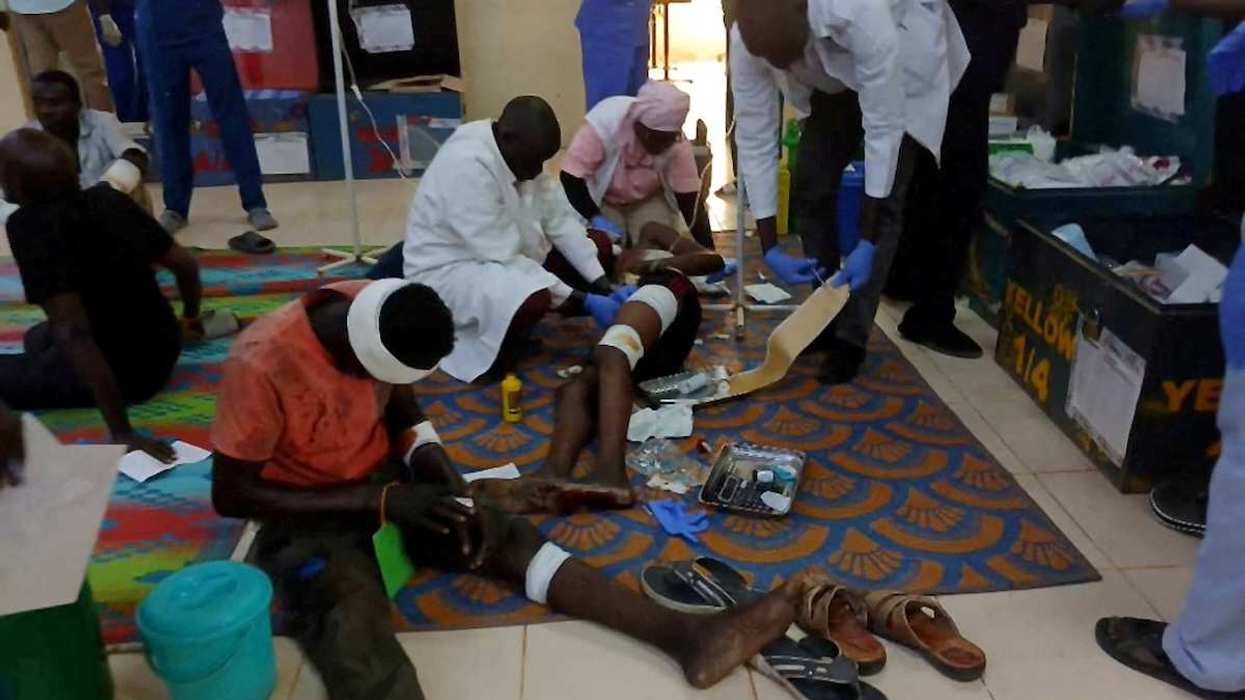
Even before that, there were broad fears for the safety of Bazoum, and his family, who reportedly have scarce access to food, water, and electricity.
What’s more, in a sign that the junta has no intention of backing down, Tchiani announced that he is now the official head of state, tapping a new cabinet, made up of both civilian and junta representatives – though few people believe the noncombatants will have much sway.
But West African states aren’t the only ones deeply invested in Niger’s fate. Outsiders – like France and the US, as well as Russia – are keeping close tabs on the deepening disaster.
Why is this landlocked country of 25 million caught in the crosshairs of geopolitical tug-of-war?
The French Connection. Many countries in the Sahel are former French colonies, and so Paris, for its part, sees the unraveling of the region as an indictment of its colonialist past. Since granting these states independence, France has been invested in state-building programs aimed, in theory, at rebuilding capacity and industries it has long exploited.
When French troops were kicked out of neighboring Mali in 2022 after that country was taken over by militants in a coup, most of those troops were relocated to neighboring Niger, one of the last remaining Sahelian states sympathetic to Western interests. (Niger is the fourth state in the region to undergo a coup in the last few years.)
The US standpoint. Since 9/11, defeating Islamic terrorism has been a cornerstone of US foreign policy. The US has aided French missions in West Africa for the past decade, both to prop up a key ally and also to clamp down on al-Qaida-linked groups and the Islamic State, which have metastasized throughout the region. Still, Washington has mostly trained and bolstered local forces.
What’s more, some observers have expressed fear that these terror groups could join forces with other nefarious actors – like pirates! – to wreak havoc on the high seas and obstruct economic deliveries to the region, which could impact global supply routes.
To be sure, US national security officials have said that terror activities in the Sahel are not a direct threat to the US, but they are a threat to US partners and geopolitical interests – particularly as Russia and China look to expand their influence throughout Africa, the world's fastest-growing continent.
What Russia wants. Russia has long been trying to expand its footprint in Africa in general – and in the resource-rich Sahel in particular.
With the Kremlin’s backing, the Wagner Group, a private army with close ties to Moscow, got its first big bite at the apple when, in 2018, its mercenaries were invited to the Central African Republic by embattled President Faustin-Archange Touadéra to help stave off local insurgents. In exchange for protecting Touadéra, the group gained access to lucrative gold and diamond mines. Wagner recently played a key role in “keeping the peace” when CAR held a referendum abolishing presidential term limits.
Today, Wagner has a footprint in Mali, Libya, and Mozambique, and recently said it sent 1,500 mercenaries to Africa, though it’s unclear where they were sent.
Meanwhile, as one of the world’s largest uranium producers, Niger is a hot commodity, and there are reports that Wagner is already talking to the junta to see how it can be of service. Indeed, for Russia, these relationships with West African despots bolster diplomatic and economic relations while also helping to fuel anti-Western sentiment throughout the region – a win-win.
What comes next? For jihadists hoping to capitalize on the deteriorating economic and security situation, the coup might prove to be a handy recruiting tool.
What’s more, it’s hard to imagine that ECOWAS will intervene militarily given that the junta have vowed to kill the man they are hoping to save. For now, it seems like Niger could very well be set to join the ranks of other coup-plagued Sahelian states facing isolation and economic ruin as a result of ECOWAS and Western sanctions.