
Skip to content
Search

Latest Stories

Middle East

Biden lands in Israel with half an agenda

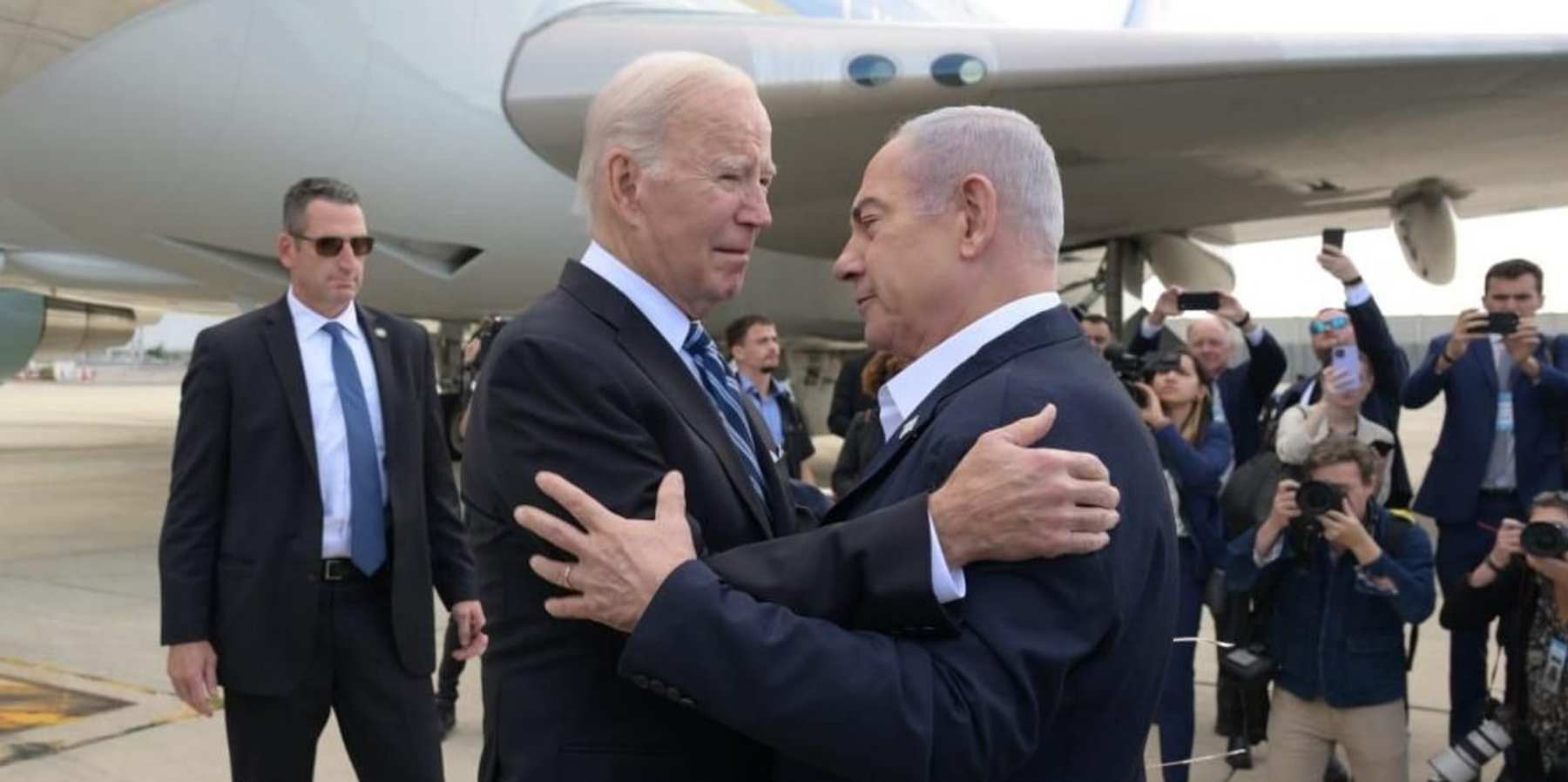
​Israeli Prime Minister Benjamin Netanyahu welcomes US President Joe Biden upon his arrival in Israel on Wednesday, Oct. 18, in a show of solidarity following the unprecedented Hamas attack mounted from Gaza.

Israeli Prime Minister Benjamin Netanyahu welcomes US President Joe Biden upon his arrival in Israel on Wednesday, Oct. 18, in a show of solidarity following the unprecedented Hamas attack mounted from Gaza.

Reuters Marketplace/DPA Multimedia Wire

Half of Joe Biden’s trip to the Middle East fell apart before he even boarded Air Force One. The US president was meant to spend part of Wednesday with Israeli PM Benjamin Netanyahu, before traveling onwards to Amman for a summit with the leaders of Jordan, Egypt, and the Palestinian Authority.

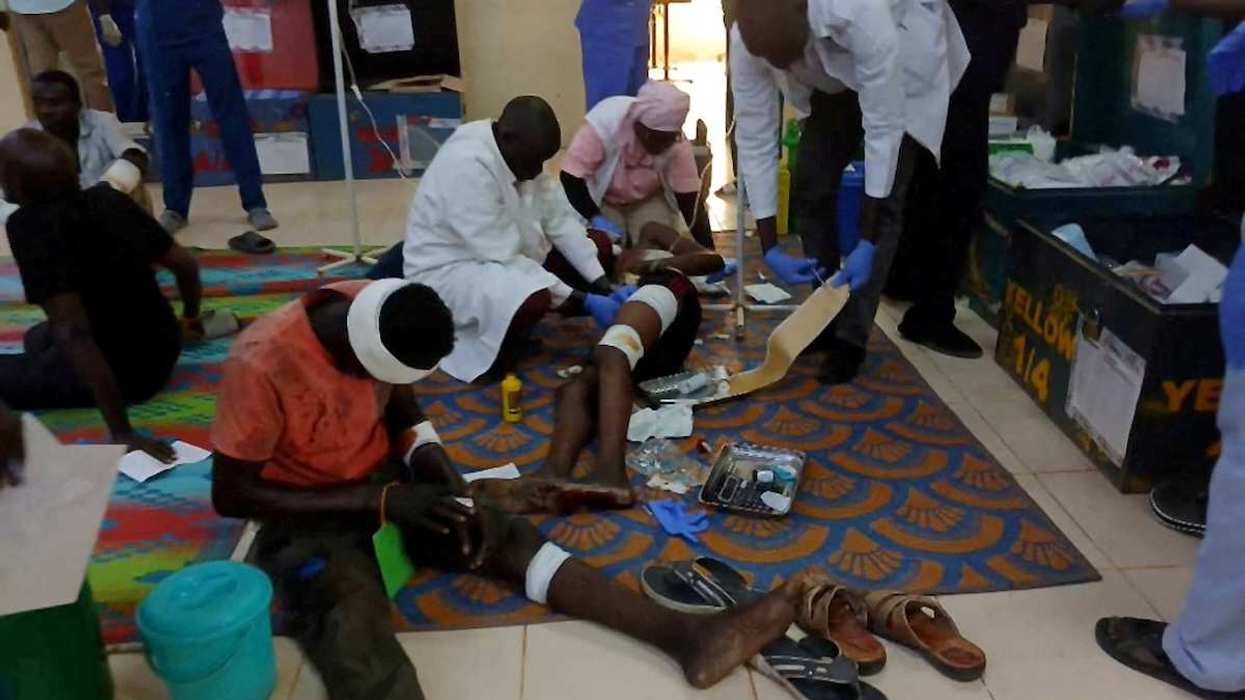
So much for plans. Things changed dramatically when a blast destroyed the Al-Ahli Hospital in Gaza City Tuesday night, killing hundreds of people. Hamas blames Israel, and Israel blames an errant rocket launched from within Gaza. Neither side showed fully convincing evidence, but with anger against Israel already surging on Arab streets, Jordan’s King Abdullah scrapped the Amman summit altogether.


Biden could have pulled the plug on the trip then. The risks, after all, are tremendous. Personal security is one thing – Israel’s Ben Gurion airport is within range of Hamas rockets, as German Chancellor Olaf Scholz learned the hard way on Tuesday.

But more than that, without the Amman leg of the trip, Biden’s visit will play in the Arab world as a further endorsement of Israel amid soaring popular rage against the Jewish State.

Still, Biden landed in Tel Aviv on Wednesday, where he told Netanyahu that the hospital blast "appears as though it was done by the other team."

With Israel about to launch what’s likely to be a long and bloody ground invasion to clear Hamas from the Gaza Strip, Biden likely sees two key reasons for going anyway:

First, to try to prevent the war from spreading. Biden will stress that any strikes on Israel from Iran or its proxies in Hezbollah would invite a response from US carrier groups that are now stationed off the Israeli coast. Hezbollah is a vastly larger, better-armed, and better-trained fighting force than Hamas. Recent days have already seen some limited clashes between Israel and Hezbollah along Israel’s northern border.

Second, to pose “tough questions” directly to Netanyahu about Israel’s tactics and longer-term objectives, according to White House spokesman John Kirby. Note that over the weekend, in a subtle shift of tone, Biden urged Israel to take steps to ease the deepening humanitarian crisis in besieged Gaza, and to make sure that a “path to a Palestinian state” remains viable. That was before the hospital blast – it remains to be seen whether Biden’s attempt at tough love will play convincingly in Arab capitals that are visibly chilly toward Washington right now.

Meanwhile, West Bank tremors are growing: In response to the hospital blast, protests erupted on the streets of the West Bank. Tensions between Israel and West Bank Palestinians were already rising even before Hamas’ rampage, raising fears that the Israel-Hamas war could trigger a possible third “Intifada” or “mass uprising” in the occupied territories.

While Israel is more insulated from the West Bank now than it was during the last intifada of 2000-2005, any significant upheaval in the occupied territories could further tax Israel’s security forces just as the country opens a southern front against Gaza while watching for a potential northern one against Hezbollah.
More For You

Armed Israeli soldiers walk through an alley in the Old City of Hebron, in the occupied West Bank, on February 7, 2026. The Israeli army routinely secures routes and gathering points when settlers visit the city.

Armed Israeli soldiers walk through an alley in the Old City of Hebron, in the occupied West Bank, on February 7, 2026. The Israeli army routinely secures routes and gathering points when settlers visit the city.

Photo by Mosab Shawer/Middle East Images/StringersHub/Sipa USA
Israel expands control in the West BankThe Israeli government unilaterally passed measures that allow Jewish settlers to purchase land in the West Bank, overriding past laws that effectively banned the sale of property there to anyone other than Palestinian residents. Critics say the measures mark another step toward annexing the West Bank and [...]
Aerial view of the nuclear explosion, code-named Seminole, at Enewetak Atoll in the Pacific Ocean on June 6, 1956.​

Aerial view of the nuclear explosion, code-named Seminole, at Enewetak Atoll in the Pacific Ocean on June 6, 1956.

Science Photo Library via Reuters Connect
The end of the New START?New START, the last nuclear arms control treaty between the US and Russia, expires today. Signed in 2010, it limited each side to 1,550 warheads and required inspections and data sharing. Its absence removes the final binding constraint on the world’s two largest nuclear arsenals. Russian President Vladimir Putin suspended [...]
Trump likely to attack Iran soon–and may even target Khamenei
- YouTube
The US and Iran are going to sit down this Friday in Oman, but diplomatic talks aren't going to avoid a military strike, says Eurasia Group's US Practice Head Clayton Allen. Iran's not willing to give up what the US is asking for, and the US is going to continue to demand way more than Iran's willing to give. [...]
​US President Donald Trump and Indian Prime Minister Narendra Modi at the White House in Washington, D.C., USA, on Feb. 13, 2025.

US President Donald Trump welcomes Indian Prime Minister Narendra Modi to the White House in Washington, D.C., USA, for bilateral discussions about trade and security on Feb. 13, 2025.

India PM Office handout via EYEPRESS
Modi and Trump finally make upAfter months of simmering tensions, Indian Prime Minister Narendra Modi and US President Donald Trump – two old friends – finally reached an agreement: Washington will drop tariffs on Indian exports from 50% to 18%, and in return, New Delhi will halt Russian oil purchases. Instead, it will buy from the US and possibly [...]