In its final week in session, the US Supreme Court will decide two cases involving Donald Trump’s attempt to overthrow the 2020 election. Both cases stem from a conspiracy spread by Trump and his allies that Joe Biden stole the 2020 election through voter fraud. This stolen election conspiracy, dubbed the “Big Lie,” has deeply wounded American democracy, and it motivated thousands of Trump’s supporters to storm the Capitol on Jan. 6, 2021.
The first case, on presidential immunity, looks at whether former presidents can be criminally prosecuted for actions taken while in office. Trump is using this claim to delay his federal indictment in DC – arguing that presidential immunity prevents him from being prosecuted for his actions on Jan. 6. Special counsel Jack Smith has argued that the broad scope Trump proposes would give presidents a free pass for criminal conduct.
When the court heard the oral arguments in April, they appeared ready to rule that presidents have some degree of immunity, which would further delay the DC case and make it all but guaranteed that it is not decided before November’s election.
“It’s already looking pretty difficult for the district court judge to proceed with a full pre-election trial,” says Eurasia Group analyst Noah Daponte-Smith, “but the Supreme Court could essentially put the nail in the coffin there. With the other delays in the documents trial and the Georgia case, it’s looking increasingly likely that Trump’s Manhattan conviction will be the only one he faces before the election.”
In the second case, the Supreme Court will decide whether the Department of Justice can use a federal obstruction statute to charge rioters involved in Jan. 6. A decision against the DOJ could not only disrupt the prosecutions of hundreds of rioters but also eliminate half of the charges against Trump in the DC case.
Regardless of how the cases are decided, the damage done to American democracy because of the stolen election conspiracy cannot be undone. Nearly 300 election deniers ran for state and congressional offices in 2022, and 159 of them won. A 2023 Monmouth poll found that 30% of Americans believe the election was fraudulent, and that number jumps to 57% among white Americans. Only 20% of Americans feel “very confident” in the integrity of the US election system.
Why was the stolen election conspiracy so widely believed? Like all good conspiracies, this one spread like wildfire because it had kernels of truth and grounds for doubt. The truth: The 2020 election was unprecedented, largely because of the COVID-19 pandemic increasing absentee voting. Grounds for doubt: Few Americans understand the procedures and processes behind elections, making it easy for falsehoods about voting machines, mail-in ballots, and vote counts to take root.
In 2020, states saw an uptick in voters opting to vote by mail – particularly among Democrats – because of the COVID-19 pandemic. This delayed the vote count, with election experts warning ahead of time that many states would at first appear red, only to shift blue once all the ballots were counted. When this happened, Trump doubled down on undermining the mail-in ballots, saying “last night I was leading, often solidly, in many key states, in almost all instances Democrat run & controlled. Then, one by one, they started to magically disappear as surprise ballot dumps were counted. VERY STRANGE.”
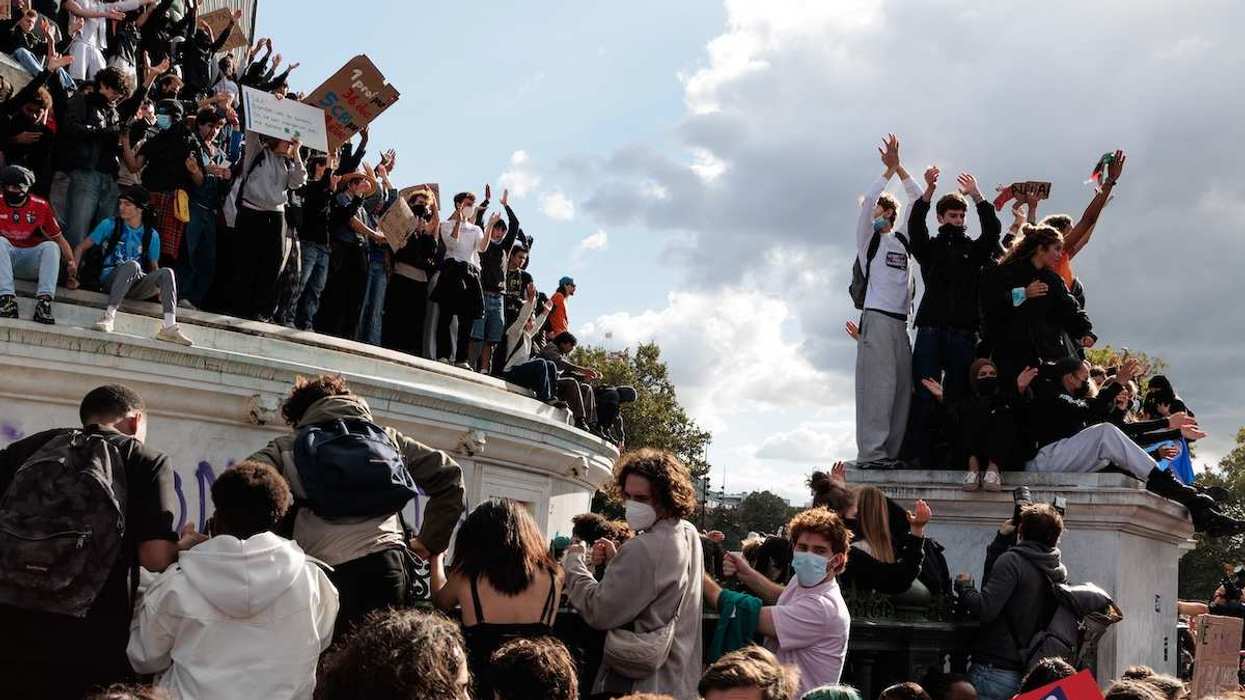
The 2020 attack on the Capitol was deadly, resulting in five deaths and numerous injuries. But those who carried it out believed they were defending democracy from voter fraud, even as they hindered a cornerstone of the democratic process: the peaceful transfer of power. There are already signs that Trump is likely to claim voter fraud if he loses in 2024, with an analysis by The New York Times finding that he has cast doubt about the fairness of the 2024 election about once a day, on average, since he announced his candidacy. At a minimum, this could lead to more voters losing faith in elections. Or in the worst case, it could spur another Jan. 6-like event if Biden wins in November.
That’s why GZERO did a deep dive into the conspiracy theories that are having the biggest impact on politics in a new immersive experience, The Disinformation Election: Will the Wildfire of Conspiracy Theories Impact the Vote? Click here to go down the rabbit hole.