Skip to content
Search

Latest Stories

Analysis

Can the IMF change to help more women?

Can the IMF change to help more women?
Matthew Kendrick

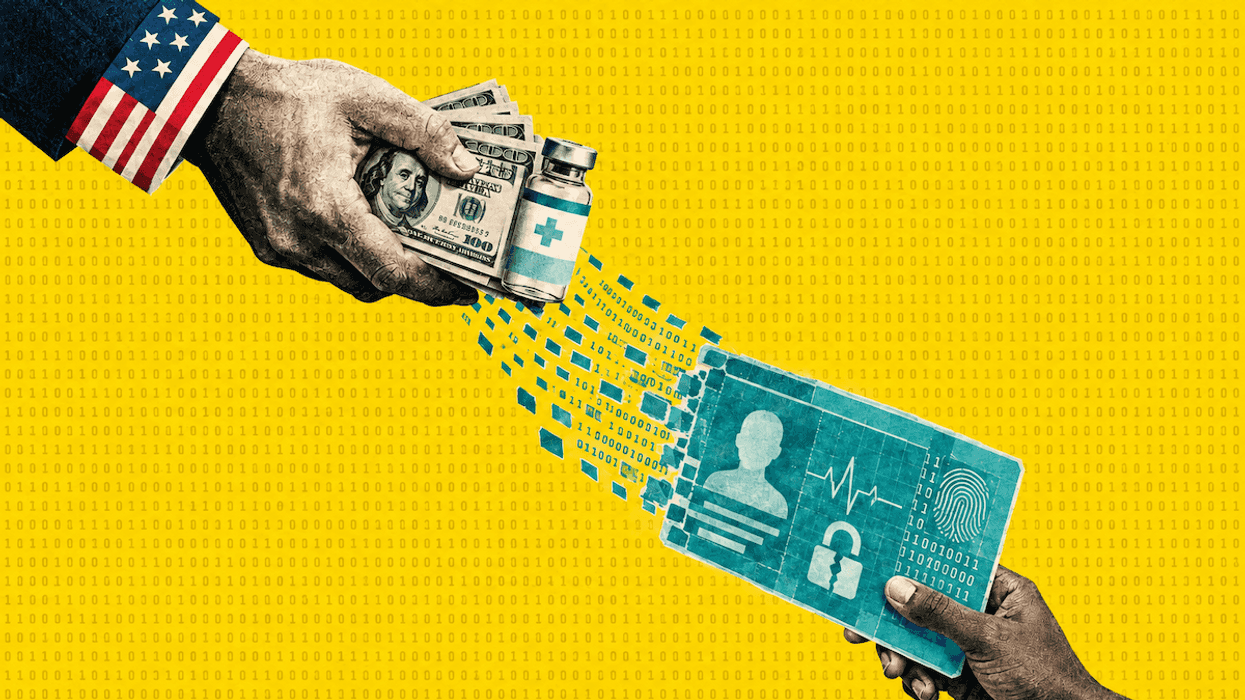
When a country hits rock bottom financially, the International Monetary Fund is meant to step in with funds to stabilize the economy without damaging its society — or the gender gap. But studies show that these programs often push women out of work at a disproportionate rate to men as the economy contracts.

Alongside this week’s World Bank-IMF Annual Meetings in Washington, DC, the IMF held a policy forum on Tuesday to discuss a new tool called Gender Impact Assessments, which are designed to help build more equitable programs — and protect some of the world’s most vulnerable women.


How do IMF programs hurt women’s opportunities? In any intervention, the IMF has to consider political practicalities in its policy recommendations. All too often, said Farah Al Shami, program director for social protection at the Arab Reform Initiative, “Austerity is politically easier than implementing tax reform.” Citing examples of governments in the Middle East and North Africa, which already spend proportionally less than peer countries on social services and safety nets and have higher female unemployment, she explained that austerity measures push more women than men out of the workforce as the economy contracts, while also reducing the benefits they need. Even more politically palatable ways to raise revenue, like value-added taxation, can disproportionately burden poor women due to their regressive nature.

Why are women forgotten? Tara Povey, the gender equality and macroeconomics project lead at the Bretton Woods Project, said the approach to gender has been too “scattershot” and often falls down the priority list in negotiations. The IMF’s Gender and Inclusion Deputy Unit Chief Monique Newiak, meanwhile, said that even when gender considerations are taken into account, too much of the focus is placed on metrics like labor force participation and not enough on social aspects like child marriage and gender-based violence.

How could Gender Impact Assessments help? By reorganizing the program development process to include key questions about women — including whether policies could force more unpaid family labor on women, monopolize women’s time, or lead to more hiring discrimination — the IMF can begin tailoring more inclusive programs. Rather than suffering social setbacks, the Fund could ensure that women are at the very least not harmed, and ideally set up for greater success in a recovered economy.

More For You

Trump’s farm troubles

U.S. President Donald Trump holds up a "Make Our Farmers Great Again" cap during a roundtable discussion on workforce development at Northeast Iowa Community College.

REUTERS/Joshua Roberts
Is US President Donald Trump going whole hog for the farm vote?Today, Trump is expected to announce two new efforts designed to help the agriculture industry: new guidance on farm equipment and an expansion of government loan guarantees. It’s his second overture to the farm sector in three months. In December, he announced a $12 billion aid [...]
​Smoke rises following an explosion, after Israel and the U.S. launched strikes on Iran, in Tehran, Iran, March 3, 2026.

Smoke rises following an explosion, after Israel and the U.S. launched strikes on Iran, in Tehran, Iran, March 3, 2026.

Majid Asgaripour/WANA (West Asia News Agency) via REUTERS
Syria was the first social media war, where the Syrian government harnessed the power of social media to spread misinformation. Ukraine was the first drone war, taking combat beyond the trenches. Now, the Iran conflict is the first artificial intelligence war, as the world’s strongest military embraces the technology.Admiral Brad Cooper, the head [...]
​A foreign tanker carrying Iraqi fuel oil damaged after catching fire in Iraq's territorial waters, following unidentified attacks that targeted two foreign tankers, according to Iraqi port officials, near Basra, Iraq, March 12, 2026.

A foreign tanker carrying Iraqi fuel oil damaged after catching fire in Iraq's territorial waters, following unidentified attacks that targeted two foreign tankers, according to Iraqi port officials, near Basra, Iraq, March 12, 2026.

REUTERS/Mohammed Aty
Four weeks into a war nobody planned to still be fighting, President Donald Trump issued Iran an ultimatum: reopen the Strait of Hormuz within 48 hours or watch your power grid get obliterated. Iran said no and threatened to retaliate against desalination plants and other civilian infrastructure in Gulf countries. Trump must have found this [...]
​German Chancellor Friedrich Merz, French President Emmanuel Macron and British Prime Minister Keir Starmer sit at the start of the E-3 meeting in Munich, Germany, on February 13, 2026.

German Chancellor Friedrich Merz, French President Emmanuel Macron and British Prime Minister Keir Starmer sit at the start of the E-3 meeting, during the Munich Security Conference (MSC), in Munich, Germany, on February 13, 2026.

Thomas Kienzle/Pool via REUTERS
For the first three weeks of the Iran conflict, Europe made its position clear: this isn’t our war. Many countries on the continent joined the US-led invasion of Iraq in 2003, a move that wrought casualties and sweeping political backlash at home. They want to avoid a repeat – especially when the European public largely opposes this war, too.Then, [...]